How to Know If It’s Good, Part 2: Novelty
This is the second post in a four-part series on the framework I use to evaluate whether a work of art has staying power. If you missed Part 1 on Intentionality, start there. And if you missed the introduction — When Is the Last Time You Bought Something That Will Outlast You? — that’s a good place to begin
In 1917 Marcel Duchamp submitted a urinal to an art exhibition. He turned it upside down, signed it with a fake name, called it Fountain, and submitted it as a work of art.
The selection committee rejected it. Of course they did. It was a urinal.
But Duchamp’s point wasn’t the object. It was the question. What makes something art? Is it the skill of the maker? The beauty of the form? The intention behind it? If an artist declares something art — if the concept is the work — does the object even matter?
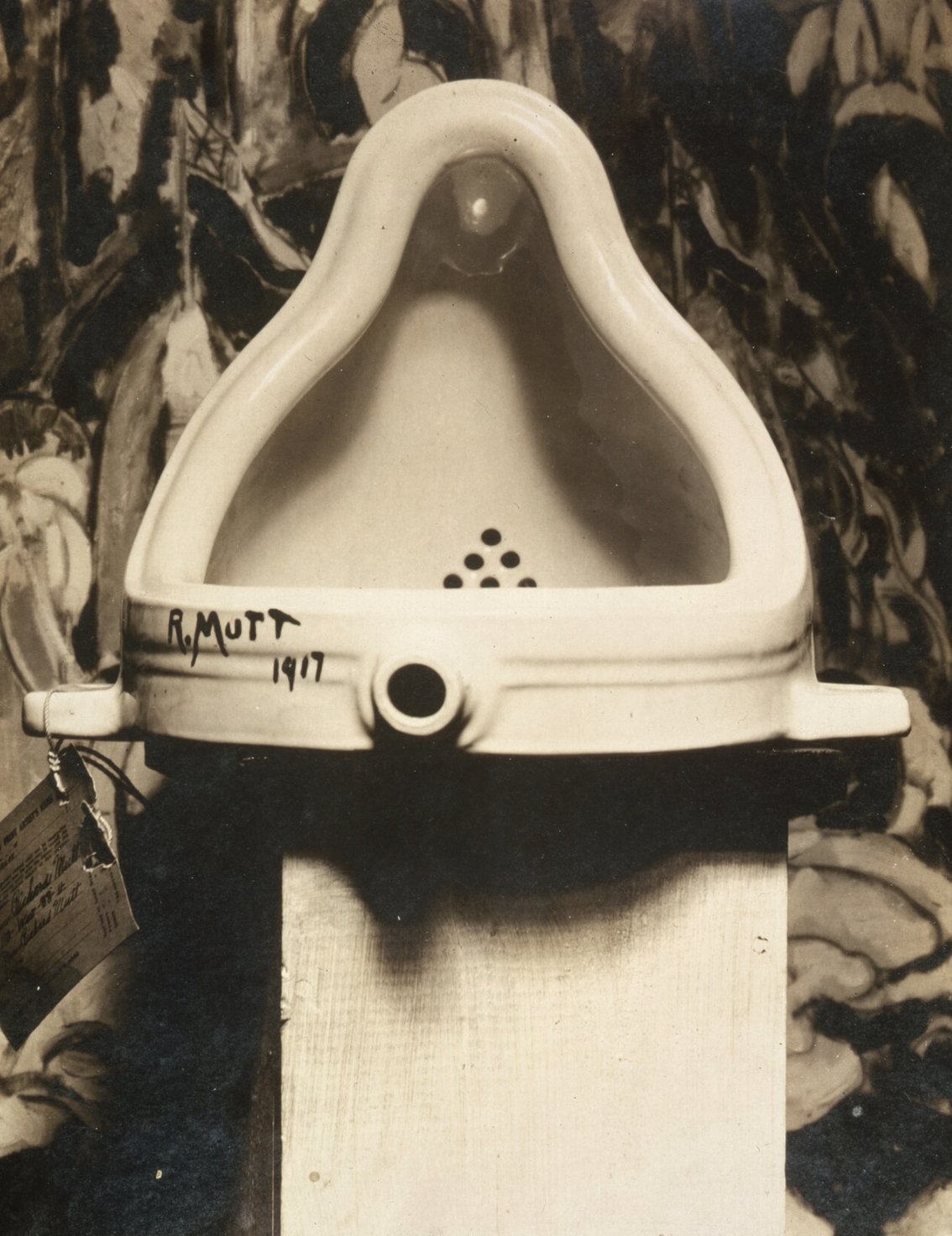
That question changed the entire conversation about what art is and can be. Not because a urinal is shocking or strange, because it is, but because there was a reason for the shock and strangeness. The provocation was in service of an idea that had no other way of being said. That’s novelty. It is not weirdness for its own sake, or shock for the sake of reaction, but a genuinely new way of saying something, thinking about something, or presenting an idea that couldn’t be said any other way.
When someone looks at Duchamp’s Fountain and says “my kid could do that,” they sound like idiots, to be honest, and they are missing the point entirely. Yes, your kid could probably turn a urinal upside down. Your kid could not have asked that question in 1917 in a way that changed how every artist and every viewer thought about art for the next century.
That’s what novelty looks like at its most extreme. In practice, standing in a gallery or a fair, it looks more like this: is this artist doing something I haven’t seen before? Are they using a material, a process, a visual language that feels genuinely distinct from everything around it? Are they advancing a conversation or just entering one that’s already crowded?
What Novelty Is Not
Before we talk about what novelty looks like, it’s worth naming what it isn’t.
Novelty is not trend-following. An artist whose work looks new because it looks like whatever is popular right now isn’t making novel work — they’re making timely work. Those are different things. Timely work dates. Novel work doesn’t.
Novelty is not bombast. It is not gimmicky edginess for shock value’s sake. Don’t mistake loudness for vision. You know who could scrawl the F word in spray paint on a Normal Rockwell print? Your kid. That’s not novelty.
Novelty is not strangeness for its own sake. A work can be bizarre, difficult, unsettling, and also completely derivative. The question isn’t whether something surprises you. It’s whether the surprise is actually achieving a real objective.
True novelty is specific. It’s an artist who found a visual language that is distinctly, identifiably theirs, and that nobody else got to first.
What Novelty Looks Like In Practice
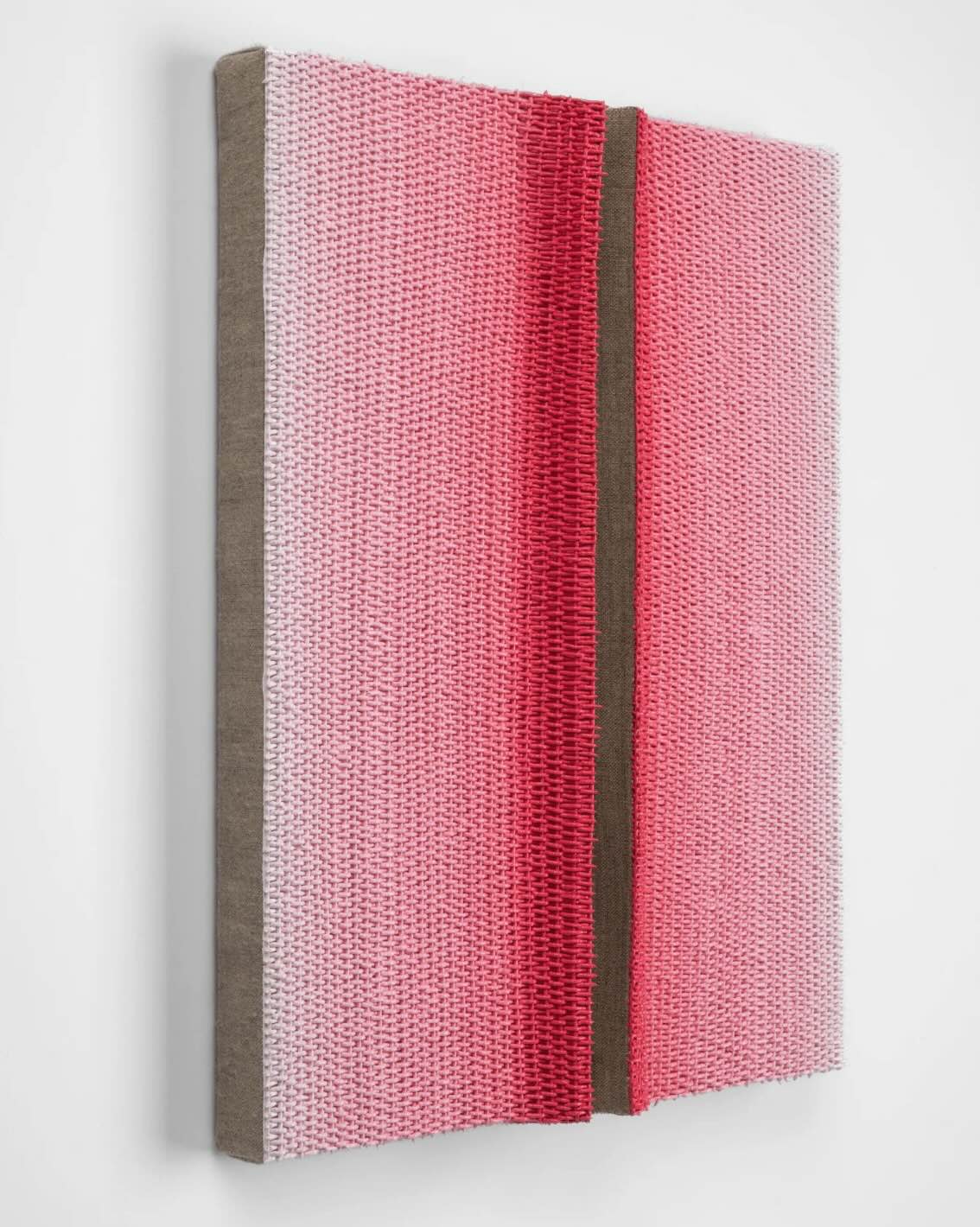
The first time I stood in front of Danielle Mysliwiec‘s work I genuinely didn’t know what I was looking at. She makes weavings out of extruded oil paint. Not weavings that look like paint. Not paint that references weaving. She physically extrudes paint into long strands and weaves them together the way you would weave thread — interlocking, layering, building a surface that is simultaneously a painting and a textile and neither one.
I had never seen anything like it. Not in twenty years of walking galleries and fairs.
But the novelty isn’t just the material trick. It’s what the material trick is saying. Mysliwiec is working within a long art historical conversation about the hierarchy between painting — traditionally the domain of high art, of men, of serious ideas — and weaving and textile, traditionally feminized, classified as craft, pushed to the margins. She’s not referencing that conversation. She’s physically enacting it. The paint and the fiber are literally the same thing in her hands. The hierarchy collapses in the making.
That’s novelty doing real work. The surprise is in service of an idea. No one has said what she is saying in this way.
Kate McQuillen approaches novelty from a completely different direction. She is a printmaker by training who applies printmaking principles to painting — which means her painted surfaces have no brushwork, no impasto, no visible layering. They are as smooth as a print. She has invented a way of making gestural abstract painting that looks like it was never touched by a brush, which creates a deeply strange and beautiful friction between the physicality of paint and the mechanical precision of print.
McQuillen is also a reader and a thinker who draws on ancient Greek epics and tragedies — specifically the way those stories move between disparate emotional registers within a single scene. She uses that source material as a way into abstract painting: how can an image bring to mind a specific feeling even when it’s entirely removed from recognizable form?
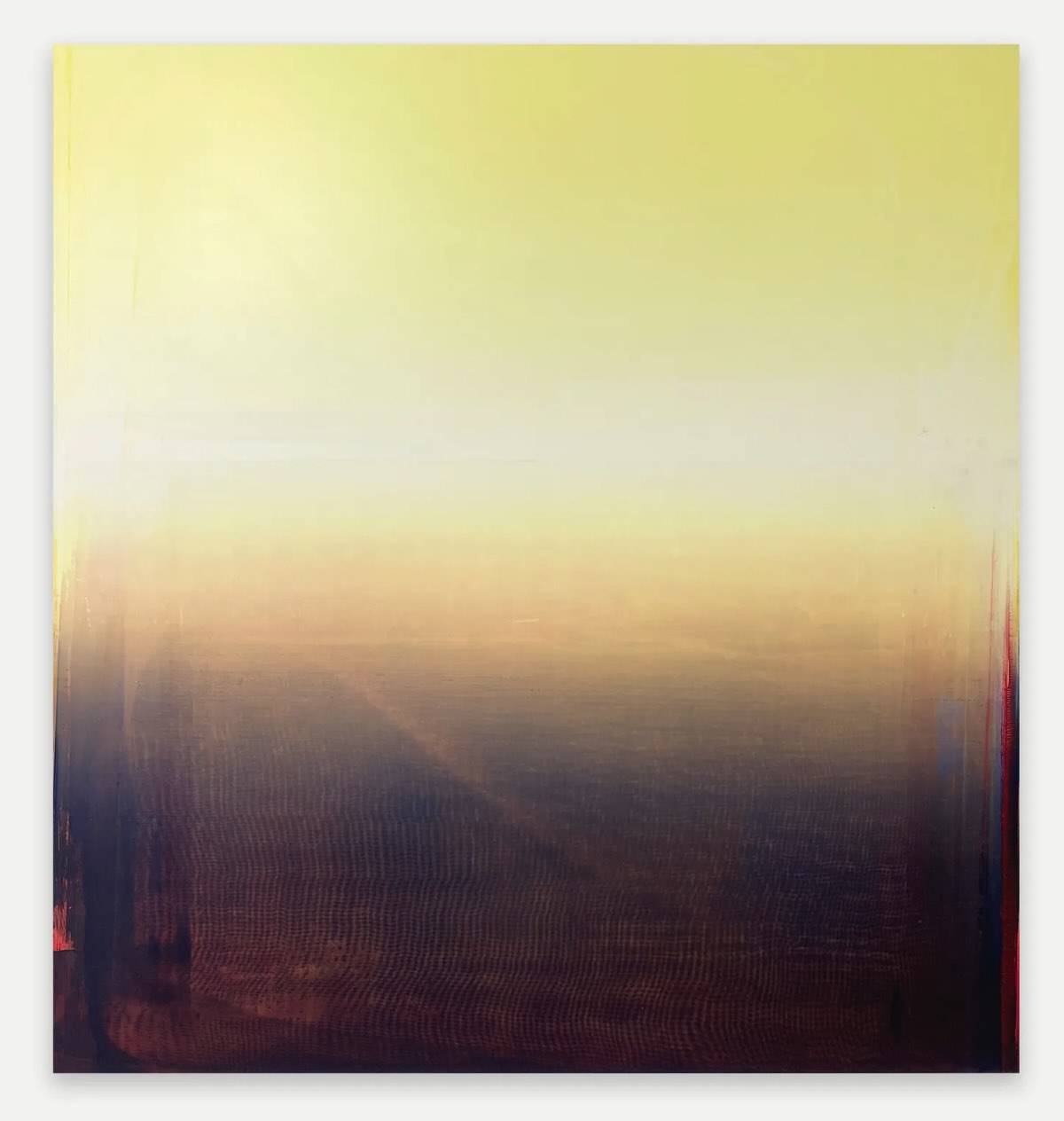
The novelty in McQuillen’s work is layered. It’s the surface technique. It’s the conceptual framework. It’s the way those two things work together to produce something that exists liminally between the things it draws from — between painting and printmaking, between abstraction and narrative, between the ancient and the present.
Neither Mysliwiec nor McQuillen looks like anyone else. That’s the signature of novelty — work that is identifiably, specifically, irreducibly itself.
The Venturist and The Novelty Trap
If you’ve taken the collector type quiz on this site, you may already know you’re a Venturist. The Venturist collector often leads with novelty above everything else. They walk into a booth and something stops them — an energy, an unexpectedness, a “wow, I’ve never seen that before” that bypasses the analytical brain entirely. They trust that instinct and they act on it. Some of the most exciting collections I’ve ever seen belong to Venturist collectors.
But novelty is also the Venturist’s blind spot. Because novelty alone doesn’t tell you whether a work has staying power. It tells you the artist found something new. It doesn’t tell you whether what they found is grounded in something real, whether the intentionality is there, whether the work knows where it sits in the broader conversation, whether it has something urgent to say about the world we’re actually living in.
The Venturist who leads with novelty and stops there ends up with a collection full of work that was exciting, edgy, and surprising in the moment but fails to hold on to that moment for much longer.
Novelty is the entry point for you Venturists, but it’s not the whole conversation.
The Practical Question
When you’re standing in front of anything and trying to evaluate novelty, the question worth asking is: have I seen this before? Not “is this good?” Not “do I like it?” Just: is this doing something I haven’t seen done?
If the answer is yes — if you can immediately think of five artists making work that looks like this — then novelty isn’t the thing that’s going to make this work last. It might have other things going for it. But it’s entering a crowded conversation rather than advancing one.
If the answer is no — if you can’t quite place it, if it doesn’t fit neatly into a category, if you find yourself saying “I don’t know what this is exactly” — pay attention. That disorientation is worth investigating. It might be novelty. It might be the beginning of something.
A second question worth asking: does this artist have a visual language that is distinctly theirs? Could you identify their work in a group show without looking at the label? Artists who have developed genuine novelty tend to be immediately recognizable — not because they repeat themselves, but because they’ve found something that belongs to them and only them.
That distinctiveness is what you’re looking for. Not weirdness. Not shock. Not trend. Just: this person found something nobody else got to first.
Next week: Self-Awareness. Does this artist know where their work sits in the broader conversation? And why does that really matter?
Every collector has a type.
A default way of engaging with art — and a default reason they walk away from something they should have bought. Find out yours in two minutes.
Take the Quiz →Already a member? This week's new additions to The Collection are waiting.
Explore The Collection →