
How to Know If It’s Good, Part 3: Self-Awareness
This is the third post in a four-part series on the framework I use to evaluate whether a work of art has staying power. If you missed Part 1 on Intentionality or Part 2 on Novelty, start there. And if you missed the introduction — When Is the Last Time You Bought Something That Will Outlast You? — that’s a good place to begin.
When I taught art history at the Cleveland Institute of Art, I started every semester the same way. I asked the students one question:
Why do you think have to take this class?
The answers were predictable. Because it’s required. Because the school makes us. Because I don’t know. A few brave souls would venture something more honest: because you can’t make art without knowing what came before you.
That last answer is the one I was waiting for. Not because art history is a prerequisite to making anything — plenty of artists work in genuine isolation and produce powerful work. But because the artists who know the conversation they’re entering make more informed choices. Their work has more layers. Their intentionality is richer because it’s grounded in something larger than their own instincts.
That’s what the third criterion in my framework is about: self-awareness.
What Self-Awareness Is
Self-awareness is an artist’s demonstrated understanding of where their work sits in the broader conversation — art historical and contemporary — and the conceptual reason for the references and relationships they’re drawing on.
That conversation can be with anyone. With Caravaggio or with a peer showing at the next booth at NADA. With the AbEx painters or with the early African American quiltmakers whose work the art world spent decades failing to take seriously. With Italian Baroque drama or with the feminist fiber art movement of the 1970s. The conversation can be explicit — direct visual quotation, named influence, obvious stylistic dialogue — or it can be subtle, a structural logic or a material choice that quietly acknowledges what came before.
What matters is that the reference is there for a reason. The artist isn’t dropping art historical names to sound serious or reaching for the nearest available influence because it looks good. They’re drawing on a specific thread because it lets them say something that couldn’t be said without it.
Why It Matters
I want to be honest about something: not everyone would agree that self-awareness is a necessary criterion for evaluating whether a work is good. Some would argue that an artist has no obligation to know or acknowledge the conversation they’re in — that pure instinct and originality are enough, that art historical awareness is an academic imposition, that the work should stand entirely on its own terms.
I understand that argument. But I don’t think it holds up.
Here’s why. An artist who genuinely understands where their work sits in the broader conversation — who knows what’s been tried before, what succeeded, what failed, and why — is making more informed choices. Their work isn’t just the product of instinct. It’s the product of instinct in dialogue with history. And that dialogue produces depth — the kind of depth that rewards a viewer over years rather than months, the kind that gives a work staying power rather than just initial impact.
There’s also a more practical point. The artist who makes work in complete isolation from any conversation might produce something genuinely original. But they might also be reinventing the wheel without knowing it — doing something that feels fresh to them but has already been done, and better, by someone else. Self-awareness is what separates genuine originality from accidental repetition.
Self-Aware Versus Derivative Work
Here’s the test I use to distinguish between a self-aware artist and a derivative one.
A self-aware artist catches the ball and advances it. They receive what came before — a style, a material, a conceptual approach, a set of questions — and they move it somewhere new. They add something that takes the conversation forward. You can trace the connection to what came before and you can also see clearly why this work had to exist — why the conversation needed this voice to go somewhere it hadn’t been yet.
A derivative artist catches the ball and either drops it or throws it back where it came from. The reference is there — you can see the influence clearly — but it isn’t going anywhere. The work doesn’t advance the conversation. It repeats what’s already been said. The connection to the source is legible but the conceptual leap that would justify the reference is missing.
The question to ask is not: can I identify the influence? It’s: can I understand why the influence is here? What is it doing for this work that nothing else could do?
If you can answer that question, you’re probably looking at self-awareness. If the reference feels decorative — present but purposeless — you’re probably looking at something derivative.
What Self-Awareness Looks Like In Practice
Molly Greene has three degrees from Yale — environmental science, philosophy, American studies — before she picked up a brush. Her paintings look at first glance like they might be decorative: soft, airbrushed, pastel, organic forms that feel botanical and slightly surreal. But the self-awareness in her work is operating on multiple levels simultaneously.
Greene is in dialogue with the history of decorative painting — the tradition that has been consistently feminized and marginalized by the art world — and she’s doing something deliberate with that tradition. Her work looks decorative on purpose. The softness and the botanical imagery and the pastel palette are not accidents. They’re a sustained investigation into the porous boundary between what gets called art and what gets called decoration, between the natural and the artificial, between the human and the non-human. She knows exactly what conversation she’s in. And she has a very specific reason for entering it the way she does.
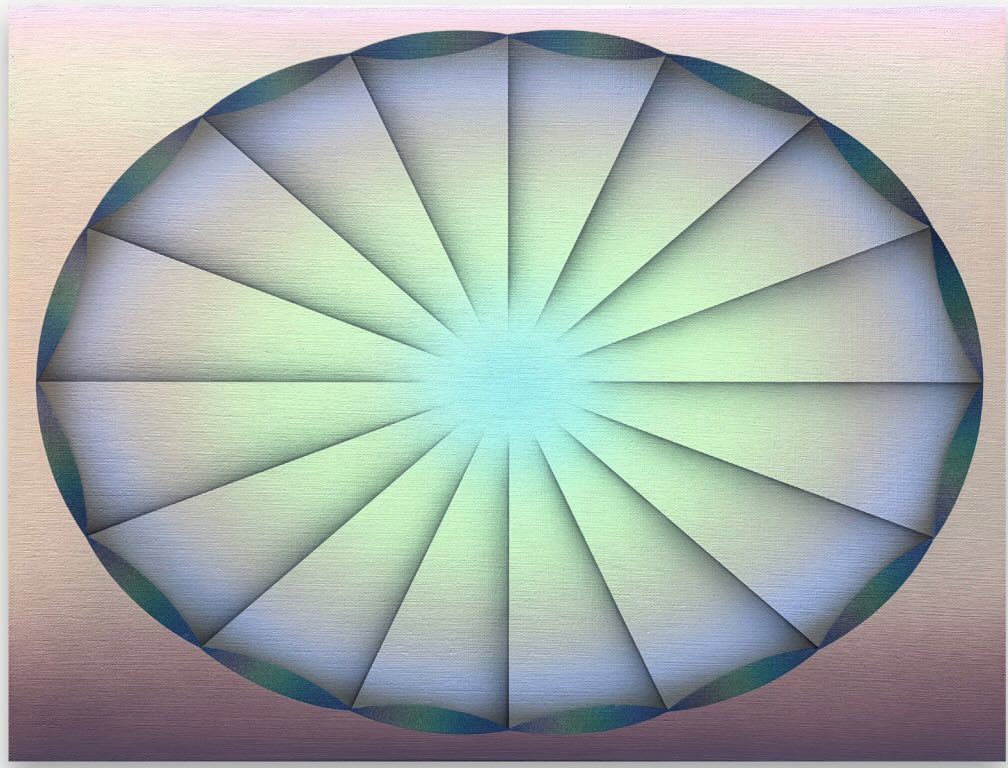
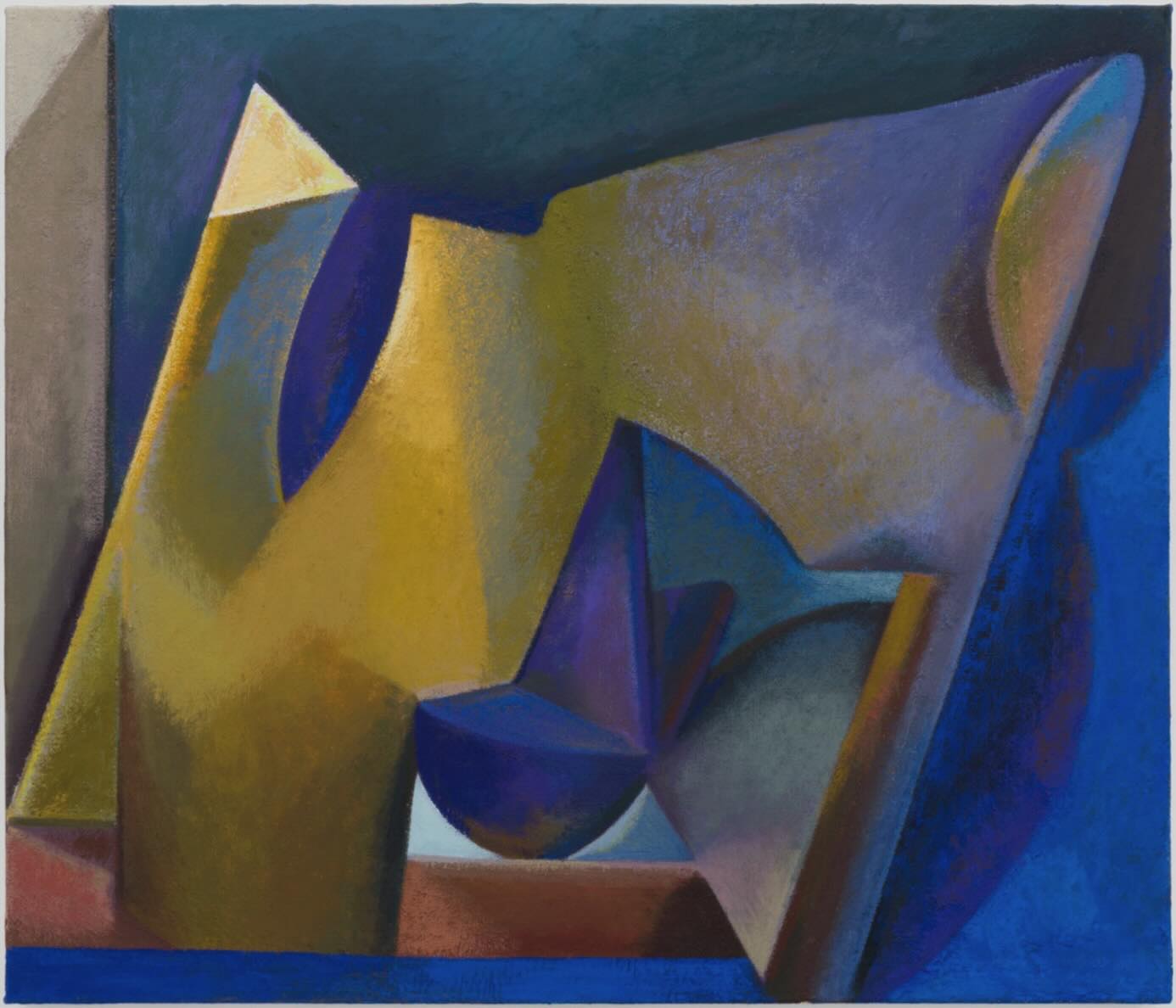
Logan Grider makes abstract paintings that are in deep dialogue with the history of American abstraction — the AbEx painters, the color field tradition, the long argument about what paint on canvas can do and mean. But he’s not repeating that conversation. He’s extending it. His work is physically demanding in ways that connect to the labor-intensive practices of Process Art while also being visually lush in ways that connect to the Romantic tradition of the sublime. The references are there, they’re legible, and they’re doing real conceptual work — each one is load-bearing, necessary to what the painting is trying to say.
Both Greene and Grider know the conversation they’re in. Both of them have a reason for entering it the way they do. That’s self-awareness operating at a high level.
The Contextual Collector and the Self-Awareness Trap
If you’ve taken the collector type quiz and discovered you’re a Contextual Collector, self-awareness is your natural criterion. You’re wired for exactly this kind of art historical and contemporary dialogue. When you find it you go deep — you follow the thread, you research the references, you build the full picture of where a work sits and why. The result, when it works, is a collection of extraordinary depth and coherence.
But the Contextual Collector has a blind spot at this criterion too.
Self-awareness isn’t always legible on the surface. Some of the most self-aware artists wear their references lightly. The dialogue is there — it’s real, it’s doing genuine work — but it requires patience and investigation to find. The Contextual Collector who needs the context to announce itself will walk past work that rewards closer looking.
The test for self-awareness isn’t whether the references are immediately obvious. It’s whether they’re there at all — and whether they’re doing something. Sometimes you have to bring knowledge to the work rather than waiting for the work to hand it to you. That’s a skill. And it’s worth developing.
The Practical Question
When you’re standing in front of anything and trying to evaluate self-awareness, the question worth asking is: does this work know where it comes from?
You don’t need to be an art historian to feel the answer. Self-aware work has a quality of intentional placement — it feels like it belongs somewhere specific in the larger story of art, like it knows what it’s responding to and why. Derivative work feels like it arrived from nowhere in particular, or like it’s trying on someone else’s clothes without quite understanding why those clothes were made.
A second question worth asking: can I understand why the reference is here? What is it doing for this work that nothing else could do?
If the reference has a reason — if pulling on that thread opens something up rather than just gesturing toward it — you’re probably looking at self-awareness. If the reference feels like decoration, like name-dropping in paint, you’re probably not.
Next week: Relevancy. Does this work have something urgent to say about the world we’re actually living in right now?
Every collector has a type.
A default way of engaging with art — and a default reason they walk away from something they should have bought. Find out yours in two minutes.
Take the Quiz →Already a member? This week's new additions to The Collection are waiting.
Explore The Collection →