
#3: What Kind of Art Can I Collect?
Casey Monda Art Advisory
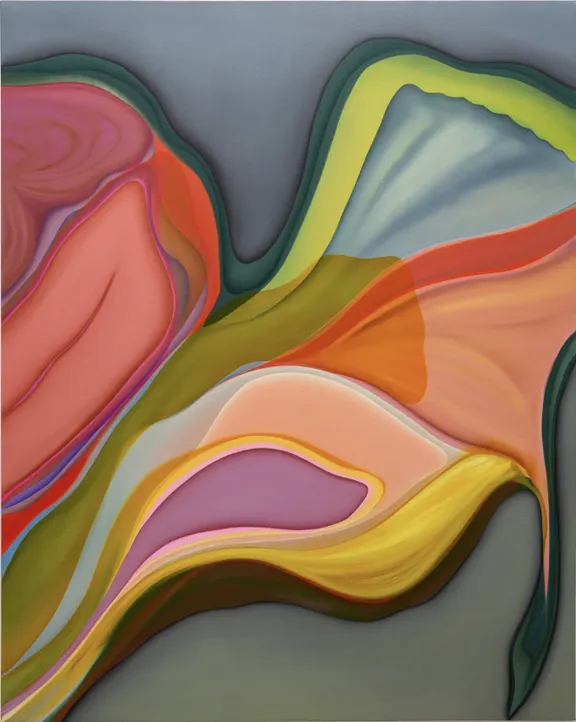
On Tuesday evening, I unwrapped a new painting that we recently purchased from Shaheen Gallery’s exhibition of new work by Antwoine Washington. Maybe they have been groomed or maybe their excitement is genuine, but my sons love it when new art arrives. They have opinions on where it should go and why; and, it is the most fun to hear all about what they are thinking. After we settled on the fact that the painting really aligns most closely with my younger son and that it should hang in his room, we took it in there to figure out which wall. There is a lot of bright art in his room and this particular painting is also bright. I held it up and my older son declared, “That does not excite my eyes.” He is 7 and he was exactly right. When I asked him why it does not excite his eyes, giddy with glee that he had articulated his opinion so clearly and concisely. He observed that the colors in the new painting are too similar to the other work on the wall and so it all just gets lost.
The best way to start discovering what kind of art you like is to look at art – a lot of art. But I imagine you already know that, and the prospect of starting this endeavor on your own sounded so overwhelming and time-consuming that you figured it would be easier to just hire me. And you would be right about that. However, I am not a mind-reader, and I cannot predict what you will like without a smidge of guidance. So, we will start with baby steps.
In this lesson, I will introduce you to six general media categories: paintings, sculpture, prints, photographs, drawings, and digital art. From spatial and storage concerns to budget and taste, objective and subjective reasons will likely drive your decisions for what type of media you want to acquire. Whatever the case may be, I always encourage clients to build diverse collections since having a variety of artwork by different artists will help you build a more sophisticated and intriguing collection. Through discussion, exploration, open-mindedness, and perhaps a small dose of risk, I can help you define your vision and build a strong collection identity. Read on and take the survey to complete the next step in your collecting journey.
Thanks for being here!
Air kisses (because we’re art people now), Casey
5 Kinds of Art to Consider

Paintings
Paintings are perhaps the first type of artwork that comes to mind when thinking of art. The elements of painting (shapes, lines, colors, tones, and textures) produce a visual language that communicates sensations of volume, space, movement, and light on a flat surface. An artist may use a single medium or a combination of media, including tempera, fresco, oil, acrylic, watercolor, ink, gouache, encaustic, or casein, which may be applied to a variety of bases such as canvas, wood or composite panel, paper, metal, or glass.

Sculptures
The two most important elements of sculptural art are mass and space. Sculpture can take the form “in the round” (freestanding objects) or “in relief” (3D elements on a background). A huge variety of media may be used, including clay, wax, stone, metal, fabric, glass, wood, plaster, rubber, and “found” objects. Materials may be carved, modeled, molded, cast, wrought, welded, sewn, or assembled.

Prints
Printmaking is the production of images (usually on paper) through various multiplication techniques. The resulting “prints” are considered original works of art, even though they exist in multiples. Printmaking consists of three major processes (relief, intaglio, and surface), with many artists using a combination of processes in their work. Common techniques include etching, woodcut, engraving, lithography, and screenprinting.

Photographs
In its early history, photography was considered “merely” a mechanical art due to its dependence on technology. However, the medium has developed into a creative and visionary art form. Established genres now include portraiture, photojournalism, landscape, architectural, social, and fashion, and the medium offers a wide variety of subject matters, sub-genres, and techniques from Modern to Contemporary photography.

Drawings
As another medium historically considered subordinate to other arts, drawing was originally intended for instrumental purposes (studying, sketching, drafting). Today, drawing is an “expanded field,” moving beyond traditional tools like pencils and pens to include techniques such as burning, cutting, scratching, sticking, writing, and sewing. No longer considered only a preparatory step in art making, drawing has become a celebrated primary medium that is reinventing the idea of representation.

Digital Arts
Digital art refers to any artistic work or practice that is created with or is presented using digital technology. Emerging in the 1980s, digital art now includes animations, photographs, illustrations, videos, digital paintings, or any other art made using software, computers, or other electronic devices. Previously used primarily in commercial settings, digital art is moving into the fine art collector space, in part thanks to the emergence of Crypto art, a digital asset tracked in a blockchain and verified using non-fungible tokens (NFTs).

#2 Understanding Art Movements
Casey Monda Art Advisory
Art history in 4 minutes or less! Or you may need to take this one in chunks...
Western art history dates to the Prehistoric era (~40,000 B.C.), with the earliest artifacts from the Paleolithic era appearing as rock carvings, engravings, pictorial imagery, sculptures, and stone arrangements. To cover approximately 42,000 years of the history of art in detail would take an eternity (and a much longer lesson series!), but thankfully scholars have divided art history into periods or “movements.” By learning about significant movements in art history, we not only gain insight into how artists of the past recorded, responded to, and dealt with the issues of their day (all art was contemporary at some point!), but we also develop our skills in identifying and talking about artistic styles, traditions, and techniques.
This second lesson will cover a handful of significant art movements that not only impacted the course of Western art history but also continue to be studied, referenced, and re-interpreted by artists today. This is by no means an exhaustive list, and resources such as the Artlex Online Art Dictionary or Tate’s Online Glossary of Art Terms are excellent destinations for learning and discovering more!
While you may not be interested in collecting historical art, or have the budget for it, I encourage you to become familiar with major art historical movements so that you can contextualize what you are looking at and identify contemporary artists who are either influenced by certain movements or are creating their own.
Air kisses (because, ya know, art fairs), Casey
Various Art Movements You Should Know

Renaissance (1400-1600)
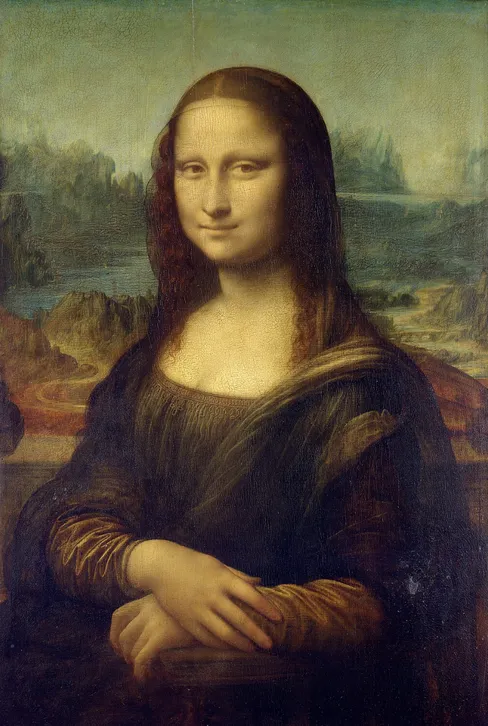
Art of the Renaissance was characterized by a focus on nature and individualism. The idea of man as independent and self-reliant was paramount, and emotional expression was a celebrated ideal. Realism, attention to detail, and the study of human anatomy emerged, and linear perspective was developed to create depth in two dimensional works. Famous artists from this time include Leonardo da Vinci, Michelangelo, Raphael, Botticelli, Brunelleschi, and Donatello.

Baroque (1600-1750)
The Baroque period was known for its ornate, over-the-top visual arts and architecture. Spurred on by a growing interest in broadening human intellect and global discovery, the stylistic tendencies of this period were complex. Baroque artwork is dramatic with rich color palettes, amplified by the development of chiaroscuro, or the emphasized contrast between light and dark. Caravaggio, Artemisia Gentileschi, and Rembrandt are well-known artists from this period.

Romanticism (1780-1850)
Romanticism celebrated the individual and imagination, focusing on passion, emotion, and sensation and rejecting the order, harmony, and rationality that had been popularized by the proceeding period of Neoclassicism. An appreciation for nature developed, and artists began painting outside, or en plein air. Famous artists of the Romantic period include Francisco Goya, John Constable, Eugène Delacroix, and J.M.W. Turner.

Realism (1848-1900)
Realism is considered to be the first “modern” art movement. Emerging with the rise of journalism and the advent of photography, Realism represented a new interest in accurately capturing the everyday lived experiences of people across the demographic spectrum. The development of naturalism and the emphasis on realism of the subject initially shocked middle- and upper-class audiences, who were more familiar with art that celebrated the upper echelons of society. The term“realism” now also describes artworks painted in a realistic (almost photographic) way. Famous artists from the Realism movement include Gustave Courbet, Jean-François Millet, and Édouard Manet.

Impressionism (1865-1885) & Post-Impressionism (1885-1910)
Alongside the boom in technological invention of the period, the Impressionists rejected realism and rather sought to capture the instant impression of a specific moment. With modern life as its subject matter and a focus on depicting light’s changing qualities, Impressionist art is characterized by short, quick brushstrokes and an almost unfinished “sketchbook” feel. Famous artists include Claude Monet, Pierre-Auguste Renoir, Mary Cassatt, and Berthe Morisot.
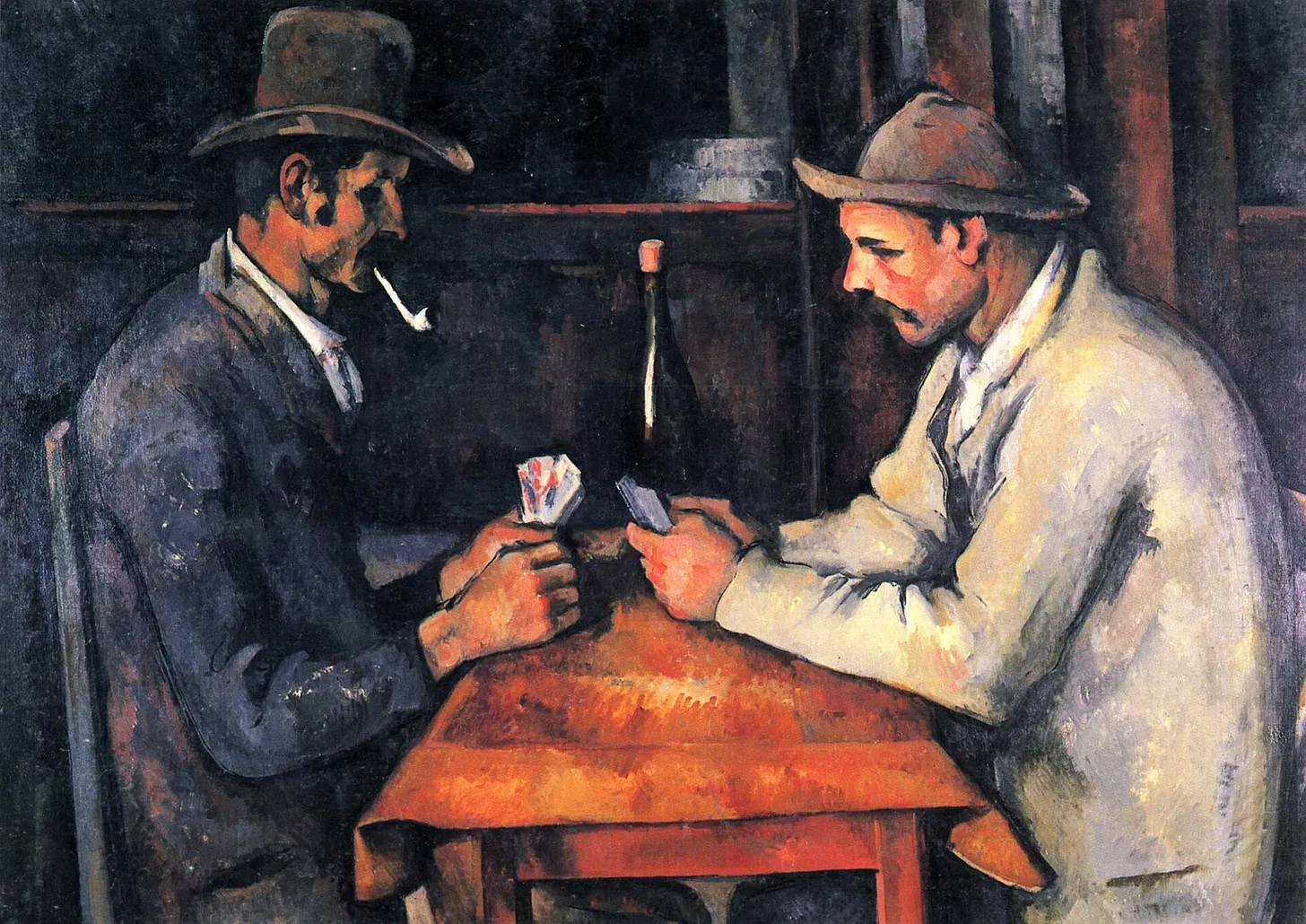
Post-Impressionism refers to a distinct change in direction from Impressionism and favored more abstract forms, concentrating on subjective visions and symbolism rather than direct observations. The most well-known post-impressionists are Paul Cézanne, Paul Gauguin, Georges Seurat, and Vincent van Gogh.

Fauvism (1900-1935)
Fauvism is considered to be the first avant-garde 20th-century movement and is characterized by expressive use of intense color, line, and brushwork, a bold sense of surface design, and flat composition. A core element of the movement was the separation of color from its descriptive, representational purpose. Henri Matisse led the movement, and other well-known Fauvist artists include André Derain, and Maurice de Vlaminck.

Cubism (1907-1914)
Cubism was established by Pablo Picasso and Georges Braque as direct rejection to the idea that art should imitate nature. Cubist art was characterized by abstraction, radically fragmented geometric objects, flat surfaces, and multiple viewpoints. The movement is credited with creating infinite new possibilities for the treatment of visual reality and inspiring many later abstract styles. Other well-known Cubist artists are Jean Metzinger, Albert Gleizes, Lyubov Popova, and Juan Gris.

Surrealism (1916-1950)
Surrealism rejected the rational mindset and embraced art that defied reason. Fighting against the repression of imagination, Surrealist artists tapped into the unconscious mind to depict revelations of everyday life. Influenced by figures such a Karl Marx and Sigmund Freud, Surrealism championed the irrational, poetic, and revolutionary. Famous Surrealist artists include Salvador Dalí, Joan Miró, René Magritte, Max Ernst, and Leonora Carrington.

Abstract Expressionism (1940s-1950s)
The artists of this movement broke away from what was considered conventional and instead relied on improvisation and spontaneity (automatism) to create abstract works of art. Abstract Expressionist artwork is characterized by gestural brush-strokes, with some artists being called “action painters,” both for the expressive and emotional “movement” in the works of art and for the physical nature in which some artists would create. Notable artists from this movement include Jackson Pollock, Helen Frankenthaler, Mark Rothko, Joan Mitchell, and Robert Motherwell.

Op Art (1950s-1960s)
With advances in science and technology, interest in optical effects and illusions grew. Op art (short for “Optical” art) is characterized by geometric forms, shapes, colors, and patterns that appear to move or blur. Often Op artists would work in black and white for maximum contrast, though some artists, such as Bridget Riley, explored color theory and function to explore new depths of illusion. Other famous Op artists include Victor Vasarely, Jesus Rafael Soto, and Richard Anuszkiewicz.

Pop Art (1950s-1960s)
Pop art, perhaps one of the most famous movements of the 20th-century, explored the theme of consumerism and mass-media by using everyday objects from popular and commercial culture to create art. The focus on identifiable imagery represented a distinct shift in the direction of modernism and challenged traditional views on what art should be by proving that art can draw from any source. Well-known artists of this movement include Andy Warhol, Roy Lichtenstein, Richard Hamilton, Peter Blake, and Rosalyn Drexler.

Minimalism (1960s-1970s)
An extreme form of abstract art, Minimalism developed as a response to the expressive works of Abstract Expressionism. It questioned whether works couldn’t be more “anonymous” and not act as a representation of something else, instead focusing only on the materiality of the artwork and its own reality. Minimalism is characterized by purified forms, order, simplicity, and harmony and encourages the viewer to focus only on what is physically in front of them. Famous Minimalist artists include Frank Stella, Donald Judd, Agnes Martin, Ellsworth Kelly, and Judy Chicago.

Conceptual Art (1960s-1970s)
Completely rejecting previous art movements, Conceptual art favored ideas over visual components. Because the art was focused on ideas and concepts rather than the finished art object, there is no classifiable style or form. Conceptual art may appear in the form of performances, written descriptions, or ephemera, but can be and look like almost anything. Notable Conceptual artists include Joseph Kosuth, Ai Weiwei, Jenny Holzer, On Kawara, and John Baldessari.

Contemporary Art (1970-present)
Beginning in the 1970s and continuing today, Contemporary art consists of many smaller movements, including Postmodernism, Feminist art, Street art, The Pictures Generation, Neo-Expressionism, Young British Artists (YBA), and Digital art, among many others. Current trends are digital and technological innovation, sustainability (both in theme and materials), diversity, and gender equity. Some exciting artists working today are George Rouy, Wanda Koop, Freya Douglas-Morris, Dana Shutz, Jake Grewal, LaToya Hobbs, Loie Hollowell, Ken Nwadiogbu, and Tschabalala Self.
There is a lot of information to absorb in this email, and we’re only scratching the surface. I would love to hear your immediate reactions to the art historical movements outlined above.
#1 Why Collect Art and Why Do I Need an Advisor?
Casey Monda Art Advisory
Welcome to the CMAA fam!
Welcome to the Casey Monda Art Advisory family! Whether you are a Substack subscriber, an active client, or a happy client from the past, I am so thrilled you are here and am honored to serve as your fearless leader on this exciting and potentially transformative journey of building an art collection. I work with all types of clients – from bare-walled novices to those who need an extra storage unit to house their treasures. For me to guide you effectively on your collecting journey, we need to work together to accomplish several fundamental tasks, and I hope this Collecting 101 series will help us do just that.
Firstly, I want to make you aware of all the possibilities so that we can accurately identify your primary reason(s) for collecting art. Once we have identified your goals, we will make decisions about what type of art and artists to consider and begin to develop your style and taste. Ultimately, we want to hone in on the appropriate venues to collect art from and how big or small your acquisition budget should be.
Thanks for being a part of the CMAA family. I am so glad you are here!
#1: Why Collect Art and Why Do I Need An Advisor?
This lesson illuminates the most common motivations behind collecting art. But above all else, first and foremost, buy what you love. I can not over-emphasize this point. If it does not resonate with you, move you, or otherwise make you think, arouse your curiosity, or make you feel something, you probably should not own it. The art you collect reflects your taste, experiences, and values, collectively forming an identity as unique as your fingerprints. With that said, there may be other reasons motivating a purchase, such as investment potential or asset allocation, cultural enrichment, personal enjoyment in decorating, and supporting the arts community. Any or all of these may apply to you and you will learn more about each of these topics below.
Now, you may wonder why you need me if collecting art is so personal. Advisors play a critical role in the art ecosystem as the sherpas (of sorts), helping clients navigate the vast and often opaque art world. We are both the guides to the summit and, when it comes to all the ancillary concerns of purchasing art, such as pricing, shipping, framing, conservation, and market analysis, the heavy lifters. I have the knowledge required to take you to the peak, but you have to trust my eye, which has been developed and strengthened over two decades spent studying art history, working in the industry, and looking at a lot of art. You hired me because you trust that I know what I am looking at and will only show you the best quality your dollar can buy. But you also trust that I understand the market and will do my best to steer you towards work that will have lasting value, financially or artistically.
Collecting art is a journey of self-discovery, and I am honored to guide you as you discover what makes you think, what inspires you, and what resonates with you as you build and expand your collection.
Some Reasons You Might Collect Art

Investment Potential
Artwork is considered a reliable long-term asset class, meaning that it holds value over time. While there is no guaranteed return, collecting art can be a strategic way to diversify your investment portfolio, minimizing risk and maximizing returns. Collecting artwork for investment purposes requires knowledge, engagement, and a long-term approach, and strategies vary based on the type of artists and artwork you are collecting.

Cultural Enrichment
Art reflects the evolution of societies, cultures, and the human experience. By learning about art history, visiting artists’ studios, and attending gallery and museum exhibitions, you can gain insight into history, cultures, and traditions. Building an intentional art collection will help you to develop new perspectives and discover a new means of self-expression.

Personal Enjoyment & Decorating
Decorating a home or office with art fosters creativity. By exploring and understanding your own personal preferences, taking into account practical aspects such as size, color, and texture, and carefully selecting artwork in a variety of media you will turn a place with four walls into a vibrant space that communicates a distinct personality.

Supporting the Arts Community
Art collecting contributes to the vibrant ecosystem that is the art world, promoting diverse perspectives and innovation. By purchasing art from emerging artists, to attending gallery exhibitions in your area, to becoming a member at your local arts museum you are supporting the growth, development, and longevity of your local arts and culture organizations. This, in turn, builds stronger and more vibrant communities.
I would love to hear your immediate thoughts on the different reasons for collecting art.