
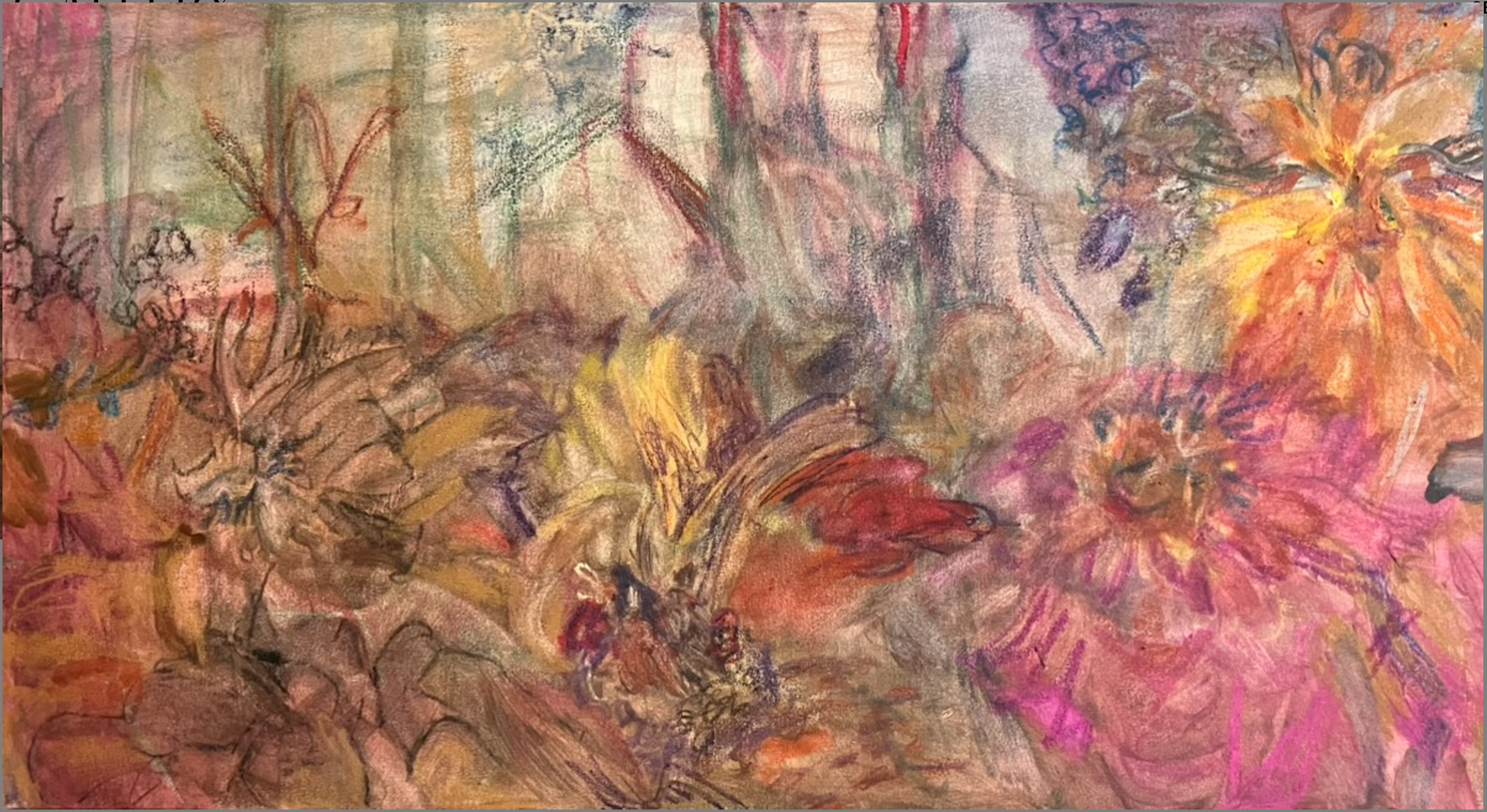
Why Substack + Some Nature-Inspired Art That Is More Than Sunsets and Flowers
Casey Monda Art Advisory
I came on strong with my shift to Substack. Let me tell you why.
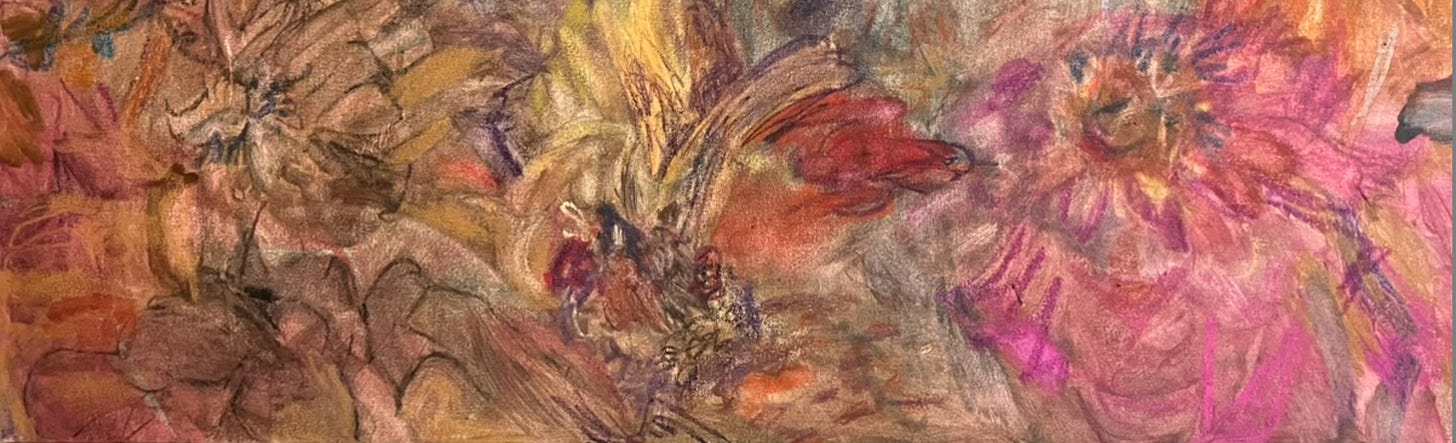
I have had many people ask me why the sudden and relentless shift to Substack? I don’t blame them. It happened quick and I came on strong. There are so many reasons why I dove into Substack head first and with reckless abandon and am so, so happy about it.
The most important reason why I started a Substack is because I miss long-form posts about art and the art market. I started Art I Saw and Liked with longer posts about art I saw and liked. It was really that simple. But as my business grew, we came out of Covid, and life happened, my IG became something else and IG itself became something else. Reels happened. Gah, I hate Reels. The algorithm changed, or continually changes all the time, which leads me to the second reason why I joined Substack.
IG is hard to keep up with. It is hard to build a real community. And IG is no longer about the visual. I don’t really know what it is about these days but I know it is a time suck, a mood suck, a joy suck, a productivity suck, etc… You get the gist. It sucks. But it also does not really do all that much for my business. Outside of a handful of engaged followers who are really interested in what I have to offer, I am not sure how it really moves the needle for my business. That makes me sound like a capitalist pig, but I have to be choosey about how I spend my time and a key criterion is that everything I do has to be absolutely necessary or have very high impact, and that leads me to my third reason.
I want to use Substack as platform to reach many more people than I can under my current business model. Don’t get me wrong, I absolutely love that I do, which is helping novice art collectors find and collect art that speaks to their soul. I love watching clients discover an artist or work that brings them closer to a fuller expression of who they are. I really want to be able to do that on a larger scale. I currently work on a one-to-one basis and I will always do that. But I would love to add a one-to-many branch to my business. My hope is that my Substack becomes a place where many novice art collectors from across the country can go to access my eye, my knowledge, my network, and my expertise. I believe there is a huge group of people out there who want to live with fantastic art from real, working artists that inspires their minds, their creativity, their families, and great conversation but they just don’t know where to go to get it and don’t feel confident in their choices. Displaying art in your home and in the spaces you occupy makes you vulnerable. I have found that people want to make choices that make them feel safe, confident, seen, and understood, even if they are visually risky. It’s a weird balance and I want to help folks find it.
That is the purpose of my Substack newsletter. Spread the word. Share it with your friends, family, neighbors, and colleagues. Please take a moment to forward this newsletter to one person who you think would enjoy reading it. And if you know of any great artists I should feature, please drop me a message!
And now on to some great art all under $10,000…
Benedict Sheuer (b. 1992, American)


I love these silk wall-dependent sculptures from Benedict Sheuer. They flutter when you walk by them. They are so gentle and graceful and vulnerable. I really want to hang a cluster, or dare I say, flock, of them asymmetrically on a large wall.
Corinne Slade (b. 1998, Montclair, NJ)


This new body of work from Corinne Slade deals with the act of deadheading—the practice of pruning flowers to encourage new growth—a powerful metaphor for personal renewal and transformation. Her new exhibition opens TODAY (!!) at COL Gallery in San Francisco. Slade is a young artist but has shown at Frieze London and Felix Art Fair, and the work is still under $5k!
Josh Callaghan (b. 1969, Doylestown, PA)


Josh Callaghan has recently come on my radar and I find his work so elegant in it engagement with the human-environment relationship. His Twig Index series takes us into the fourth dimension as it harkens to human evolution while his Root Ball asks us what future humans and future Nature might look like if we continue on our current trajectory. Callaghan’s work masterfully looks back and forward simultaneously to helps figure out what we should do in the now.

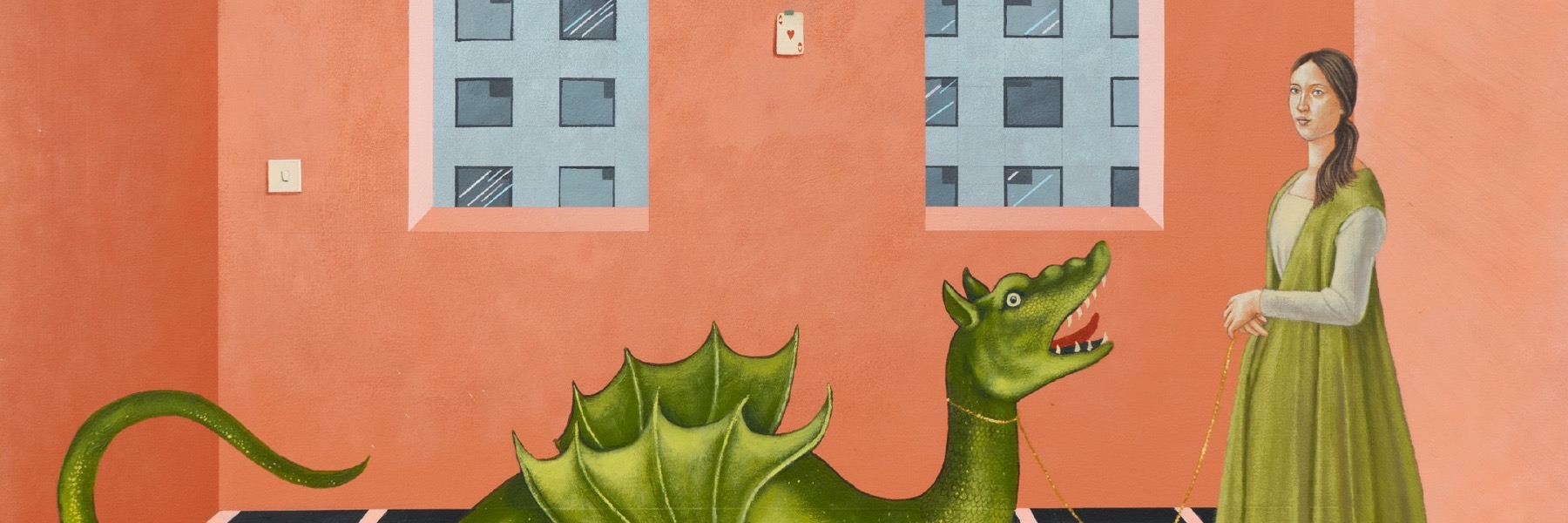
How Do I Look At Art and Some Really High Quality Surrealism
Casey Monda Art Advisory
Sometimes we end up with more questions than answers
Well, the answer to the first question is easy. Use your eyes!! JK…sort of. On the one hand, looking at art is easy. Just look at it. But on the other hand, it is hard because you really should be engaging all of your senses and your imagination. Taste? Yep. Touch? Totally (well imagined touch. Don’t actually touch the art…unless you are instructed to do so.) Sound? You betcha. Smell? Yes sir.
Using your imagination to engage all 5 senses is one of the best ways to find your way into a piece of art about which you know nothing. I always tell people that they should stand in front of a work of art long enough to be able to say five things about it. (In case you missed it, that is the key takeaway from today’s lesson. Well that and don’t touch the art.) If after that, you are still not feeling it, then you can move on. But, a good way to get to 5 things other than listing the colors you see is to imagine what the scene might feel, taste, smell, and sound like. This even works with abstract art and takes you on a little non-substance-fueled acid trip. You should try it.
Another strategy is to imagine why an artist made the decisions that they did. If you think about it, every mark, brushstroke, line, swoosh, splash, splotch (a technical term), crosshatch, gradient, the material, the size, every single aspect of a work of art was a decision made by the artist. Together all of these decisions coalesce to (hopefully) convey what the artist is trying to say. So maybe your 5 intelligent comments are imagining these decisions and why they were made. You could even take it a step further by asking yourself how the work might change if the artist had made a different choice. Would it be more or less effective? Would your perception of the meaning or message have shifted?
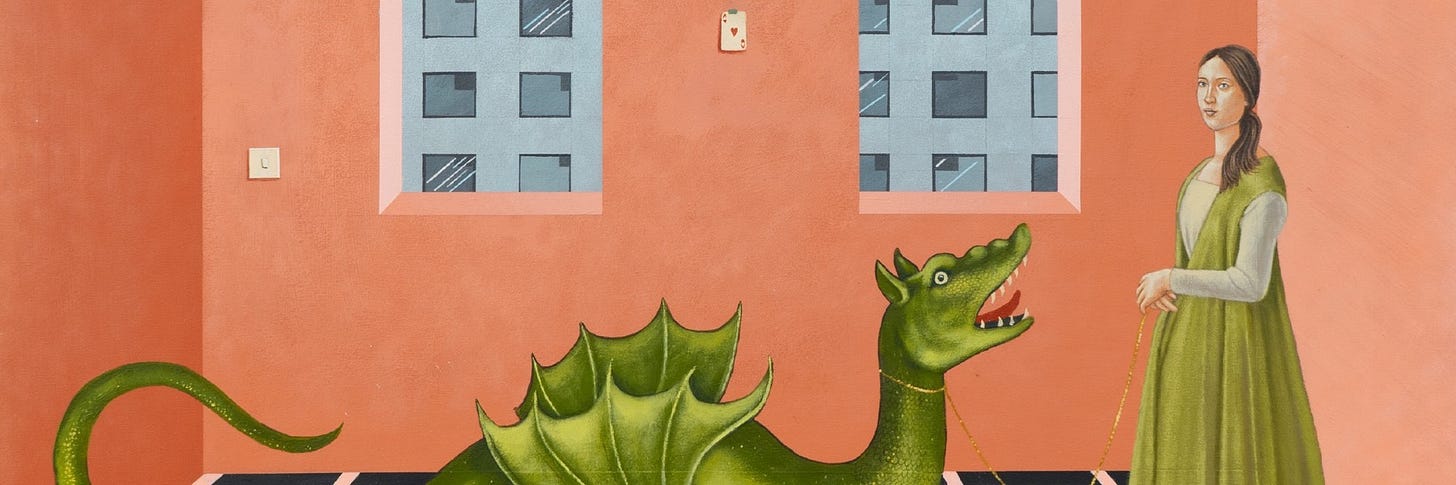
Let’s practice on this week’s artist recommendation! She’s so good and has a waiting list, but I’ve got the secret sauce…
Aniela Preston (b. 1998, Coventry, UK)
Picture this: You walk into an exhibition by an artist about whom you know nada. The images on the wall are at once familiar and foreign, whimsical and onerous, cheery yet eerie. What do you do? First, take a stroll around and drink it all in. Are there any recurring figures or symbols? Do you see a character show up in multiple compositions? What’s the color palette got going on? Do you feel uncomfortable? What makes you want to keep looking? How did the paint get to the substrate? Can you see the brushstrokes? Can you see piles, pools, or puddles of paint (impasto is the technical term) on the surface? Do the images remind you of anything else you have seen?


Here are my five thoughts:
- The architecture and compositions definitely have an Early Renaissance feel to them, when artists were just figuring out linear perspective, but here the perspective is amiss. It is like she wants you to think of Renaissance perspective but also recognize that this is not that. This is not an attempt to render the world as accurately as possible as we see it, but perhaps it is the world as we feel it, experience it, or dream it. This is not physical reality but the metaphysical, emotional, experiential, or internal reality.
- A lot of big cats. Why the big cats? They are not fearsome or aggressive here but symbolically they perhaps serve as a harbinger of danger.
- The hexagonal pool and the style of the lillies and trees in Veil of deception giving me major Ghent Altarpiece vibes. The Ghent Altarpiece is a masterwork by Jan Van Eyck, the Northern Renaissance master who taught us everything we know about minute detail. Why does she want me to go there??
- So many questions about the colors. Millenial pink e’er’where. I feel like I’m in Florida with all the turquoise and peach. But it’s working for me. I like the color palette because it feels calming in spite of everything else in the composition presenting a giant question mark.
- There are “bodies of water” in each painting— a tub, the blue rug and turquoise carpet, that maroon situation with a night cityscape in the far distance, the pool, the water and ship—and I feel like there is a thread here. Perhaps some aspect of environmentalism?
Ok, here’s the takeaway: Even when you know nothing about a work of art or an artist, you can start to identify details and make connections that will help you understand it. Some works evoke more questions than answers, and that is okay!
Aniela Preston graduated with her Fine Art BA at the University of Leeds in 2021 after completing her Foundation Diploma at Central Saint Martins. In 2022 she was selected as a finalist for the Ingram Prize, and most recently, she has been selected as a finalist for the Royal Society of British Artist’s 2023 Rome Scholarship. Aniela’s paintings blend the contemporary with the classical in a hyper-realist style, offering both quiet glimpses into intimate moments and gesturing towards wider societal, political and environmental issues. Her paintings, therefore, not only provide social critique but draw on the concept of traditional formality that mythologises the mundane. Painting primarily in acrylic, she hopes her paintings are not just aesthetic objects but rather invitations to consider the impact of our actions.
She has recently had solo shows at LUPO Gallery in Milan and Black White Gallery in London. Her work will be show at the Westbund Art Fair in Shanghai in November 2024. (Most of the paintings are already sold out! Let me know if you are interested and I can connect you with the gallery.) Aniela Preston will graduate from the Royal College of Art in 2025.
I'm tapped out at $5k but I really love some more expensive artists. HELP!
Casey Monda Art Advisory
I can help you solve this problem.
First of all, congratulations on joining the expensive taste club. We are a fun bunch! If you spend enough time around great art, you’ll soon notice that it can be difficult to set limits on how much you are willing to spend on a piece you love. But there is a budget. There is always a budget. If you have found an artist you love but just can’t afford one of their signature pieces, there are some workarounds…
- Consider purchasing a smaller work, a work on paper, a study, or a print (if the artist produces prints). Here is a gorgeous little ink drawing by Dora Maar up for auction next week and the starting bid is only $500…
- Watch charity auctions on Artsy. Many emerging artists will donate works to charity auctions to support causes about which they are passionate and to help gain exposure to art-loving audiences. There are often good deals to be had.
- Identify what it is about that artist that resonates with you and look for artists working along similar lines. Is it the theme? The colors? The artist’s story? This is a big part of what I do so feel free to ask for help.
- And I know you don’t want to hear this…but you could always save toward it. It’s good to set goals!
Here is 1 charity along with 4 artists who’s work sells for more than $10k (and in 1 case WAY more…) but their smaller works under $5k are just as wonderful, or might be even better, but definitely have something to offer…
Museum of Contemporary Art Detroit Benefit Auction
The auction is live now on Artsy and lots will start to close on October 28 at 12:00pm EDT. Here are some favorites:


Hank Willis Thomas (b. 1976, Plainfield, NJ)
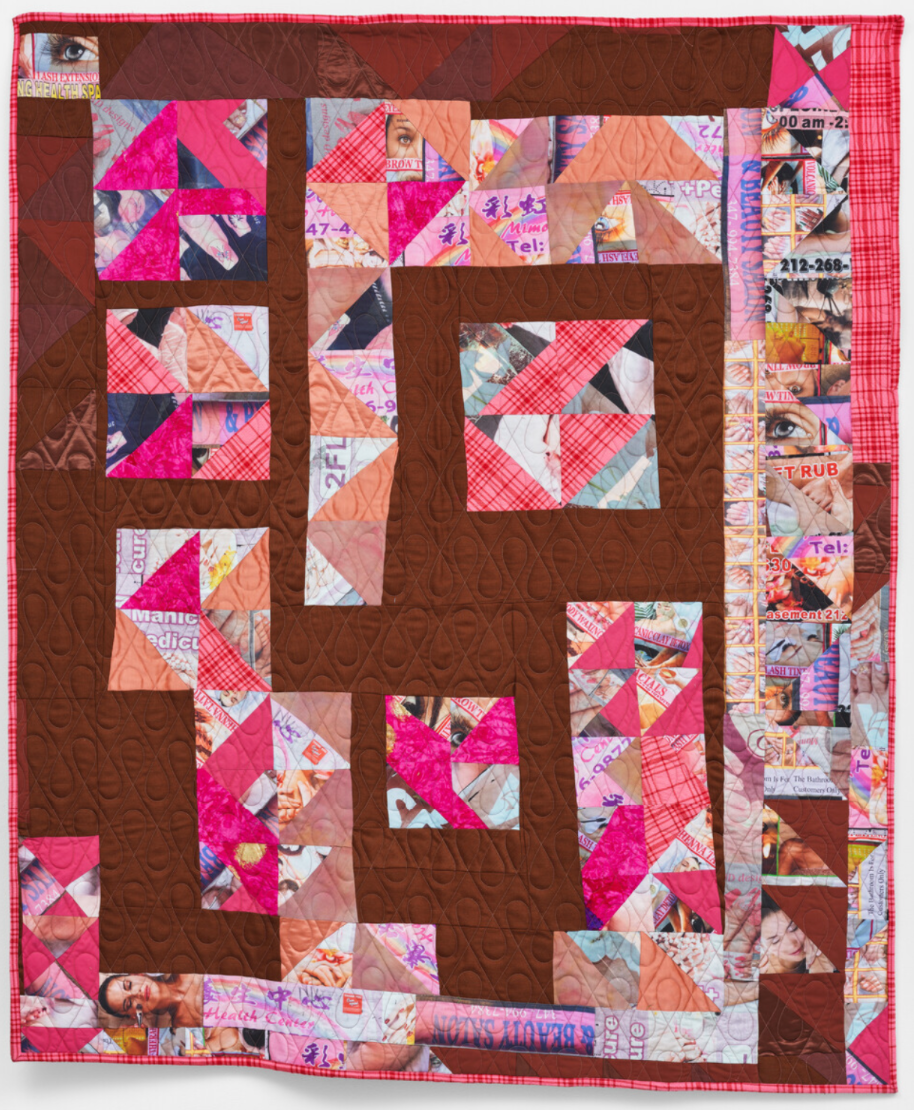
Yes, you read that right. THE Hank Willis Thomas of The Embrace in Boston Commons. His work, like his quilts and large sculptures, sells solidly in the 6 figures and he has blue chip representation but he has a print practice that makes his work really attainable. I typically am not drawn to overly political art, its just not my thing, but Hank’s elegant touch always gets me and I am so enthralled by his new series of monoprints (or as the studio is calling them, unique variations) that remind us all how important it is to protect our democracy. I like how the works can be read in a variety of ways and from multiple viewpoints, depending where on the spectrum the viewer falls politically. In the end, Hank reminds us that we all share a common goal and that is to protect our freedom. These are listed at $10,000 each, which falls slightly outside the scope of this newsletter, but they are too good not to share considering his work is often well into the hundreds of thousands. Here are 2 of the unique variations.


Gudmundur Thoroddsen (b. 1980, Reykjavik, Iceland)
I had the distinct pleasure of seeing Gudmundur Thoroddsen’s show at Asya Geisberg in September. It was one of those shows that I saw first from the sidewalk and it beckoned me in to the gallery before I even realized what gallery I was entering. Once I realized I was in Asya Geisberg, I was not surprised as I always love her program. But I digress. This show was a knock out and these works whether small or large have such visual impact on a space. The paintings, while abstract, give the viewer a true sense of the Icelandic landscape in all its oxymoronic glory. The jagged edges of cliffs meet the soft moss covered rocks. The volcanic lava flows butt against icy glaciers. The island itself was formed from nothing into something but the beauty of the country stems from the fact that it is so untouched. You literally get the feeling that no one has ever been there before. I felt all of this standing in front of these paintings. The show closes in a couple of days but here are a few favorites under $5k.


Harminder Judge (b. 1982, Rotherham, UK)
I had the distinct pleasure of meeting and sharing a meal with Harminder a few months ago in Cleveland. It was refreshing to hear him rave about our fair city, so I automatically liked him, but also hearing him talk about art was transcendent, much like his artistic practice, which is grounded in an extended exploration of pigmented plaster as an artistic medium. “His alchemical process involves layering pigments into pools of wet plaster. The plaster sets – freezing a record of its creation in time, and the surface is then worked, polished and slowly worn away to reveal layers of colour, texture and movement beneath. Culminating in expansive modular panels and ineffable shapes which seem to hover off the wall, colour, forms, and compositions are allowed to reveal themselves and intensify over time. The results are sensual and seductive, with surfaces appearing sleek and shimmering. They have an illusory quality, seeming to hover in front of the wall, suggesting depth, evoking the idea of a portal or doorway and inviting the viewer to stay with them in contemplation.” -from the artist’s CV and bio
Prices range from GBP 30,000+ for his most ambitious multi-panel works down to around GBP 4500 for the smaller panels and he is represented by London Gallery The Sunday Painter.

Saba Farhoudnia (b. 1987, Tehran, Iran)
Saba was born in the midst of war. Her paintings are monumental in scale and explore the challenges facing the human condition. Saba merges the art of drawing, painting, language, and verse, through brushstrokes, geometric forms, calligraphy, and gestural marks to evoke drama, pain, humor, and beauty. The forms are intended to plumb the depths of the grotesque and elevate the humor in beauty. Her work explores humanity poised on a precipice: facing an insecure present and an uncertain future. She is represented by Fou Gallery in New York.

So there you have it and this is just scratching the surface. It was hard to narrow it to just 4 artists to feature but stay tuned for more posts like this. And if you see something you like, let me know and I can share more details.
Unionized Art-Buying...Kind Of... and Text-and-Image Abstract Painting Actually Done Well
Casey Monda Art Advisory
More like collective buying power...but unionized sounds catchier!

Ever wonder why you walk into an exhibition and every single work already has a red dot? In the world of art, galleries like to make their best patrons feel very important. One way they do this is by offering exclusive access to new work by their artists before the rest of the lowly art-buyer-wannabes get to see it. Life ain’t fair, folks. If you patronize and support a gallery, they will love you back. This is one reason why having an art advisor behooves the novice buyer. An art advisor is basically a union rep for their whole clientele giving each client the collective buying power of the whole. That is certainly the case for my clients for a variety of reasons.
First of all, none of my clients are spending millions or even hundreds of thousands of dollars on art, nor do they have important last names (no offense y’all). And secondly, being new collectors, they have not necessarily found a gallery that they would want to patronize so heavily that they would gain exclusive access to previews. But when I combine the collective buying power of 10 to 15 clients, all of a sudden I gain access to everything they want on their behalf. See how that works?
The problem for me is that I have access to all of this incredible work that I would love to place, but with only 10-15 clients, not everything is for every taste. Honestly, this is the main reason I started this Substack. I am betting that there are TONS of would-be-art-buyers out there that do not even know this art exists, but if they did, they would love it, and they would buy it!
One such example is…
Heath Wae (b. 1989, Melbourne, AU)
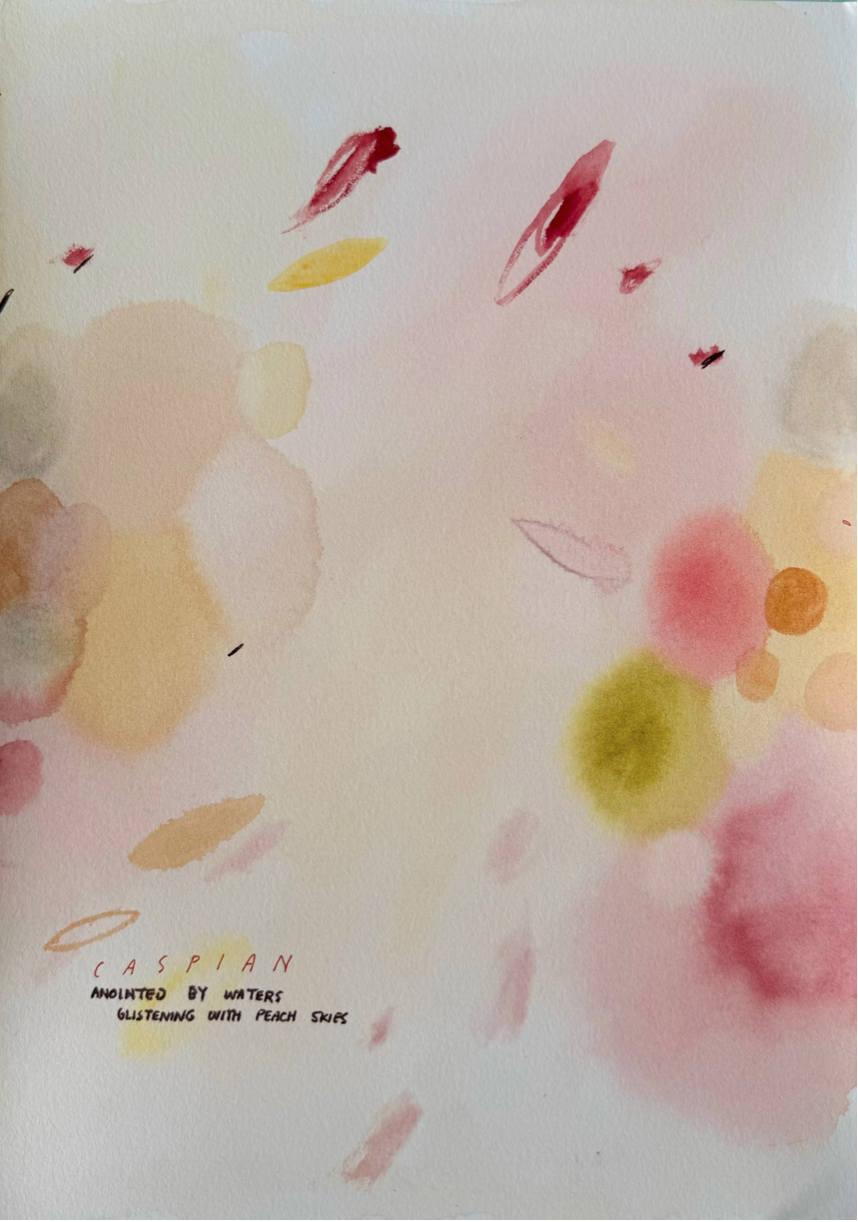
Yall, I love Heath Wae. And I really, really love his new body of work that is opening in a cool new show at London gallery The Dot Project on October 23. The Dot Project is dedicated to emerging artists and the next generation of collectors. Their mission and my mission are essentially identical so I love them.
Using text in art is really hard, like really, really hard. It can so easily get cheesy or cheap-looking. Sometimes, when done poorly, it just feels like the easy way out for an artist to get their message across to the viewer. But Heath Wae uses text to great effect, eliciting a particular feeling in the viewer but not necessarily answering any questions or making the work’s meaning more accessible. With his words and phrases, he sets up a framework within which the viewer can meaner and explore. More labyrinth and less road map.
I would really love to see this whole body of work (except the one that is already sold, of course) stay together and hung down a hallway or in a cluster…Somebody do it please!


What do you think? Do these totally transport you to a different time and place? Let me know where your mind goes!
Quickie Read: Jess Bosworth Smith
Casey Monda Art Advisory
On Tuesday evening, I unwrapped a new painting that we recently purchased from Shaheen Gallery’s exhibition of new work by Antwoine Washington. Maybe they have been groomed or maybe their excitement is genuine, but my sons love it when new art arrives. They have opinions on where it should go and why; and, it is the most fun to hear all about what they are thinking. After we settled on the fact that the painting really aligns most closely with my younger son and that it should hang in his room, we took it in there to figure out which wall. There is a lot of bright art in his room and this particular painting is also bright. I held it up and my older son declared, “That does not excite my eyes.” He is 7 and he was exactly right. When I asked him why it does not excite his eyes, giddy with glee that he had articulated his opinion so clearly and concisely. He observed that the colors in the new painting are too similar to the other work on the wall and so it all just gets lost.
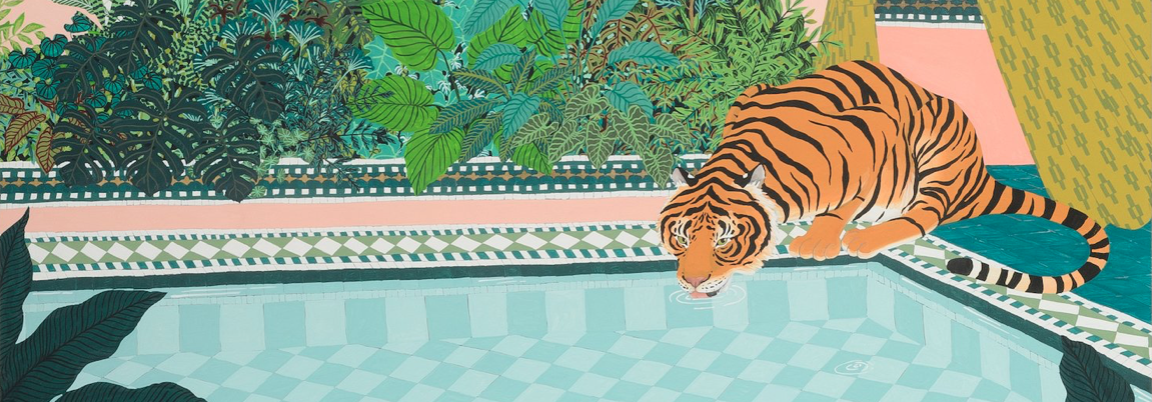
Exhibition promotional emails for 131 A Gallery’s current exhibition of Jess Bosworth Smith have hit my inbox a couple of times now and I like the work every time. Here is a favorite that happens to still be available.

Advertised price is R 38,000 or about $2100-2200.
I love 131 A Gallery’s program in Capetown, South Africa. They place emerging artists next to established artists and have a keen eye for high-quality work.
Have a great day!
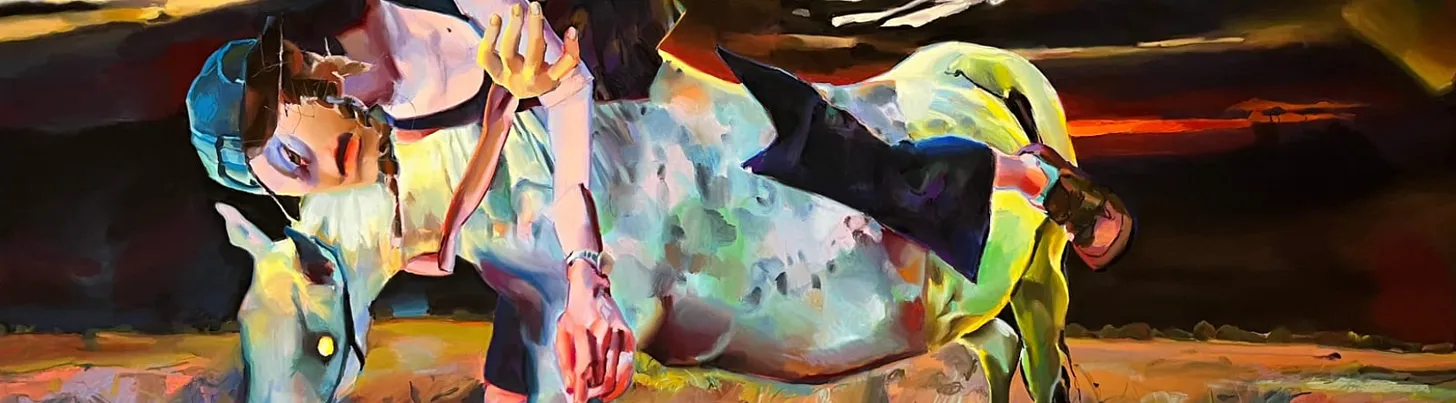
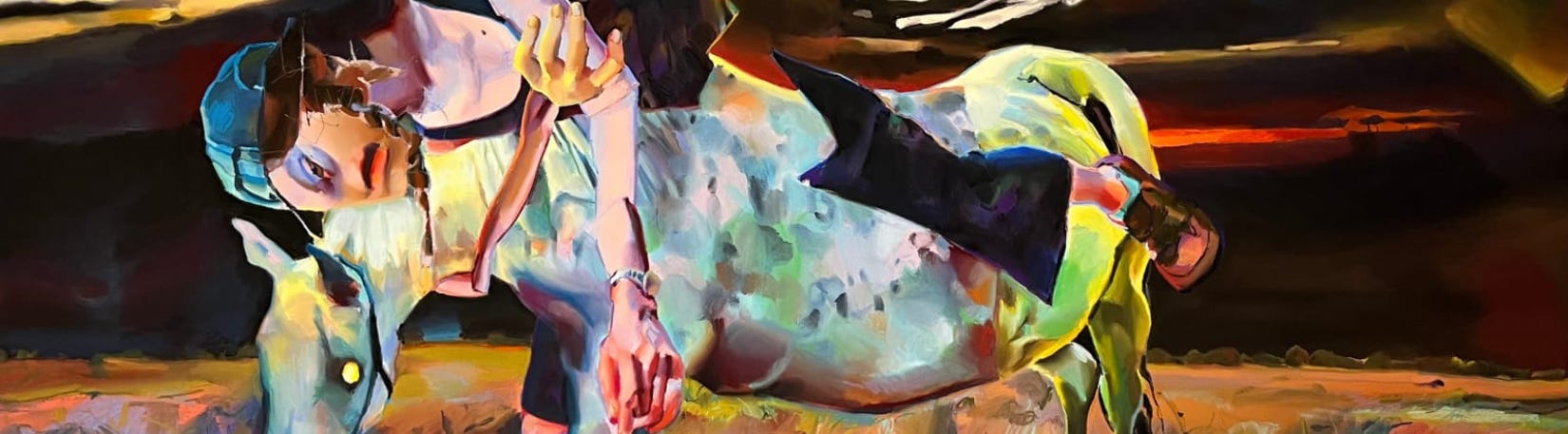
(Banner image: Jess Bosworth Smith, I’ve Got Better People To Leave on Read (detail), 2024, gouache on board, 118 x 87.5 cm)
City Feature: CLEVELAND
Casey Monda Art Advisory
Great art does not have to come from New York and LA
Yes, many of the great American artists live and work in New York City and Los Angeles. FACT. But, if you live in the middle of the country, aka not in one of the aforementioned coastal cities, you know that there are so many wonderful artists living and working across our great nation.
HOT TIP: NYC and LA costs of living are exorbitant so artists outside of these huge markets enjoy much lower COL, and thus their art is much less expensive, but often just as high-quality as what is coming out of the emerging market in NYC and LA. That was a run-on sentence but I don’t care. I digress.
So, let us turn our attention to CLEVELAND. Say it in an Oprah voice, “CLEEEVELAAAANNNDDD!!!”
Honestly, Cleveland is a really dang cool city. Unlike the radically dad-sounding previous sentence, Cleveland is dope and has lots of great, world-class, might I add, cultural institutions, including but not limited to the Cleveland Orchestra, Cleveland Museum of Art, Museum of Contemporary Art Cleveland, SPACES, Rock and Roll Hall of Fame, etc… While our big arts and culture organizations are fabulous, we have but just a handful of galleries in our small but mighty arts ecosystem. So many of the artists who live and work here have to seek representation outside the city or are independent.
But, we’ve got a guy. There’s always a guy, right? He has been in the art biz since he could crawl and knows everyone, like everyone, in the art world. And he has a phenomenal gallery that marries the best of our local talent with all-stars of the century like Alex Katz and Frank Stella. His name is Brett Shaheen. His gallery is Shaheen Gallery. And a few of the amazing local artists to whom he has introduced me and I am now sharing with you are:
Rose Haserodt


TR Ericsson

Neil MacDonald


Do you live in a city filled with amazing local artists? Let me know where you live and maybe I will feature your city next!
As always, thank for being here!
I Want Good Art But I Don't Know Where To Start and What Is An Emerging Artist Anyway?
Casey Monda Art Advisory
Spoiler Alert: Start here. And emerging = affordable.
Let me paint a picture for you and see if it resonates. You are in your mid-late thirties. You have recently moved into a big-kid house. The last vestiges of your first-apartment furniture and IKEA art have finally made it to the curb for garbage-pickup day. You are ready to buy real furniture (that withstands ketchup and greasy fingers, obvi) and some “good art.” The furniture piece is easy enough to find on your own. But the art, well that is another story.
You have some money to spend on said art, but not hundreds of thousands, or even tens of thousands of dollars. Where does one find GOOD art under $10,000, you ask.
HERE! RIGHT HERE! You did it. You solved the mystery. You came to the right place. Everything on this Substack will be under $10,000. I will bring my 16 years of experience in the art world and multiple art history degrees (yep, two of them. See, Dad, there IS commercial value in an art history degree!) to bring you the best art from around the world that is wallet-friendly, high-quality work that will stand the test of time. It will inspire you, challenge you, spark interesting conversations with your guests, and probably make your friends jealous. You’re welcome.
Subscribe to read on for my very first suggestion…
On my phone, in a secret (not really secret) folder, I keep a treasure trove of artists I love who are just hitting their stride. We call them emerging artists. It is difficult to define or categorize emerging artists. They are usually on the young side, but not always. They are usually relatively recent MFA grads, but sometimes they took time away after finishing school and are coming back to being a working artist. They probably have a few gallery shows under their belt, maybe a solo show. Perhaps they were in New American Paintings (a gold mine of emerging artists, btw. You should subscribe to the magazine and put them on your bookshelf if you really want to look like you know what you are doing.)
What emerging artists typically have in common is that they have found their voice and a visual language to communicate what it is they want to say. They have a few bodies of work that demonstrate both their technical prowess and thematic relevance; and the people who need to have started to notice them. And they are probably still starving, so we should support them.
If we are talking about artists in terms of investments, emerging artists are the venture capital gambles. Some will hit it big and be generation-defining. Some will make it enough to support themselves. And some will peter out into oblivion. But the work they are making now is awesome and worth buying because it resonates with YOU!
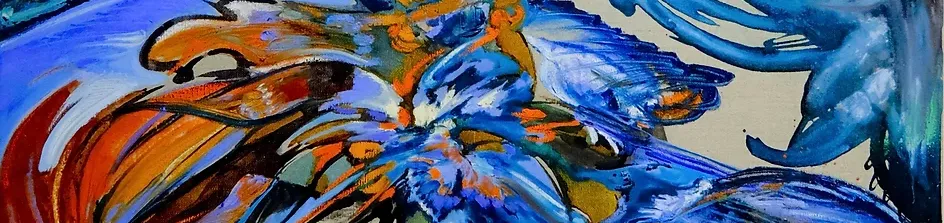
Let’s talk about Katherine Qiyu Su, for example, because a very smart client just bought one of her paintings and she is in the current exhibition Blue Hour at Phillips. Katherine was featured in the Annex at Half Gallery in New York in August 2024, her US debut, and had another solo show earlier in the year. She has been in quite a few group shows in London and Italy. She got her MFA in London in 2023. And she has something really interesting to say and a novel way of saying it. I LOVE it already! But let’s look:

Whoa! High visual impact, right?! Katherine’s work is all about the human experience with reality and memory. Where is the line between what we remember to be true, what we know to be true, and what actually happened? How do we trace these intangible memories? As someone who used to memorize her entire day’s worth of homework and never write a single thing down but now will forget to breathe if she does not write it down, this work really hits home. Here are a few more awesome paintings:


If I were standing in front of these paintings and knew nothing about them, here are five things I might say about them:
- I love her use of complementary colors to emphasize the contrast of her explosive brushwork. (Thanks grad school.)
- These intimate moments of line work punctuate the large sweeping swaths of color.
- The exposed bare linen demonstrates where we started and reifies the journey to this final frenetic composition.
- The composition is abstract but I feel like I am really looking at something. But I can’t put my finger on it. It’s like a word on the tip of your tongue.
- This painting makes me want to shift in to high gear and get $h*t done!
Katherine’s large canvases sell for about $8000-9000 and smaller ones (about 35×28 in) sell for under $5,000. I have access to a couple of available so hit me up if you’re interested!
#6 How Do I Develop Taste?
Casey Monda Art Advisory
Baby, you were born with it!
Congratulations! You’ve reached the final lesson in the Collecting 101 series. While this series cannot possibly cover all there is to know about the art world, I hope that it has given you a foundational understanding of art, its history, and how to build an art collection. Together, we can continue to deepen your knowledge, expand your comfort zone, and finesse your collecting skills so that you can enjoy a strong and personalized art collection for years to come.
Even now that you know where to buy art from, how it is priced, and the variety of art and artists available, you may wonder how on earth you even begin to decide what you want to collect. (Yes, it can be overwhelming!) This final lesson will suggest some questions to ask yourself as you explore.
I always encourage collectors to approach the task of developing their taste with an open mind. Have an open mind towards art that you do not initially understand, be willing to take a little risk, and also allow yourself to change your mind as you learn more about art, artists, and your preferences. And I’ll say it again – the best way to develop your taste is to look at a lot of art. In time, you will have a clear understanding of what your taste is and can collect accordingly.
Air kisses (we are tres chic), Casey
Questions To Ask Yourself

What Style of Art Am I Most Drawn To?
There are two distinct styles of artwork: abstract and representational. Abstract art does not accurately depict a visual reality but uses shapes, colors, forms, and gestural marks to achieve its effect. Representational art represents some aspect of reality, in a more or less straightforward way. While the distinction exists, artists often blur the line between the two, with abstract elements appearing in representational works and vice versa. As you look at art, pay attention to what style you are predominantly drawn to, however, by no means does your collection need to contain only one or the other!

What Do I Value Most in Art?
Each artwork contains various elements, from color, form, shape, and brushstroke to technical skill, materials, and emotion. Artists can be known for their mastery of one particular element, or excel at many, and understanding what is most important to you will help guide you in your selections. Ask yourself what you value most when looking at art. Is it an artist’s ability to render a scene exactly as it appears? Is it the emotional journey they take you on through vibrant colors? Is it how an artist expresses thoughts around a particular issue? Pay attention to how art makes you feel and think, and what affects you most strongly.

What Themes are Important to Me?
Art covers an unlimited range of topics and themes. Some artists boldly approach challenging subjects, while others focus on aesthetics. As you explore what you are drawn to, you can consider whether you would like your collection to follow one theme or incorporate a variety of themes. Do you want your collection to challenge you intellectually or for your art to complement a color scheme? (It can be both!) Would you like your collection to represent certain ideals, and what are those ideals? What kind of conversations should your collection spark? Some examples of themes currently trending in Contemporary art are environmentalism and sustainability, social justice, technological development, and the acknowledgment of previously unheard or unrecognized voices.

What Story Do I Want My Art to Tell?
Every art collection tells a story. Perhaps it is a story of your community, representational of local artists, landscapes, and identity. Or, maybe, it’s a story with a global perspective comprised of artwork gathered from memorable art experiences around the world. As you build your art collection, consider what story you would like to tell. Ask questions and have discussions – the more you do the more you will learn. And, above all, allow your personality and identity to inform your decisions and inject your collection with soul.
It might be daunting at first, but you will have a developed sense of taste in no time!
#5 How is Artwork Priced?
Casey Monda Art Advisory
Some of the most common questions I get asked by collectors who are starting to purchase art are about pricing. Why is one work of art more expensive than another? Who decides how much a work of art is worth? Is this work of art in front of me worth the price it is listed at?
This fifth lesson will outline many of the factors that go into pricing a work of art. The price of an artwork can be set by the artist, gallery, or art auction specialist; and, understanding how these prices are determined will help you better appreciate the work, materials, and techniques that go into creating art, the identifiers of a strong artistic career, and the intrinsic value of art (and artists) beyond what just attracts the eye.
I always recommend that collectors be wary when considering artwork, its value, and its price. It has been said that value informs price, but that price does not inform value, meaning that just because something is expensive does not necessarily mean that it is valuable. Pay attention to what speaks to you, what you find interesting, and those artists you admire or with whom you feel a connection. This will inform what is valuable to you, now and in the future.
Air kisses (:* :*), Casey
Ways That Artwork Is Priced

Size
Generally speaking, the larger the artwork the higher the price. Pricing based on size considers the amount and cost of materials used, as well as the time taken to complete the artwork. Some artists and galleries use a basic formula to price artwork comprising a set dollar amount based on the artist’s reputation (or sales history) multiplied by the artwork’s size in square inches.

Material, Technique & Visual Quality
Pricing can be influenced by the cost of the materials used. Sculptures made from bronze, for instance, often have higher prices due to the initial cost of raw materials (and perhaps even special tools needed to create the artwork). Pricing based on an artist’s technique can take into account the complexity of the technique (the more complex a technique the higher the price), or the popularity of a technique (how well-regarded is the technique and how long does it take to master?). Visual quality can be subjective, however, artwork with complexity, strong and/or balanced compositions, and originality are considered to be of higher value.

Artist’s Lifecycle
An artist’s reputation and the level of recognition they have received greatly contribute to how expensive an artwork is. Artists who command the highest prices have lengthy and consistent exhibition histories with notable galleries, artwork in permanent collections of museums and institutions, and published articles, essays, and reviews about them in scholarly journals and significant art publications. If you have a smaller budget, buying artwork from emerging artists can be a great opportunity to collect unique, strong, up-and-coming artists at lower price points.

Where the Artwork is Being Sold
Artwork purchased from galleries and art fairs has been priced according to the size of the work, the success of the artist’s most recent exhibition, and other notable and recent accomplishments, such as winning awards or museum exhibitions. Galleries try to price an artist’s work consistently and with an upward trajectory to support the artist’s career development. Auction houses price artworks using “auction estimates.” Auction estimates fluctuate more than gallery pricing due to changing buyers’ tastes, artist popularity, and art market cycles. The final price of an artwork at auction is ultimately determined by the winning bid.

Other Costs to Consider
When building an art collection with a particular budget, there can be additional costs on top of the artwork’s price to consider. These can include:
- Auction House Fees (Buyer’s Premium)
- Framing
- Shipping & Installation
- Insurance
- Conservation
- Storage
These additional costs vary greatly depending on the type of art you are collecting, and we can certainly discuss in more detail on a case-by-case basis.
#4 From Where Can I Collect Art?
Casey Monda Art Advisory
Everything you need to know about where to buy and why
With so many options to choose from it is hard to decide what you should collect, or even know what you like. The first step is to start developing your taste, and how you do this is by looking at a lot of art. Before too long preferences will begin to emerge, patterns will start to form, and you will also develop a clear idea of what you do not like! While you look at art, take your motivation(s) for collecting art into consideration – Do you want to be inspired? Do you want to be conceptually challenged? Are you decorating your home?
When it comes to deciding where to buy art from, you need to not only know what your options are but to understand what type of art is typically sold where. This knowledge (and me!) will help guide you in making collecting decisions based on your taste, your priorities, and your budget.
One immediate and important distinction is to understand the difference between the primary and secondary art market. Essentially, the primary market consists of artwork that is being sold for the first time, while the secondary market consists of artwork that is being re-sold. Primary market artworks come directly from the artist (emerging, mid-career, or established) and can be purchased from artist studios, galleries, art fairs, or online platforms. Secondary market artworks can have a more limited availability and value is determined by the success of an artist’s career and the sales history of comparable artworks. Secondary market artworks can be purchased from galleries, art fairs, online platforms, and auction houses.
With such a huge variety of artists and artworks available to collect from a huge variety of places, getting started can be overwhelming. By attending art gallery exhibitions, art fairs, and art auction previews, and by browsing online platforms and art & design magazines, you will begin to understand where you fit in the world of art collecting (and where the pieces destined for your collection are hiding out!)
Air kisses (we are who we are), Casey
Different Places to Buy Art

Art Galleries
Art galleries come in all shapes and sizes, and offer art from a wide variety of artists ranging from emerging artists to established “blue chip” artists. They most often present art in the form of exhibitions, curated around a particular artist, movement, or theme, and provide additional information such as artist biographies or press releases, which provide more context on the artist(s), artworks, and exhibition. Gallerists or gallery attendants are available to answer questions, talk more about the artist(s), and provide additional information on available artworks. Online platforms such as GalleriesNow or MyArtGuides.com can help you find galleries and current exhibitions in cities near you.

Art Fairs
Currently over 300 art fairs take place every year in cities all around the world. Essentially “art trade shows,” art fairs host hundreds of international galleries under one roof, typically for 3-4 days, and offer a great opportunity to take in a lot of art in a short amount of time. Each gallery presents an artist or group of artists in a “booth,” with many art fairs focused around a theme such as art on paper, Old Masters, prints, emerging artists, or Contemporary art. Each booth is attended to by representatives from the gallery, and sometimes the artist(s) themselves, giving you the chance to ask questions, discuss what you are seeing, and inquire about collecting available artworks.

Auction Houses
Auction houses may at first seem intimidating, particularly if you’ve seen high-society scenes in movies or read about record-breaking art sales in the headlines, however in recent years they have opened their doors to a wider audience, with almost 90% of artworks selling for under $10,000. Auction previews, typically on view for 1-2 weeks before an auction, are free to attend and give the opportunity to see a variety of artwork within a certain artistic style or movement, such as prints & multiples, design, photographs, Contemporary, or Latin American art, among many others. Well-known auction houses include Sotheby’s, Christie’s, Phillips, Bonhams, and Heritage.

Online Platforms
Discover art from the comfort of your own home! Instagram is a great resource for discovering art – start by following the profiles of artists and galleries that you like. There are also several online platforms for buying art. Gallery platforms partner with galleries and showcase artworks from all associated galleries on one site, making it an easy way to access a wide variety of style, type, and price point. Artsy.net and Platformart.comare two great examples. Artist platforms are websites where you can buy directly from artists, again exposing you to a wide variety including artists who may not yet be represented by a gallery. Some recommended artist platforms are Saatchiart.com and Singulart.com.

Artist Studios
Another, perhaps lesser known, place to buy art is directly from the artist’s studio. This becomes a possibility when you have a developed a relationship with an artist (or an art advisor who knows the artist) and can gain direct access to the artist and their studio. One benefit with this method is that you can avoid the extra fees associated with buying from a gallery, auction house, or online platform. Another is that it makes collecting art a more intimate and personal experience, offering the chance to better understand the artist’s creative process, the context in which they produce ideas, and their artistic vision.