
How To Evaluate Art Prices
All Access
This is the third in a short series building out the How to Collect section of the site. So far, we’ve covered how to talk to gallery staff and what’s different when you buy at auction versus a gallery. This time: how to evaluate art prices — or more specifically, the question almost everyone asks me, but rarely the one that’s actually stopping them.
In all my years of advising clients, I can count on zero hands the number of times someone walked away from a piece because they genuinely disagreed with the price. It happens, I suppose, but in my world, it’s extremely rare. Evaluating the price of a piece of art is one of those things that any art buyer should know how to do, but rarely is it the due diligence that’s going to stop someone from an acquisition. What actually stalls people, far more often, is the fear that they’re committing to loving this thing forever. We are very closely binding up money and emotion when we purchase a piece of art, so we have to reconcile both sides of the brain. It is a hard thing to do, but here are some pointers that will make it a little easier, especially for you new art buyers out there.
First of all, let us deal with the idea that one is marrying this piece of art before God and all the witnesses. You are not. To be perfectly frank, just like with any marriage, you will go through seasons of love and like with your art. Certain pieces will speak to you more or less in certain times of your life. AND THAT IS OKAY. The best art is capable of staying with you through thick and thin even if it is not always your favorite. Now, I understand the instinct to reach for a comforting answer here — something like, don’t worry, you can always sell it if you fall out of love. But, really, I’m not going to tell you that, because it isn’t reliably true. Art doesn’t always resell easily, and treating resale as your safety net is a bad way to make a purchase you might regret. So if that’s not the answer, what is?
Here’s what I’ve noticed, watching people buy art for years: the price-and-permanence anxiety is almost always at its worst when someone is buying to fill a wall, or because they’ve been told it’s a smart investment. When the work is chosen for those reasons, there’s no real pull holding steady against the fear, so the fear wins, and the price becomes the thing people fixate on instead of naming what’s actually bothering them. But when a piece genuinely resonates — when you can’t stop looking at it, when you keep thinking about it after you’ve left the room — the price stops being the obstacle. It’s still a real number, but it isn’t the thing standing in your way anymore.
Recognizing resonance in yourself is a skill, and like most skills, it gets better with practice, a concept I’ve written about before. That’s part of why starting with smaller, lower-stakes pieces is a genuinely good strategy, not a consolation prize for people who can’t afford more. Buying a few modest pieces and paying attention to how you feel about them six months later teaches you more about your own eye than reading about art ever will.
So let’s actually get practical about it. “Trust your gut” is true to some extent, but it’s not useful on its own, and if you’re going to trust your gut, you should at least understand what you’re looking at.
What Actually Shapes A Price
Medium and materials. A unique work — an oil painting, a one-off sculpture, a work on paper that exists as a single object — is priced differently than something produced in multiples, like a print or an edition. Materials matter too: bronze costs more to produce than paper, and that cost is reflected in the price regardless of the artist’s reputation.
Scale. Larger work generally costs more, but not in a straight line. A piece twice the size of another isn’t automatically twice the price — scale interacts with material cost, studio time, and how ambitious the piece was to make. Price per square inch is not a complete myth but it is not always the whole picture.
Edition size, if relevant. A unique work and a limited edition print by the same artist will price very differently, and within editions, size matters too — a print from an edition of 10 will typically cost more than if the same image were from an edition of 250, because scarcity is part of what you’re paying for.
The artist’s career stage. Where an artist is in their career — just out of an MFA program, mid-career with steady gallery representation, or well-established with a long exhibition history — shapes price more than almost anything else. This isn’t about talent; a very talented emerging artist will still price lower than an established one, because price reflects market position and history, not just skill. This means that at our end of the market, the early, emerging end, we have to be expert quality sleuths (this is exactly what the four-part How to Know If It’s Good framework is for) because we won’t have the market signals to tip us off.
Gallery reputation and overhead. The same caliber of work can cost more at a well-known gallery than an emerging one, and that’s not necessarily inflation. Established galleries have higher overhead, deeper relationships with institutions and collectors, and often a longer track record of building an artist’s market, all of which factors into how they price.
Comparable sales, when they actually exist. If you’re evaluating a price, looking at what similar work by the same artist has sold for can help, but proceed carefully here, especially with younger artists. As I wrote in the last post, an artist needs a real body of sales history before comparables mean much of anything. One or two early results, especially at auction, can be misleading rather than clarifying.
None of this replaces the first part of this post. Learning how to evaluate art prices is genuinely useful, and it’ll make you a sharper, more confident buyer. But the harder question was never really “is this priced fairly.” It was “do I actually want this, or am I trying to solve a different problem — a blank wall, a sense that I should be collecting, a fear of getting it wrong.” Once you know the answer to that, the number tends to matter a lot less than you thought it would.
Next up in this series: building a collection with a point of view — because once you know how to buy well, the next question is what you’re actually building toward.

Buying Art at Auction vs. Gallery: What Actually Changes
All Access
This is the second in a short series building out the How to Collect section of the site. Last time, I talked to gallerists about what actually makes people uncomfortable walking into a gallery. This time, I’m digging into buying art at auction vs. gallery — the two very different worlds I’ve spent my career moving between, first at Christie’s and Hindman, now as an advisor.
My first auction at Christie’s, I was the low person on the totem pole, which meant I spent most of the day in an office answering phones, nowhere near the saleroom. But at some point I snuck down to watch, just for a few minutes, and the bug bit me instantly. I remember standing in the back, watching the auctioneer work the room — teasing out one more bid, letting the silence stretch just a beat longer than felt comfortable, the whole room holding its breath waiting to see if someone would raise their paddle one more time. I was hooked before I ever held a paddle myself.
Years later, I’ve sat in both seats — on the phone relaying a client’s bids into the room, and bidding myself on behalf of someone else. There’s real strategy to it, knowing when to come in, when to hold, when the other bidder is bluffing and when they’re not. And when it works, when you get the piece, it feels like you won, even though it was never yours to keep. That adrenaline — the “are we going to get it, are we not” — is one of my favorite feelings in this entire industry.
I bring all this up because I think auctions have an image problem. People assume it’s cold, or exclusive, or something you need credentials to even walk into. In my experience, it’s the opposite. It’s one of the most thrilling, alive corners of the art world, and it’s open to more people than they realize.
Primary vs. Secondary Markets
Before we get into any of it, there’s a distinction that new collectors don’t even know they need to know, but once you understand it, everything else about buying art starts to make more sense: the difference between the primary market and the secondary market. The primary market is the first sale — buying directly from the gallery representing the artist, work that has never changed hands before. The secondary market is everything after that. Most people think of auction when they hear “secondary market,” and that’s usually right, but a private resale through a gallery counts too. The distinction isn’t about where you’re buying. It’s about whether the work is entering the market for the first time or circling back through it.
When Auction Records Matter
Here’s where it gets genuinely tricky, and where I think a lot of new collectors get misled without realizing it. Auction houses (the big kahunas are Christie’s and Sotheby’s, but where new collectors and most AISAL readers will spend most of their time are places like Freeman’s, Heritage, or maybe Bonham’s) regularly run sales of what the industry sometimes calls “wet paint”: work by young, still-actively-producing artists that has already found its way to auction, sometimes just a year or two after it left the studio. On paper, that looks like validation. In practice, it can be a trap. An artist needs a critical mass of auction lots — enough sales, over enough time — before that history actually tells you anything real about value or trajectory. One or two early auction appearances for a young artist don’t establish a market. They’re often just an early collector deciding to flip a piece, sometimes at a price that has very little to do with what the work is actually worth.
This matters because I’ve watched new collectors fall into one of two versions of the same mistake. Either they see no auction record at all for an artist and assume that means the work has no value — when in reality, the artist might just be too early in their career for auction data to exist yet, and that’s normal, even a good sign. Or they find a single auction result, priced well under the gallery price for similar work, and conclude the artist is overvalued — when what actually happened is the work simply wasn’t ready for the secondary market yet, and one anomalous, undervalued sale doesn’t reflect anything meaningful.
Auction records become a genuinely useful tool at the other end of a career — for artists who’ve been producing for decades, or who’ve stopped producing entirely because they’ve died. Frank Stella and David Hockney, both gone in recent memory, are good examples: enough sales, over enough years, that the data actually says something. If you’re looking at an artist like that, auction history is worth your attention. If you’re looking at someone still in their thirties with three lots to their name, it mostly isn’t.
And one other scenario that bears mentioning here is the one in which work by relatively young, emerging artists starts appearing at auction because unscrupulous collectors buy it on the primary market and then turn around and flip it within a few years. This type of speculative buying can tank a young artist’s career with unsustainable price increases in a very short period of time. In short, it is a bubble. When that bubble bursts, it can burn an artist for good. It happened a lot around COVID and it is really sad to watch. Nowadays, many galleries ask buyers to sign agreements that they will not participate in this kind of activity. There is no faster way to get blackballed from the art world…
Auction Previews
The other myth I want to take apart, to bust if you will, is the idea that auction previews are somehow closed to you — that you need credentials, or a paddle, or some kind of insider status just to walk in and look. You don’t. Auction previews are open to anyone, the same way a museum is, and they’re honestly one of the more exciting things you can do with an afternoon if you love art. You’re looking at work that’s been in private hands, and is very likely about to go back into private hands, sometimes permanently, or at least for your lifetime. And you can usually get up very close, like in a way that would get you kicked out of a museum. It’s a rare window.
Buying At Auction
If you’re actually thinking about bidding, the weeks leading up to a sale are exactly the time to start asking questions. And you should. I asked someone who’s spent years working the specialist side of smaller and mid-tier auction houses what the biggest misconception is, and her answer was immediate: people think they’re not allowed to ask. The opposite is true. If you see a lot you’re interested in, reach out to the specialist in charge of that department. Ask for a condition report — the document specialists prepare noting any damage or issues with the piece — and don’t be embarrassed to ask what a term means if the language is unfamiliar; condition reports can get technical fast. Ask for more images if the catalog photos aren’t enough. If you’re able to, go see the work in person before you bid. And build a few practical numbers into your thinking before you ever raise a paddle:
- the buyer’s premium, which everyone pays, is non-negotiable, and needs to be factored into your bid from the start, not treated as a surprise afterward.
- Factor in tax as well.
- And get a real sense of shipping costs. Some houses will help you estimate, others expect you to approximate the size and weight yourself and get your own quote. Either way, don’t let it be the thing you forgot to think about until after you’ve won the lot.
(Pro tip: You can’t just not pay for something and think there won’t be consequences. It is very, VERY hard to cancel a sale. You will likely be barred from bidding in the future if you refuse to pay and a sale is cancelled. So know your numbers before you raise that paddle.)
Buying at a Gallery vs. Auction: Real Differences
Buying at a gallery works differently, and it’s worth understanding those differences rather than assuming gallery is simply the calmer, less intimidating option. Here are a few key differences:
- Gallery prices are typically fixed, or lightly negotiable in private (set by the gallery in consultation with the artist), while an auction price is genuinely unknown until the hammer falls, shaped by an estimate but never bound by it. Galleries don’t charge anything comparable to a buyer’s premium, but that doesn’t automatically make gallery buying cheaper; the cost structures are just different, not tilted one direction.
- Relationships matter on both sides, in different ways. A strong relationship with an auction specialist can open real doors. Specialists often know everyone relevant to their department, from museum directors to curators to gallery owners, and a deep enough relationship means they can vouch for you as a good collector within that world. Gallery relationships build differently, often closer to the artist directly, sometimes leading to studio visits or first access to new work. Galleries will also sometimes offer payment plans, especially for a client they’re building a relationship with, while auction houses generally expect payment in full within a set window, often seven days.
- And provenance — the documented ownership history of a piece — can actually go either direction. At auction, you may get limited information, and the seller’s identity is often not disclosed at all. At a gallery, particularly with a “wet paint” artist whose work is coming straight out of the studio, you might get full transparency, and there’s a real chance you’d be the very first owner the work has ever had — something auction essentially never offers.
None of this is about deciding gallery or auction is the better path. They’re just different systems, with different information available to you, different costs, and different kinds of relationships behind them. The real barrier was never expertise. It was not knowing what you were allowed to ask.
Next up in this series: how to actually evaluate a price — because knowing the market is only half of the equation.
How to Talk to Gallery Staff (According to Gallerists)
All Access
I was in New York this week, flying through as many galleries as possible in a single day with my intrepid Viewing Rooms partner, Anne Parke. We hit, among many others, Harper’s 3-artist show, Boesky’s summer group show, Fredericks & Freiser, Susan Inglett Gallery, Morgan Lehman, Silke Lindner, Jane Lombard Gallery, and Shrine. Somewhere around gallery three, I started wondering what gallerists actually think when new visitors walk in the door, like how to talk to gallery staff. I put the same question to a few different gallerists: what is the most annoying thing people say when they walk in? And what makes you want to have a real conversation?
I expected a list of etiquette sins. What I got was more interesting than that.
The small stuff came first, and it was actually funny (and very surprising to me!) in how consistent it was. Don’t assume the person who greets you and tells you about the show is the artist. Literally, this was the first thing all three gallerists said. Who knew this was the most common obnoxious question gallerists get?! As one gallerist put it to me, half-laughing: “it’s not like some county fair tent!”
The third gallerist I talked to, who happens to be one of my favorite Chelsea gallerists as well, walked me through the whole tell of a first-timer. Obviously, the artist question is a dead giveaway. But then you have the assumption a group show with five wildly different painters is somehow all one person. Then there’s the guessing that anything good in the room must be a name they already know, a Basquiat sighted in the wild. And finally there’s the whispering. People walk into galleries like they’ve entered a library, or a church. Ha!
None of this, he told me, actually bothers him. Newness doesn’t. What he said next is the part that matters.
The thing that genuinely annoys gallerists, it turns out, has nothing to do with sophistication. It’s bad faith. Collectors who know exactly what they’re doing and choose to behave badly anyway — complaining about paying tax, or refusing to, as if it’s optional. Renegotiating terms after a deal is already made, after the invoice is sent. Dragging their feet on payment for weeks, sometimes longer. “The great thing about unseasoned collectors,” he said, “is that they pay right away.”
Sit with that for a second, because it undoes the exact fear that keeps most people out of galleries in the first place. The worry is always some version of: I’ll ask a stupid question, I’ll say the wrong thing, I’ll out myself as someone who doesn’t belong here. But that isn’t what actually irritates the person behind the desk. A sincere, uninformed question doesn’t cost anyone anything. Bad faith does. Gallerists have a genuinely high tolerance for not knowing — what they don’t have patience for is people who do know better, acting like the rules don’t apply to them.
So if you’re the person standing outside a gallery window trying to decide whether you’re allowed to go in: you are. And here are a few conversation starters and pro tips:
Ask who the artist is if you’re not sure who’s who. Just reframe “Are you the artist?” to “Who is the artist?” That simple question tees up the gallerist perfectly to give you their spiel. They have it down pat. Trust.
Ask what drew the gallery to this artist.
Ask if the gallerist has been to the artist’s studio.
Read the writing on the wall before asking if all the work is by the same artist. Like, literally, the gallery will have text ON THE WALL usually in large lettering that tells you the name of the exhibition, the artist’s name, and some information about the show.
Ask the price point or price range, plainly, the way you’d ask at any shop. But not first. This is a totally fair question and helps everyone involved understand if you are just an art-curious visitor looking at great work or a serious buyer. Neither is bad or wrong. But don’t lead with this question. Demonstrate genuine interest in the practice first. Whether you are there to look or actually buy, your first order of business is to learn about the artist. You want to do that either way.
An artist’s show is an exhibition, not an exhibit. We exhibit dinosaur bones. We show artist’s work in an exhibition. Maybe it sounds petty, but the art world is stereotyped as snobs for a reason. We are who we are. Just roll with it.
Talk at a normal volume. I mean don’t scream, but you can just talk to the gallerist like you are talking to a friend.
Honestly, you are not going to be the most annoying person who walked through that door today, and you are extremely unlikely to be the least welcome. The bar is lower than you think, and it was never about how much you already knew.
Next up in this series: what actually separates buying from a gallery and buying at auction — because the etiquette isn’t the only thing that’s different.
How to Know If It's Good, Part 4: Relevancy
All Access
This is the fourth and final post in a four-part series on the framework I use to evaluate whether a work of art has staying power. If you missed Part 1 on Intentionality, Part 2 on Novelty, or Part 3 on Self-Awareness, start there. And if you missed the introduction — When Is the Last Time You Bought Something That Will Outlast You? — that’s a good place to begin.
In the fall of 1807, Jacques-Louis David finished a painting that had taken him nearly three years to complete. The Coronation of Napoleon is massive — thirty feet wide, twenty feet tall — and it depicts a specific moment from a specific ceremony that had taken place at Notre-Dame Cathedral on December 2, 1804. Napoleon, who had crowned himself Emperor minutes earlier, is placing the crown on the head of Empress Joséphine. The Pope, who had traveled from Rome specifically to perform the coronation, sits behind them, watching.
Except that isn’t quite what happened. Napoleon did crown himself — that part is accurate. But David, working under Napoleon’s direct patronage, made choices. He moved figures. He softened the Emperor’s posture into something chivalrous. He painted in attendees who were not present and erased others who were. He included himself in the upper gallery, sketching the scene. The painting is meticulous and enormous and based on a real event, and almost none of it is documentary.
What makes the painting matter two hundred years later has nothing to do with its accuracy as a historical record. It matters because of everything David had to do to make Napoleon look the way Napoleon needed to look — because of the gap between what happened and what was painted, which tells you more about power and propaganda and the anxiety of a new empire than any factual account of the ceremony ever could.
That gap is relevancy.
What Relevancy Is
Relevancy is the fourth and final criterion in my framework for evaluating whether a work of art has staying power, and it is the most misunderstood of the four — mostly because people assume it means art about current events.
It doesn’t. Art about current events is journalism. Journalism is valuable, but it isn’t the same thing as art, and conflating the two is one of the fastest ways to build a collection that feels urgent right now and dated in ten years.
Relevancy, as I mean it, is this: does this work tell us something about how people feel about the world they’re actually living in right now? Not what happened. How it felt to be inside it. The texture of the moment — the fear, the grief, the longing, the confusion, the specific quality of consciousness that belongs to this particular time and no other.
A mural of George Floyd on the side of a building commemorates a man and marks a moment. That is meaningful and it is not nothing. But it doesn’t necessarily tell us how a particular group of people experienced what happened — the event itself, the aftermath, the fractures it exposed, the hope and rage and exhaustion that lived inside it. The work that captures that is doing something different. It is leaving a record not of what occurred but of what it felt like to be alive when it occurred, and that record compounds in value over time rather than depreciating.
Here’s the other thing about relevancy, and it’s the part that surprises people when I say it: it has absolutely nothing to do with pedigree. A Yale MFA and a Gagosian show cannot manufacture urgency. Neither can a museum acquisition or a glowing review in Artforum. An artist can check every box the institutional art world has invented and still be making work that is beside the point of what’s actually happening — accomplished, self-aware, intentional, novel, and fundamentally uninterested in the world outside the studio. And a self-taught artist with no gallery representation and no institutional trail can be making work that is so precisely, undeniably of this moment that standing in front of it feels like being handed a mirror. Relevancy is the criterion that democratizes the framework. You cannot fake it and you cannot buy it.
The Counterargument
The obvious objection is this: doesn’t every era believe its own art is relevant? Aren’t we always too close to the present moment to know what will last?
Yes. And that’s exactly why relevancy is the hardest criterion to evaluate and the most important one to try.
The test isn’t whether the work is about something that’s in the news. The test is whether it captures something true about human experience as it’s actually being lived right now — something that future viewers will recognize as a record of their ancestors’ consciousness, the way we look at David’s Napoleon and understand immediately what that court needed to believe about itself. Work that does this tends to be less about events and more about interiority. Less about what happened and more about what it meant to the people it happened to. Less documentary, more psychological. That’s the quality worth looking for.
LaKela Brown
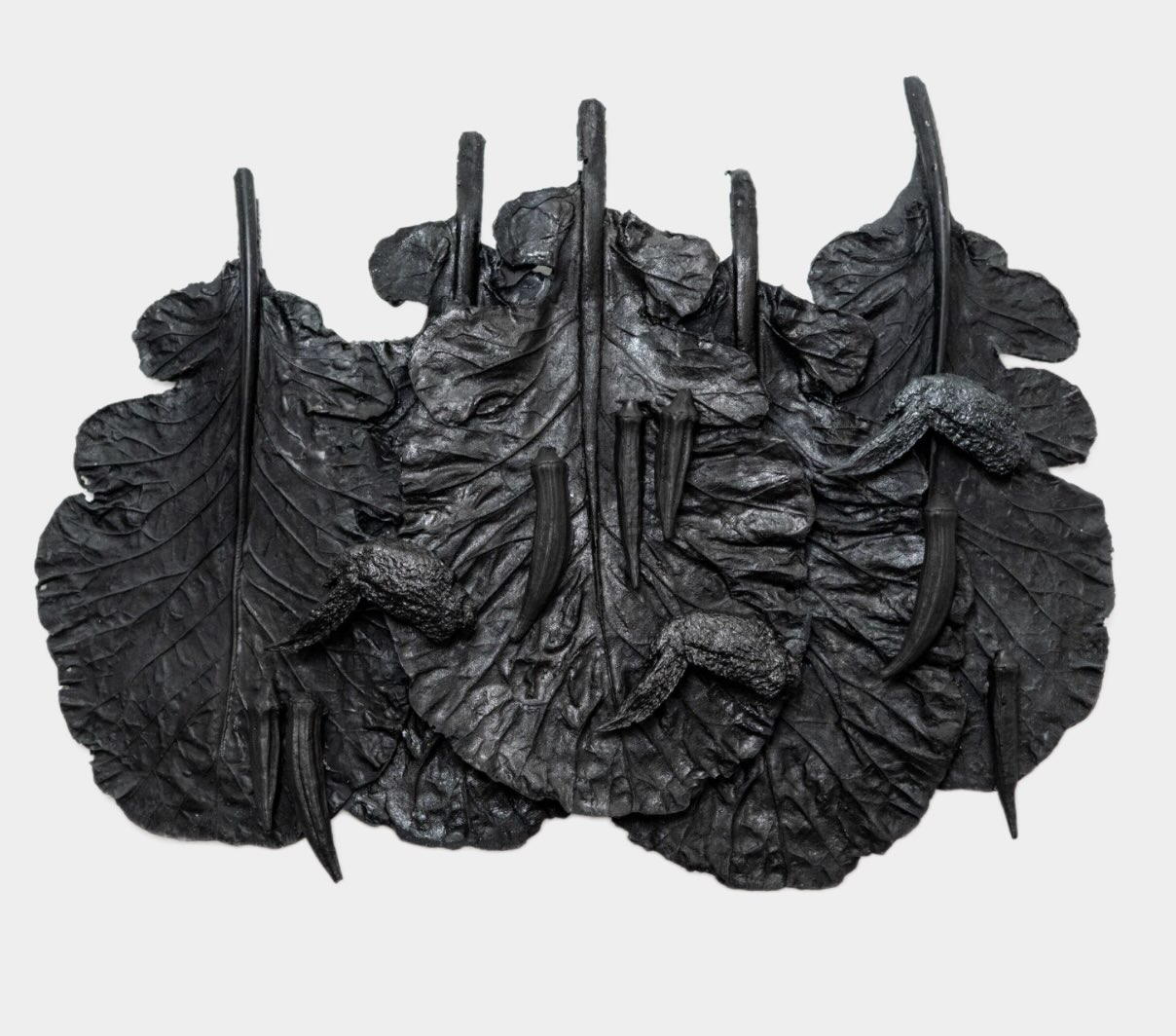
LaKela Brown makes plaster reliefs. Door-knocker earrings. Rope chains. Culinary plants and ancestral foods. Objects that carry enormous cultural weight rendered in a material that is simultaneously monumental and fragile, permanent and ghostly.
Her work is in the permanent collections of the Museum of Fine Arts Boston, The Studio Museum in Harlem, and the Mint Museum. The institutional pedigree is serious. But the pedigree isn’t why her work is relevant — it’s confirmation of something the work was already doing on its own.
What Brown is making is a record of how Black American culture understands itself right now — the pride and the inheritance, the insistence on being seen, the line she draws between 1990s hip-hop iconography and West African ethnobotany. The door-knocker earrings aren’t a nostalgic gesture. They’re a statement about what gets passed down, what gets dismissed, and what gets reclaimed. Standing in front of one of her reliefs, you understand something about how Black Americans inhabit their own history that no amount of news coverage could tell you. The work doesn’t document a moment. It records the feeling of living inside one.
That is relevancy at a high level. The signals confirmed it. The signals did not create it.
Maysey Craddock
Maysey Craddock works in gouache and thread on found fabric — old grain sacks and worn textiles that have their own history before she ever touches them. Her landscapes are atmospheric and elegiac: marsh grasses, waterways, fragile ecosystems rendered in materials that are themselves evidence of time passing and things wearing out.
Her work isn’t about climate change as a news event. She is not making infographics in paint. What she is making is a record of what it feels like to be a living thing inside a fragile world — the particular quality of attention you develop when you understand that the landscape you’re looking at may not be there in a generation. There is grief in her work, and there is also something that resists grief, some insistence on looking carefully at the beautiful and the precarious and the passing. That combination — the elegy that refuses to stop paying attention — is exactly what it feels like to be an environmentally conscious person alive right now.
Craddock represents what relevancy looks like when there are no obvious signals pointing you toward it. The work isn’t politically loud. It doesn’t announce its urgency. But it is leaving a record of this moment — of what humans in the early twenty-first century understood about their relationship to the natural world and how they felt about what they were losing — that will matter to people looking back on it a hundred years from now.
The Strategic Collector and the Pedigree Trap
If you’ve taken the collector type quiz and discovered you’re a Strategic Collector, relevancy is your natural criterion. You’re wired to seek out work that has something urgent to say — work that is in conversation with the world, that reflects the moment, that will be understood by future historians as meaningful to its time.
And here’s the thing: you’re often right. The signals the Strategic Collector follows — institutional validation, critical attention, major gallery representation — frequently do point toward genuinely relevant work. LaKela Brown is a perfect example. The research and the work arrive at the same place and confirm each other.
But pedigree can confirm relevancy. It cannot replace the act of looking for it. The Strategic Collector’s trap at this criterion isn’t getting the evaluation wrong — it’s outsourcing the evaluation to signals and then mistaking confirmation for discovery. An artist making genuinely urgent work doesn’t need institutional permission to be doing it. The most relevant work often arrives before the apparatus has any idea what to do with it. If you’re only willing to recognize relevancy after someone else has recognized it first, you will always be reading yesterday’s record of how people felt rather than being present for the making of today’s.
The Strategic Collector who trusts their own response to urgency — who is willing to feel the mirror before the museum hangs it — is capable of building something extraordinary.
The Practical Question
When you’re standing in front of anything and trying to evaluate relevancy, the question worth asking is: does this work tell me something true about what it feels like to be alive right now?
Not: is this about something important? Importance is easy to fake. Not: does this reference current events? Events are the surface. The question is whether the work has captured something interior — something about how people actually experience the world they’re in, what they’re afraid of, what they’re reaching for, what they understand about their moment that they couldn’t have understood in any other moment.
You don’t need to be able to articulate it. You just need to feel it. The work that has genuine relevancy tends to produce a specific sensation: the feeling of being seen. Not you personally, necessarily, but the time you’re living in — as if the artist looked directly at this moment and found a way to hold it still long enough to hand it to you.
That’s the test. And when a work passes it, you’ll know — not because someone told you, but because you felt it first.
What The Framework Can't Teach You
There is something the four criteria together point toward that none of them can fully name on their own, and I want to try to say it before we’re done.
The best art is always simultaneously singular and universal. Particular and general. Irreducibly one person’s vision — one set of obsessions, one way of seeing, one life’s worth of specific experience — and somehow, inexplicably, also about everyone.
I felt this in the Picturing Motherhood exhibition at the Cleveland Museum of Art several years ago. It was one of the best topical exhibitions (as in not an exhibition about a specific artist, group of artists, or geographical region) I have ever seen because it hit on the singular and universal aspects of what it means to be a mother. Visitors became immersed in each artist’s unique experience, but also saw themselves in some way in those stories. It was incredibly moving.
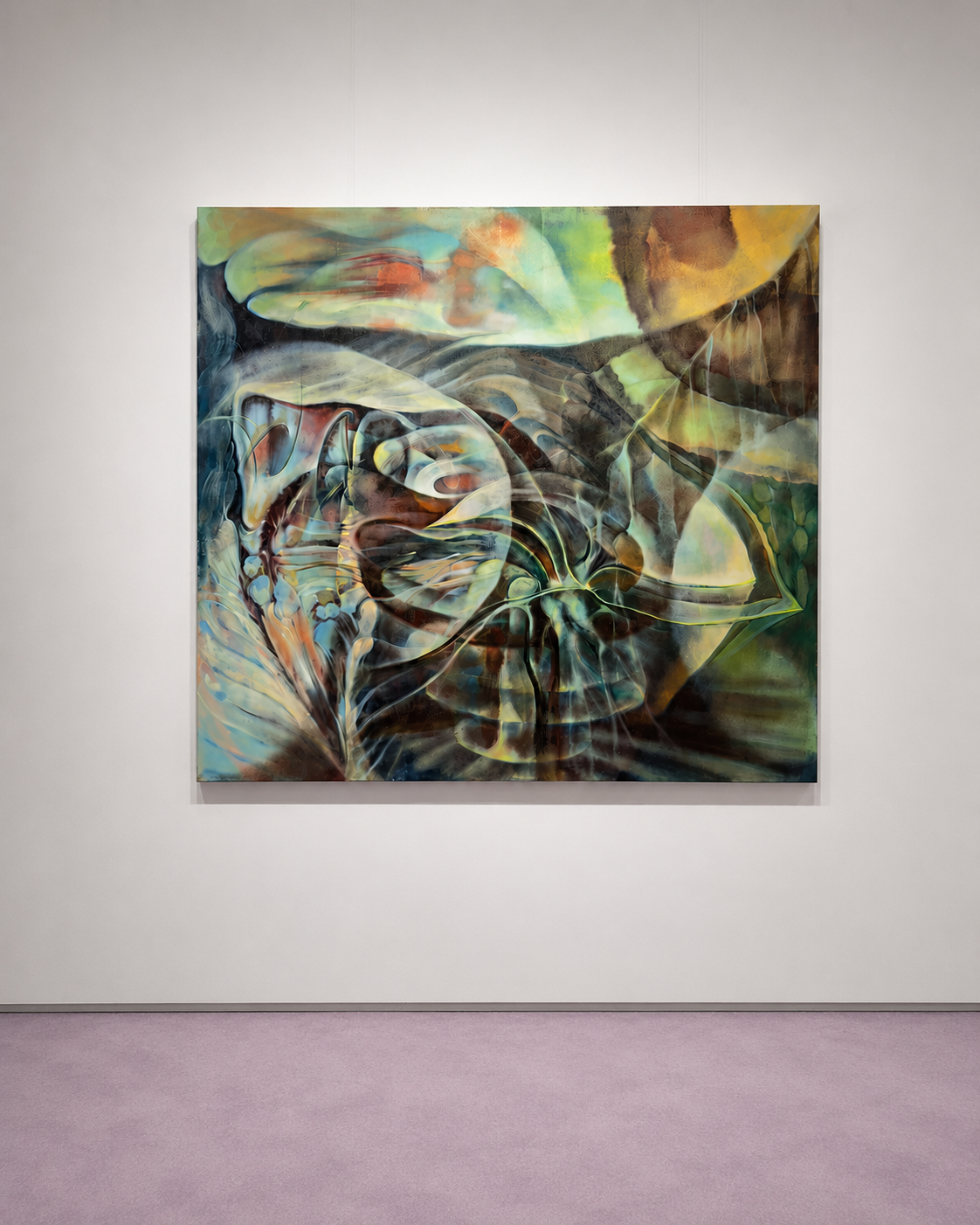
I also experienced this at NADA New York this year, standing in front of the work of Effie Wanyi Li at Foundry Seoul’s booth. Li works in oil on canvas, and her paintings explore what it might look like for energy to course through the body — the inner landscape of sensation and chronic pain rendered in a painterly language that is entirely, unmistakably hers. The work is about something most of us have never tried to see. And standing in front of it I felt it immediately: energy moving through my veins, synapses firing, atoms spinning, the entire hidden universe of activity that has been happening inside my body from the moment of conception and will continue until I take my last breath. It is the most intimate thing about me. I have never once seen it, or even thought about what it really looks like, for that matter. She showed it to me.
That is what the framework is really after. Intentionality tells you the artist is in command of their choices. Novelty tells you they found something nobody else got to first. Self-awareness tells you they know where their work sits in the larger conversation. Relevancy tells you they have something urgent to say about the world we’re actually living in. But underneath all of it is this: the artist made something so precisely, undeniably their own that it had nowhere to go but inward — into you, into everyone who stands in front of it. The particular became universal. The singular became the shared.
You don’t need a framework to feel that. But you need to know how to look for it.
This wraps up the four-part series on how to know if art is good. The complete framework: Intentionality, Novelty, Self-Awareness, Relevancy. Every work in The Collection has passed all four.
How to Know If It's Good, Part 3: Self-Awareness
All Access
This is the third post in a four-part series on the framework I use to evaluate whether a work of art has staying power. If you missed Part 1 on Intentionality or Part 2 on Novelty, start there. And if you missed the introduction — When Is the Last Time You Bought Something That Will Outlast You? — that’s a good place to begin.
When I taught art history at the Cleveland Institute of Art, I started every semester the same way. I asked the students one question:
Why do you think have to take this class?
The answers were predictable. Because it’s required. Because the school makes us. Because I don’t know. A few brave souls would venture something more honest: because you can’t make art without knowing what came before you.
That last answer is the one I was waiting for. Not because art history is a prerequisite to making anything — plenty of artists work in genuine isolation and produce powerful work. But because the artists who know the conversation they’re entering make more informed choices. Their work has more layers. Their intentionality is richer because it’s grounded in something larger than their own instincts.
That’s what the third criterion in my framework is about: self-awareness.
What Self-Awareness Is
Self-awareness is an artist’s demonstrated understanding of where their work sits in the broader conversation — art historical and contemporary — and the conceptual reason for the references and relationships they’re drawing on.
That conversation can be with anyone. With Caravaggio or with a peer showing at the next booth at NADA. With the AbEx painters or with the early African American quiltmakers whose work the art world spent decades failing to take seriously. With Italian Baroque drama or with the feminist fiber art movement of the 1970s. The conversation can be explicit — direct visual quotation, named influence, obvious stylistic dialogue — or it can be subtle, a structural logic or a material choice that quietly acknowledges what came before.
What matters is that the reference is there for a reason. The artist isn’t dropping art historical names to sound serious or reaching for the nearest available influence because it looks good. They’re drawing on a specific thread because it lets them say something that couldn’t be said without it.
Why It Matters
I want to be honest about something: not everyone would agree that self-awareness is a necessary criterion for evaluating whether a work is good. Some would argue that an artist has no obligation to know or acknowledge the conversation they’re in — that pure instinct and originality are enough, that art historical awareness is an academic imposition, that the work should stand entirely on its own terms.
I understand that argument. But I don’t think it holds up.
Here’s why. An artist who genuinely understands where their work sits in the broader conversation — who knows what’s been tried before, what succeeded, what failed, and why — is making more informed choices. Their work isn’t just the product of instinct. It’s the product of instinct in dialogue with history. And that dialogue produces depth — the kind of depth that rewards a viewer over years rather than months, the kind that gives a work staying power rather than just initial impact.
There’s also a more practical point. The artist who makes work in complete isolation from any conversation might produce something genuinely original. But they might also be reinventing the wheel without knowing it — doing something that feels fresh to them but has already been done, and better, by someone else. Self-awareness is what separates genuine originality from accidental repetition.
Self-Aware Versus Derivative Work
Here’s the test I use to distinguish between a self-aware artist and a derivative one.
A self-aware artist catches the ball and advances it. They receive what came before — a style, a material, a conceptual approach, a set of questions — and they move it somewhere new. They add something that takes the conversation forward. You can trace the connection to what came before and you can also see clearly why this work had to exist — why the conversation needed this voice to go somewhere it hadn’t been yet.
A derivative artist catches the ball and either drops it or throws it back where it came from. The reference is there — you can see the influence clearly — but it isn’t going anywhere. The work doesn’t advance the conversation. It repeats what’s already been said. The connection to the source is legible but the conceptual leap that would justify the reference is missing.
The question to ask is not: can I identify the influence? It’s: can I understand why the influence is here? What is it doing for this work that nothing else could do?
If you can answer that question, you’re probably looking at self-awareness. If the reference feels decorative — present but purposeless — you’re probably looking at something derivative.
What Self-Awareness Looks Like In Practice
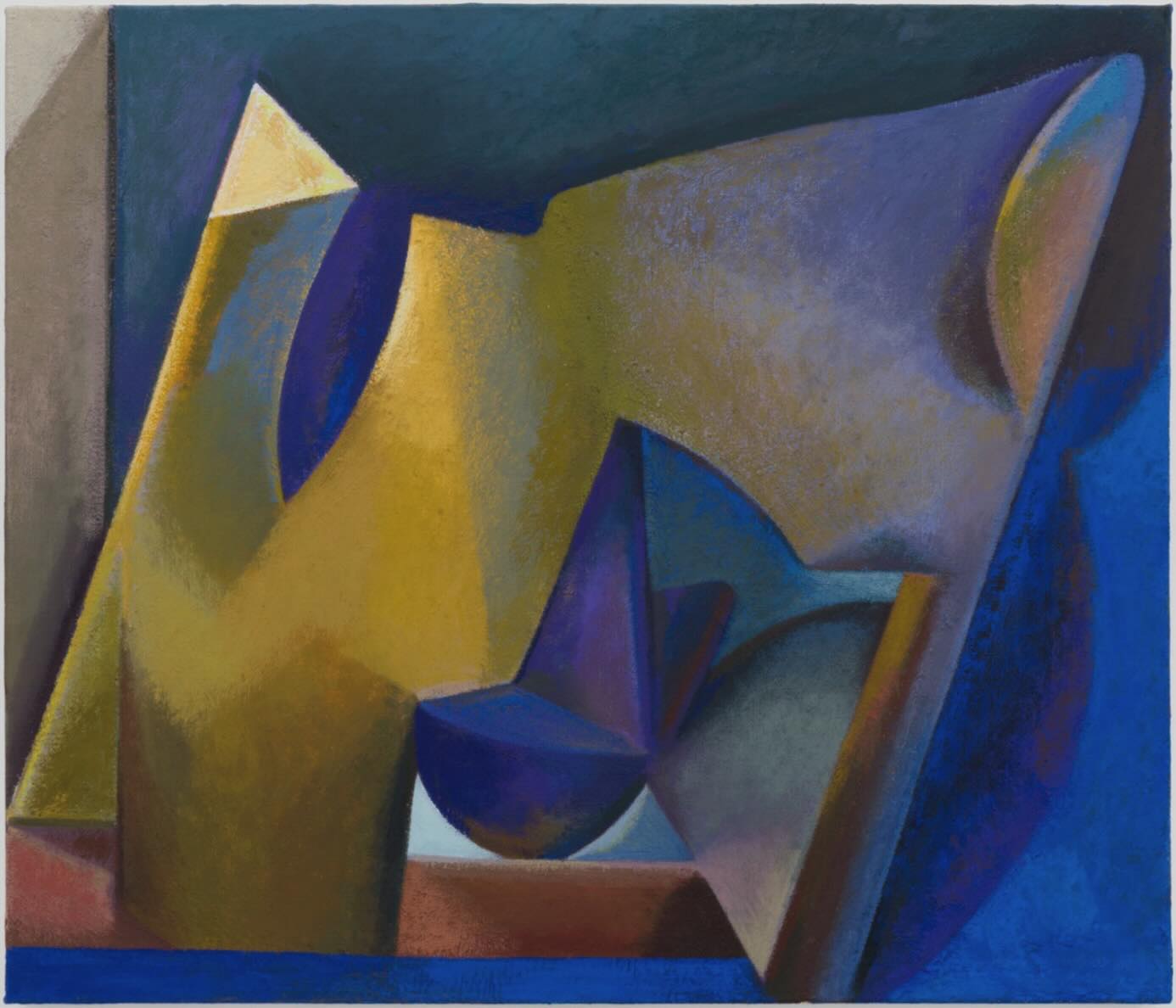
Molly Greene has three degrees from Yale — environmental science, philosophy, American studies — before she picked up a brush. Her paintings look at first glance like they might be decorative: soft, airbrushed, pastel, organic forms that feel botanical and slightly surreal. But the self-awareness in her work is operating on multiple levels simultaneously.
Greene is in dialogue with the history of decorative painting — the tradition that has been consistently feminized and marginalized by the art world — and she’s doing something deliberate with that tradition. Her work looks decorative on purpose. The softness and the botanical imagery and the pastel palette are not accidents. They’re a sustained investigation into the porous boundary between what gets called art and what gets called decoration, between the natural and the artificial, between the human and the non-human. She knows exactly what conversation she’s in. And she has a very specific reason for entering it the way she does.
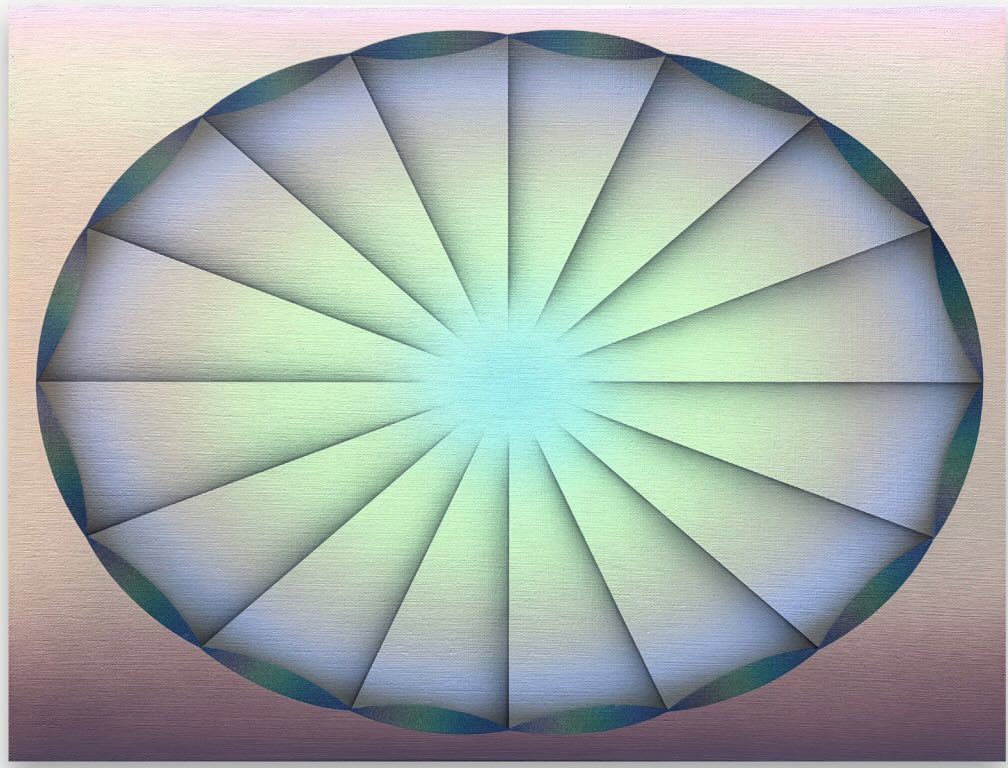
Logan Grider makes abstract paintings that are in deep dialogue with the history of American abstraction — the AbEx painters, the color field tradition, the long argument about what paint on canvas can do and mean. But he’s not repeating that conversation. He’s extending it. His work is physically demanding in ways that connect to the labor-intensive practices of Process Art while also being visually lush in ways that connect to the Romantic tradition of the sublime. The references are there, they’re legible, and they’re doing real conceptual work — each one is load-bearing, necessary to what the painting is trying to say.
Both Greene and Grider know the conversation they’re in. Both of them have a reason for entering it the way they do. That’s self-awareness operating at a high level.
The Contextual Collector and the Self-Awareness Trap
If you’ve taken the collector type quiz and discovered you’re a Contextual Collector, self-awareness is your natural criterion. You’re wired for exactly this kind of art historical and contemporary dialogue. When you find it you go deep — you follow the thread, you research the references, you build the full picture of where a work sits and why. The result, when it works, is a collection of extraordinary depth and coherence.
But the Contextual Collector has a blind spot at this criterion too.
Self-awareness isn’t always legible on the surface. Some of the most self-aware artists wear their references lightly. The dialogue is there — it’s real, it’s doing genuine work — but it requires patience and investigation to find. The Contextual Collector who needs the context to announce itself will walk past work that rewards closer looking.
The test for self-awareness isn’t whether the references are immediately obvious. It’s whether they’re there at all — and whether they’re doing something. Sometimes you have to bring knowledge to the work rather than waiting for the work to hand it to you. That’s a skill. And it’s worth developing.
The Practical Question
When you’re standing in front of anything and trying to evaluate self-awareness, the question worth asking is: does this work know where it comes from?
You don’t need to be an art historian to feel the answer. Self-aware work has a quality of intentional placement — it feels like it belongs somewhere specific in the larger story of art, like it knows what it’s responding to and why. Derivative work feels like it arrived from nowhere in particular, or like it’s trying on someone else’s clothes without quite understanding why those clothes were made.
A second question worth asking: can I understand why the reference is here? What is it doing for this work that nothing else could do?
If the reference has a reason — if pulling on that thread opens something up rather than just gesturing toward it — you’re probably looking at self-awareness. If the reference feels like decoration, like name-dropping in paint, you’re probably not.
Next week: Relevancy. Does this work have something urgent to say about the world we’re actually living in right now?
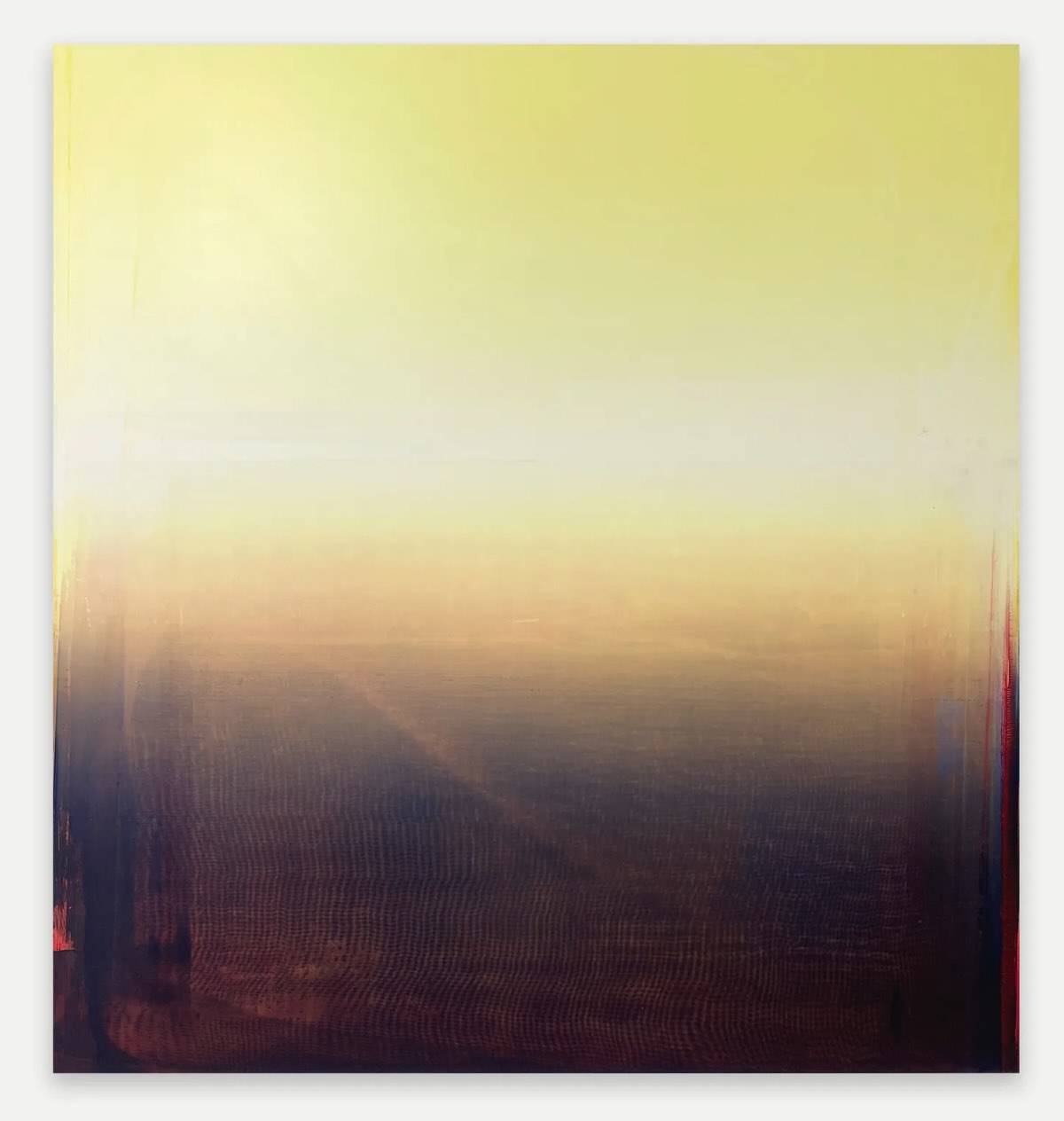
How to Know If It's Good, Part 2: Novelty
All Access
This is the second post in a four-part series on the framework I use to evaluate whether a work of art has staying power. If you missed Part 1 on Intentionality, start there. And if you missed the introduction — When Is the Last Time You Bought Something That Will Outlast You? — that’s a good place to begin
In 1917 Marcel Duchamp submitted a urinal to an art exhibition. He turned it upside down, signed it with a fake name, called it Fountain, and submitted it as a work of art.
The selection committee rejected it. Of course they did. It was a urinal.
But Duchamp’s point wasn’t the object. It was the question. What makes something art? Is it the skill of the maker? The beauty of the form? The intention behind it? If an artist declares something art — if the concept is the work — does the object even matter?
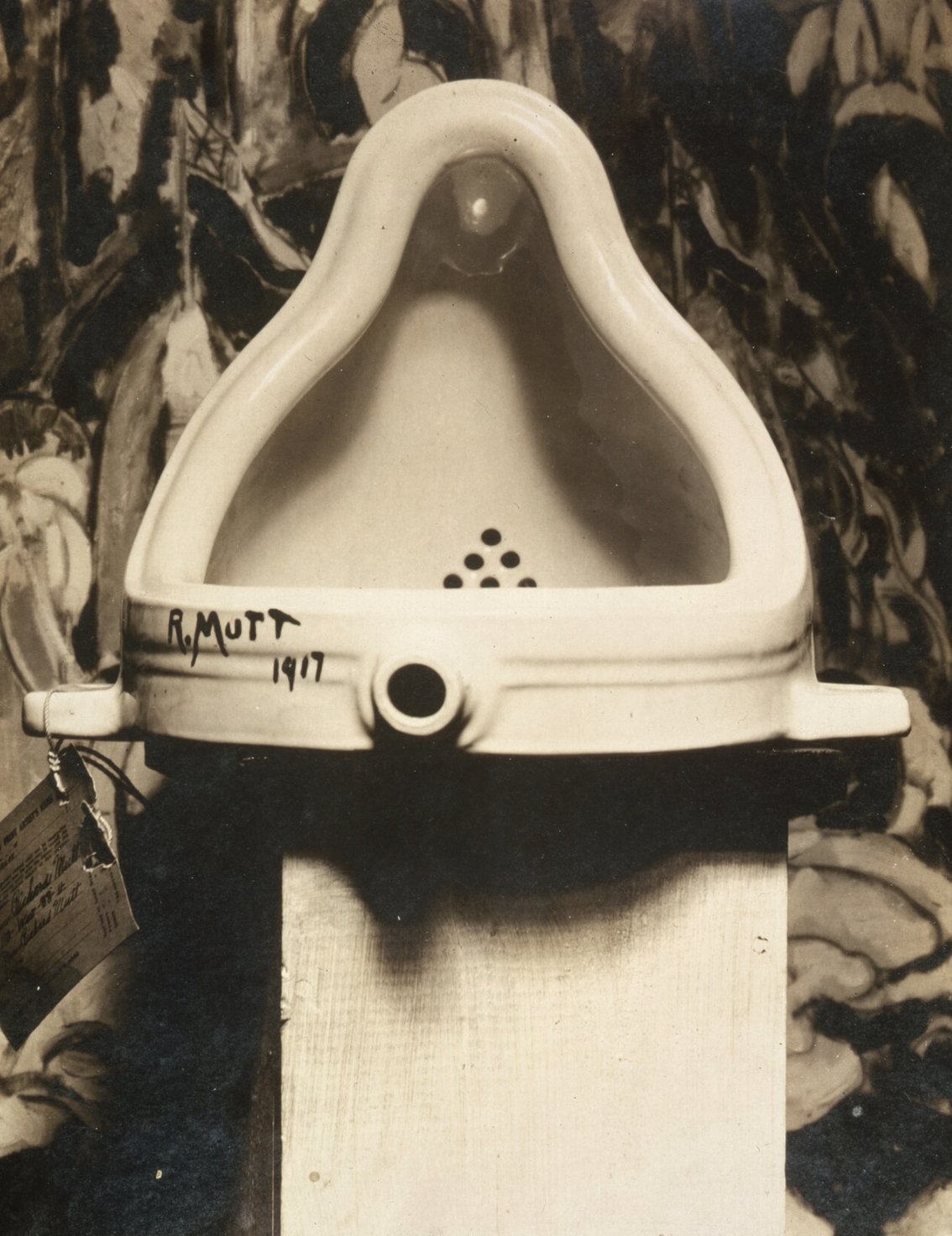
That question changed the entire conversation about what art is and can be. Not because a urinal is shocking or strange, because it is, but because there was a reason for the shock and strangeness. The provocation was in service of an idea that had no other way of being said. That’s novelty. It is not weirdness for its own sake, or shock for the sake of reaction, but a genuinely new way of saying something, thinking about something, or presenting an idea that couldn’t be said any other way.
When someone looks at Duchamp’s Fountain and says “my kid could do that,” they sound like idiots, to be honest, and they are missing the point entirely. Yes, your kid could probably turn a urinal upside down. Your kid could not have asked that question in 1917 in a way that changed how every artist and every viewer thought about art for the next century.
That’s what novelty looks like at its most extreme. In practice, standing in a gallery or a fair, it looks more like this: is this artist doing something I haven’t seen before? Are they using a material, a process, a visual language that feels genuinely distinct from everything around it? Are they advancing a conversation or just entering one that’s already crowded?
What Novelty Is Not
Before we talk about what novelty looks like, it’s worth naming what it isn’t.
Novelty is not trend-following. An artist whose work looks new because it looks like whatever is popular right now isn’t making novel work — they’re making timely work. Those are different things. Timely work dates. Novel work doesn’t.
Novelty is not bombast. It is not gimmicky edginess for shock value’s sake. Don’t mistake loudness for vision. You know who could scrawl the F word in spray paint on a Normal Rockwell print? Your kid. That’s not novelty.
Novelty is not strangeness for its own sake. A work can be bizarre, difficult, unsettling, and also completely derivative. The question isn’t whether something surprises you. It’s whether the surprise is actually achieving a real objective.
True novelty is specific. It’s an artist who found a visual language that is distinctly, identifiably theirs, and that nobody else got to first.
What Novelty Looks Like In Practice
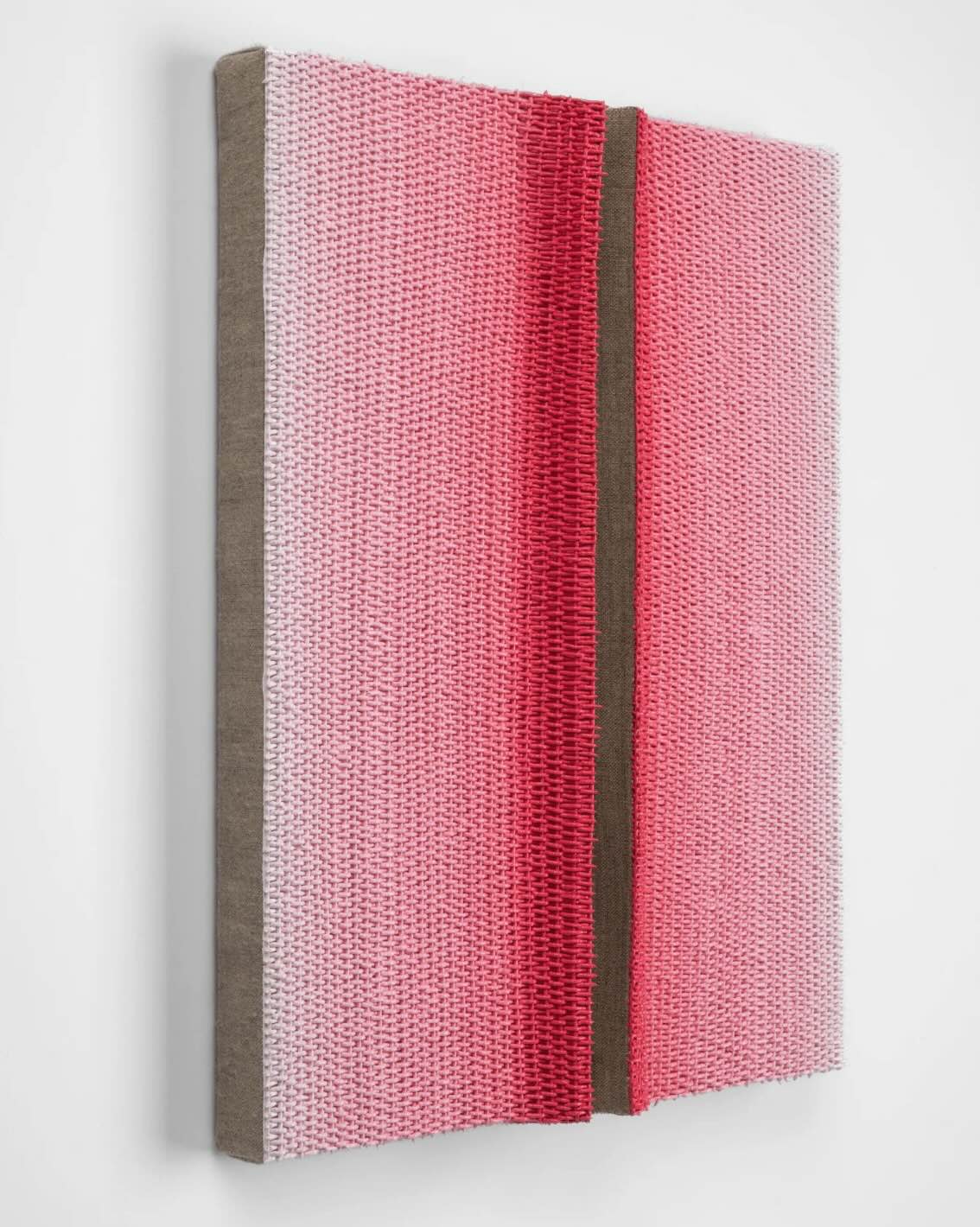
The first time I stood in front of Danielle Mysliwiec‘s work I genuinely didn’t know what I was looking at. She makes weavings out of extruded oil paint. Not weavings that look like paint. Not paint that references weaving. She physically extrudes paint into long strands and weaves them together the way you would weave thread — interlocking, layering, building a surface that is simultaneously a painting and a textile and neither one.
I had never seen anything like it. Not in twenty years of walking galleries and fairs.
But the novelty isn’t just the material trick. It’s what the material trick is saying. Mysliwiec is working within a long art historical conversation about the hierarchy between painting — traditionally the domain of high art, of men, of serious ideas — and weaving and textile, traditionally feminized, classified as craft, pushed to the margins. She’s not referencing that conversation. She’s physically enacting it. The paint and the fiber are literally the same thing in her hands. The hierarchy collapses in the making.
That’s novelty doing real work. The surprise is in service of an idea. No one has said what she is saying in this way.
Kate McQuillen approaches novelty from a completely different direction. She is a printmaker by training who applies printmaking principles to painting — which means her painted surfaces have no brushwork, no impasto, no visible layering. They are as smooth as a print. She has invented a way of making gestural abstract painting that looks like it was never touched by a brush, which creates a deeply strange and beautiful friction between the physicality of paint and the mechanical precision of print.
McQuillen is also a reader and a thinker who draws on ancient Greek epics and tragedies — specifically the way those stories move between disparate emotional registers within a single scene. She uses that source material as a way into abstract painting: how can an image bring to mind a specific feeling even when it’s entirely removed from recognizable form?
The novelty in McQuillen’s work is layered. It’s the surface technique. It’s the conceptual framework. It’s the way those two things work together to produce something that exists liminally between the things it draws from — between painting and printmaking, between abstraction and narrative, between the ancient and the present.
Neither Mysliwiec nor McQuillen looks like anyone else. That’s the signature of novelty — work that is identifiably, specifically, irreducibly itself.
The Venturist and The Novelty Trap
If you’ve taken the collector type quiz on this site, you may already know you’re a Venturist. The Venturist collector often leads with novelty above everything else. They walk into a booth and something stops them — an energy, an unexpectedness, a “wow, I’ve never seen that before” that bypasses the analytical brain entirely. They trust that instinct and they act on it. Some of the most exciting collections I’ve ever seen belong to Venturist collectors.
But novelty is also the Venturist’s blind spot. Because novelty alone doesn’t tell you whether a work has staying power. It tells you the artist found something new. It doesn’t tell you whether what they found is grounded in something real, whether the intentionality is there, whether the work knows where it sits in the broader conversation, whether it has something urgent to say about the world we’re actually living in.
The Venturist who leads with novelty and stops there ends up with a collection full of work that was exciting, edgy, and surprising in the moment but fails to hold on to that moment for much longer.
Novelty is the entry point for you Venturists, but it’s not the whole conversation.
The Practical Question
When you’re standing in front of anything and trying to evaluate novelty, the question worth asking is: have I seen this before? Not “is this good?” Not “do I like it?” Just: is this doing something I haven’t seen done?
If the answer is yes — if you can immediately think of five artists making work that looks like this — then novelty isn’t the thing that’s going to make this work last. It might have other things going for it. But it’s entering a crowded conversation rather than advancing one.
If the answer is no — if you can’t quite place it, if it doesn’t fit neatly into a category, if you find yourself saying “I don’t know what this is exactly” — pay attention. That disorientation is worth investigating. It might be novelty. It might be the beginning of something.
A second question worth asking: does this artist have a visual language that is distinctly theirs? Could you identify their work in a group show without looking at the label? Artists who have developed genuine novelty tend to be immediately recognizable — not because they repeat themselves, but because they’ve found something that belongs to them and only them.
That distinctiveness is what you’re looking for. Not weirdness. Not shock. Not trend. Just: this person found something nobody else got to first.
Next week: Self-Awareness. Does this artist know where their work sits in the broader conversation? And why does that really matter?


How To Know If It’s Good? Part 1: Intentionality
All Access
This is the first post in a four-part series on the framework I use to evaluate whether a work of art has staying power. If you missed the introduction — When Is the Last Time You Bought Something That Will Outlast You? — start there. And if you’d rather watch than read, the masterclass video is coming soon. I’ll link it here when it’s live.
I had a professor at Davidson College who gave me the single most useful tool I know for understanding how to know if art is good — not a checklist, not a theory, just one question he asked about everything. Not “is this beautiful?” Not “is this technically accomplished?” Not even “do you like it?”
Why does this image look the way it does?
At eighteen I thought he meant historical context — the forces that shaped an artist’s moment, the movements they were responding to, the world they were making work inside. And that’s part of it. But as I grew in my understanding of art I came to realize the question was really about something more internal. It was about choice, the choices an artist made in response to those external forces. What were they controlling inside the studio amidst the uncontrollable external forces of the times in which they lived?
That question became the foundation for the first criterion I use when evaluating whether a work has staying power: intentionality. It won’t tell you everything about whether a work is good. But without it, nothing else matters much.
Here’s the core concept: is the artist in command of their choices?
If you think about a work of art less as a finished product and more as a series of decisions a person made to communicate a particular message, intentionality snaps into focus. Every decision — scale, material, mark, color, composition — should feel considered rather than accidental or decorative. The question isn’t “is this skillful?” It’s “does this artist know exactly what they’re doing and why?”
Craft without intention is decoration. Intention without craft can still produce powerful work. But when you get both, you get something worth stopping for.
The Picasso Problem
The clearest example of intentionality in art history is also the most misunderstood.
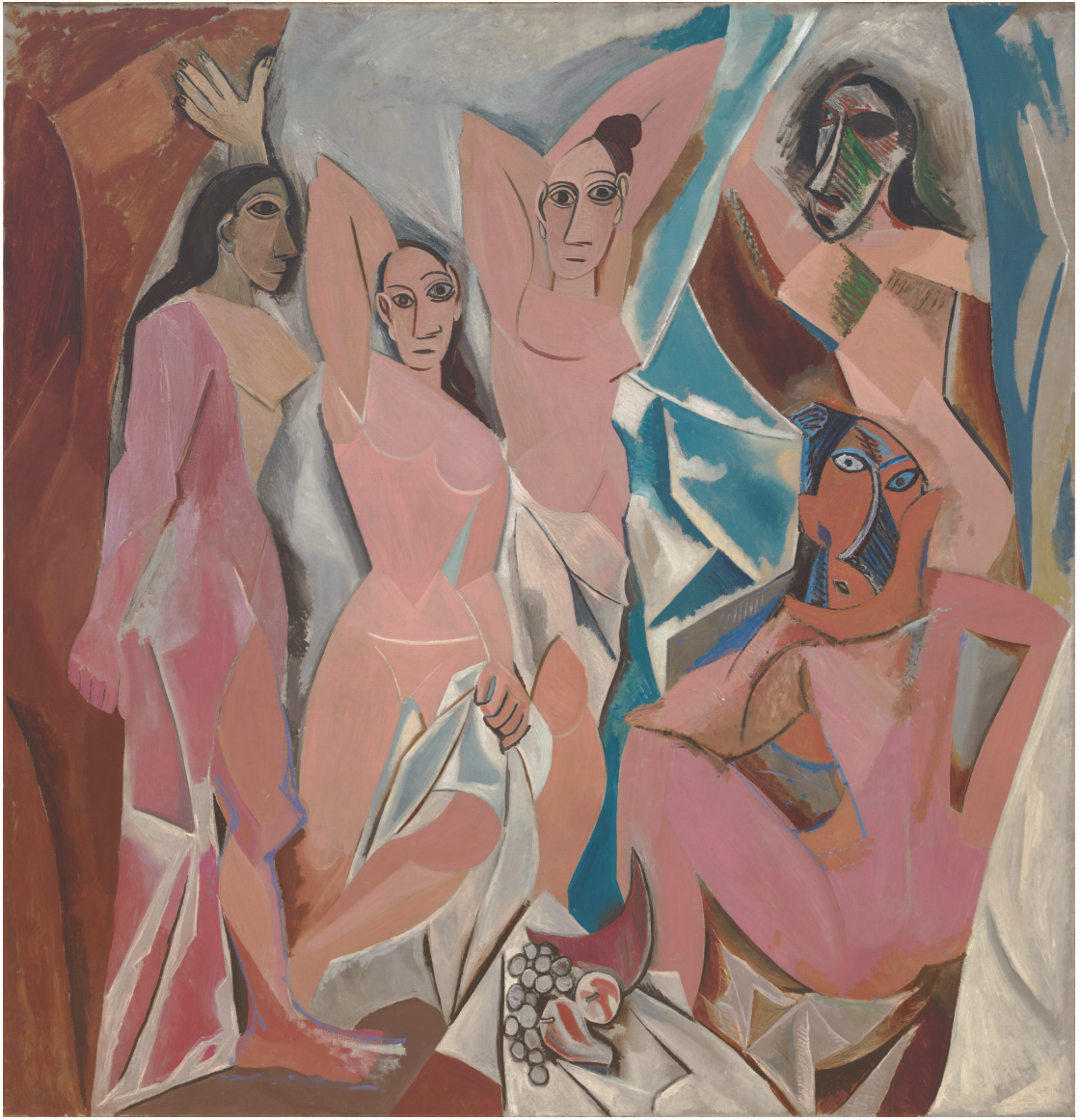
Everyone knows Cubism looks strange. The fractured planes, the multiple perspectives simultaneously visible, the figures that seem to be coming apart and reassembling at the same time. Most people assume it looks strange because Picasso was doing something new and difficult — that the strangeness is the symptom of a learning curve.
It isn’t. Picasso was one of the greatest draftsmen who ever lived, on par with Michelangelo. He was a prodigy who could render the human figure with photographic accuracy by the time he was a teenager. Cubism doesn’t look the way it does because it had to. It looks the way it does because Picasso chose it. Every fractured plane, every impossible angle, every figure that refuses to resolve into legibility — that was a decision made by someone who knew exactly what he was giving up and why.
That’s intentionality. Not the inability to do something else. The deliberate choice to do this instead.
Intentionality in Representational Work
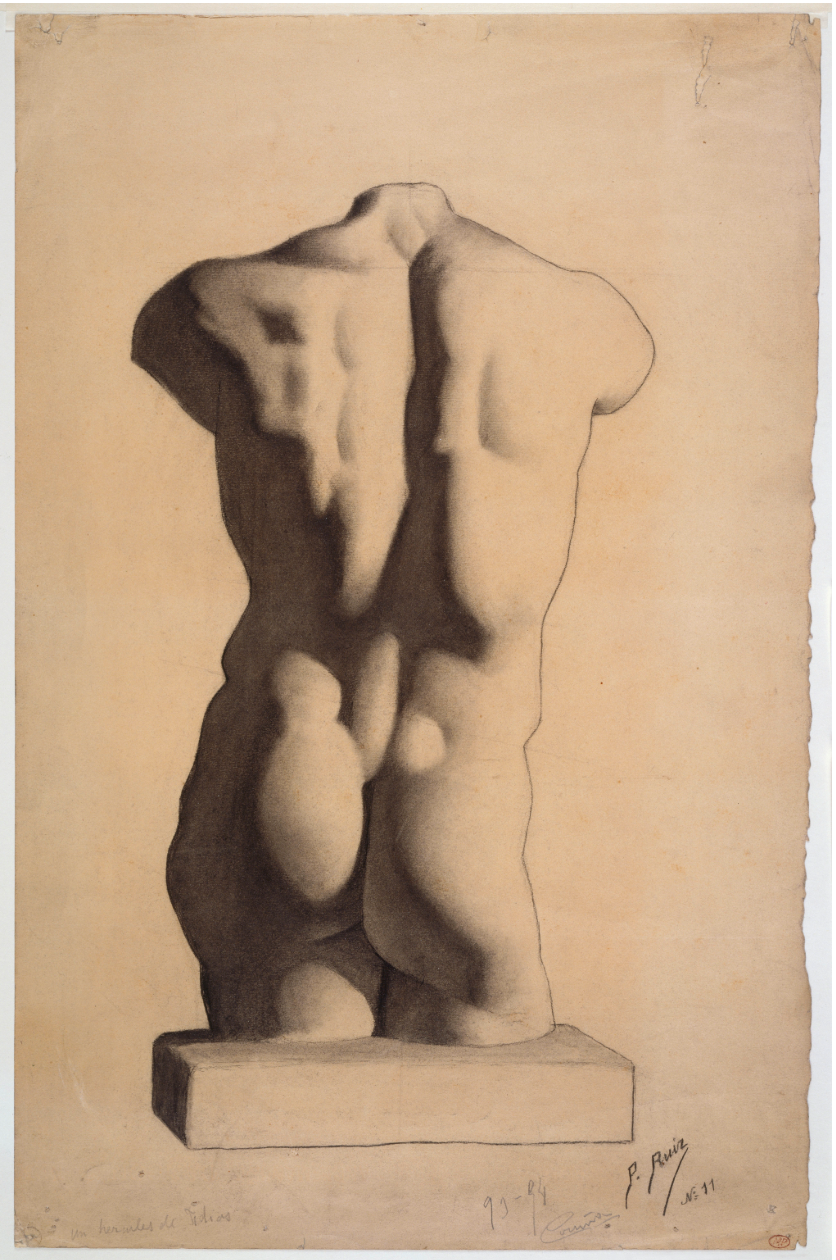
Stephen Thorpe makes it easy. His paintings are representational — you can read the landscapes, the atmospheric shifts between interior and exterior, the collision between the natural world and the psychological one. When you look at a Thorpe, you feel almost immediately that someone is in complete command of what you’re seeing. The gradations of color are deliberate. The compositional tension is deliberate. The way the work sits at the border between the recognizable and the dissolving is deliberate.
Thorpe’s gallery describes his work as “deliberately rendered to represent the dualities, synergies, and contradictions of relation between environment and human interiority.” That sentence is doing what the best artist statements do — it confirms what you already felt standing in front of the work. The form and the concept are in alignment. There is a reason this looks the way it does, and once you understand the reason, you see it everywhere in the work.
That alignment — between what an artist is trying to say and the choices they make to say it — is the signature of intentionality.
Intentionality in Abstract Work
Abstract work is harder. When there’s no subject to anchor you — no figure, no landscape, no recognizable object — it can be tempting to assume that whatever happened on the canvas was more or less accidental. Paint flew, gravity pulled, the artist responded to what emerged. And sometimes that’s true. Sometimes a work really is just what happened.
But sometimes the apparent chaos is the most intentional thing in the room.
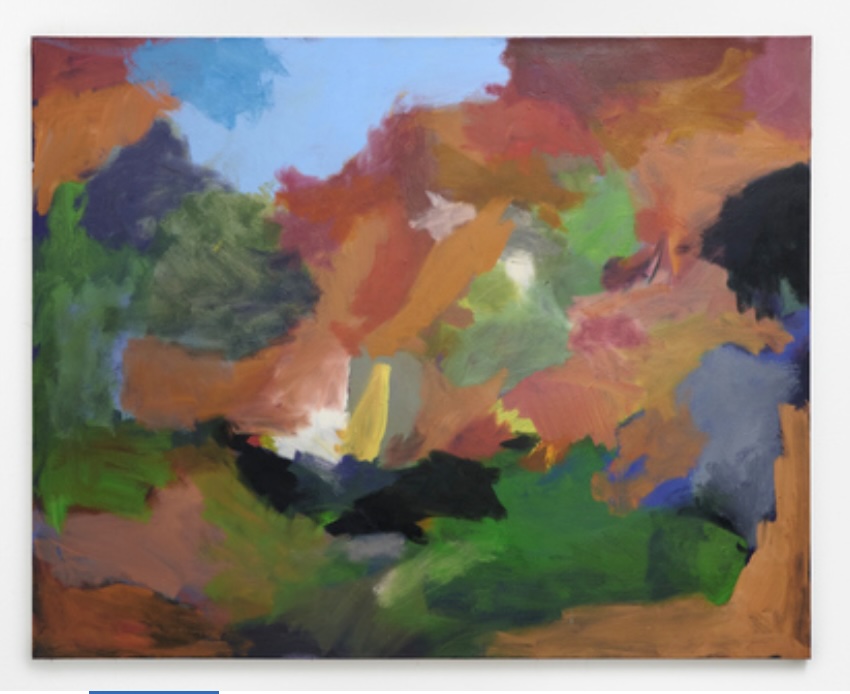
Demetrius Wilson‘s paintings look, at first encounter, like pure energy. Paint flies across his canvases like a collision. Fragments of bodies and beasts emerge from turbulence and dissolve back into it. The work is saturated with color, driven by restless mark-making, full of violence and movement and something that feels almost uncontrolled.
It isn’t.
Wilson is investigating specific ideas — truth, beauty, and violence, and whether they exist independently from humankind. His abstractions represent a deliberate departure from his earlier figurative work. He could paint a figure. He chooses not to, because the abstraction opens the canvas as a laboratory for the ideas he’s working with in a way that figuration wouldn’t. The marks that look accidental are in fact choices made in service of a very specific inquiry. The turbulence is the point. The fragmentation is the point. The violence that feels generative rather than destructive — that is absolutely the point.
This is how you apply the intentionality lens to abstract work: you ask whether the form supports the concept. Not whether you can explain the concept without reading the wall card, but whether the work makes you feel like the artist intended — whether the choices they made reflect or support their end goal. Does this look the way it does because the artist chose it, or because they stumbled onto it?
Wilson’s work answers that question with complete confidence. Even if you don’t know what he’s investigating, you feel that someone is in command. That’s intentionality operating below the level of conscious understanding — which is, arguably, where the most powerful work happens.
The Practical Question
When you’re standing in front of anything — representational or abstract, figurative or conceptual — the question worth asking is simple: could this have been made differently and been equally strong?
If the answer is yes — if the colors could have been different, the scale could have been smaller, the mark could have been looser, and none of it would have mattered — then the choices aren’t doing necessary work. The craft may be impressive. The result may be beautiful. But it’s decoration.
If the answer is no — if this work could only be this and nothing else, if every decision feels load-bearing, if changing anything would change everything — then you’re probably looking at intentionality.
That’s the test. It won’t always give you a clean answer. But it will always make you look harder. And looking harder is the whole point.
When Is the Last Time You Bought Something That Will Outlast You?
All Access
Like something that was specifically designed to last a lifetime and beyond?
We hear it a lot. “They just don’t make things like they used to.” The maxim feels truer today than it ever has before. Cars, washing machines, clothes — nothing is made to last anymore. Everything is fast, made for an ever-changing and evolving world, and largely disposable despite price tags that might suggest otherwise.
And yet we keep spending. On things that will be out of style in three years, worn out in five, forgotten in ten. Most of us have never stopped to ask: is there anything I could buy right now that would actually outlast me? That would still mean something in twenty years — not because it held its value on a spreadsheet, but because it kept giving something back?
I’ve been thinking about this question a lot lately, particularly as someone who spends most of her waking hours thinking about how to buy art that lasts. We live in a culture of extraordinary consumption and almost no permanence. We spend freely on things designed to be replaced — clothes that go out of style, furniture that follows trends, art that matches the sofa. None of it is wrong exactly. But none of it lasts either.
And yet there is a category of object that was specifically designed to outlast its moment. The object is made by someone trying to say something true about their time, their experience, or their way of seeing the world. It is something that leaves its mark on the world by, in the words of art critic Jerry Saltz, “expanding consciousness, deepening experience, and destabilizing certainty.”
That object is a work of art. A real one.
I want to be careful here because I’m not talking about all art. I’m not even talking about expensive art. If you want to know how to buy art that lasts, the distinction I’m making has nothing to do with price and everything to do with intention — the difference between something made to decorate and something made to endure.
Here’s the most honest way I know to explain it.
There is work being made right now — and sold, in galleries, for thousands of dollars — that will look exactly the same in ten years as it does today. You’ll walk past it on your wall and feel the same pleasant feeling you felt the first day. You might marvel at the artist’s unique material or process or reminisce over a particularly lovely vacation to your favorite beach. It will still be pretty. It will still work with the room. And that’s all it will ever do.
And there is other work being made right now — sometimes by artists no one has heard of, sometimes for less money than you’d expect — that will look different in ten years, not because the work changed but because you did. You went through something, or lost something, or became someone slightly different than the person who hung it, and the work has enough in it to meet you where you are now rather than where you were then.
That second kind of work is what I think of when I think about art that lasts.
When you’re buying original art for the first time, the question of what lasts versus what doesn’t is rarely part of the conversation anyone has with you. Most advice stops at “buy what you love.” That’s true — but it doesn’t help you understand what you’re actually choosing between.
Consider Jude Griebel. He is a Canadian sculptor — a 2026 Guggenheim Fellow — who spends months hand-carving miniature figures from wood, clay, textiles, and papier-mâché, merging human bodies with landscapes, consumed species, and the wreckage of the natural world. His sculptures are simultaneously grotesque and tender, darkly funny and genuinely heartbreaking. They are about what we are doing to the planet and to each other — about consumption, erasure, and the strange entanglement between human bodies and the living world around them.
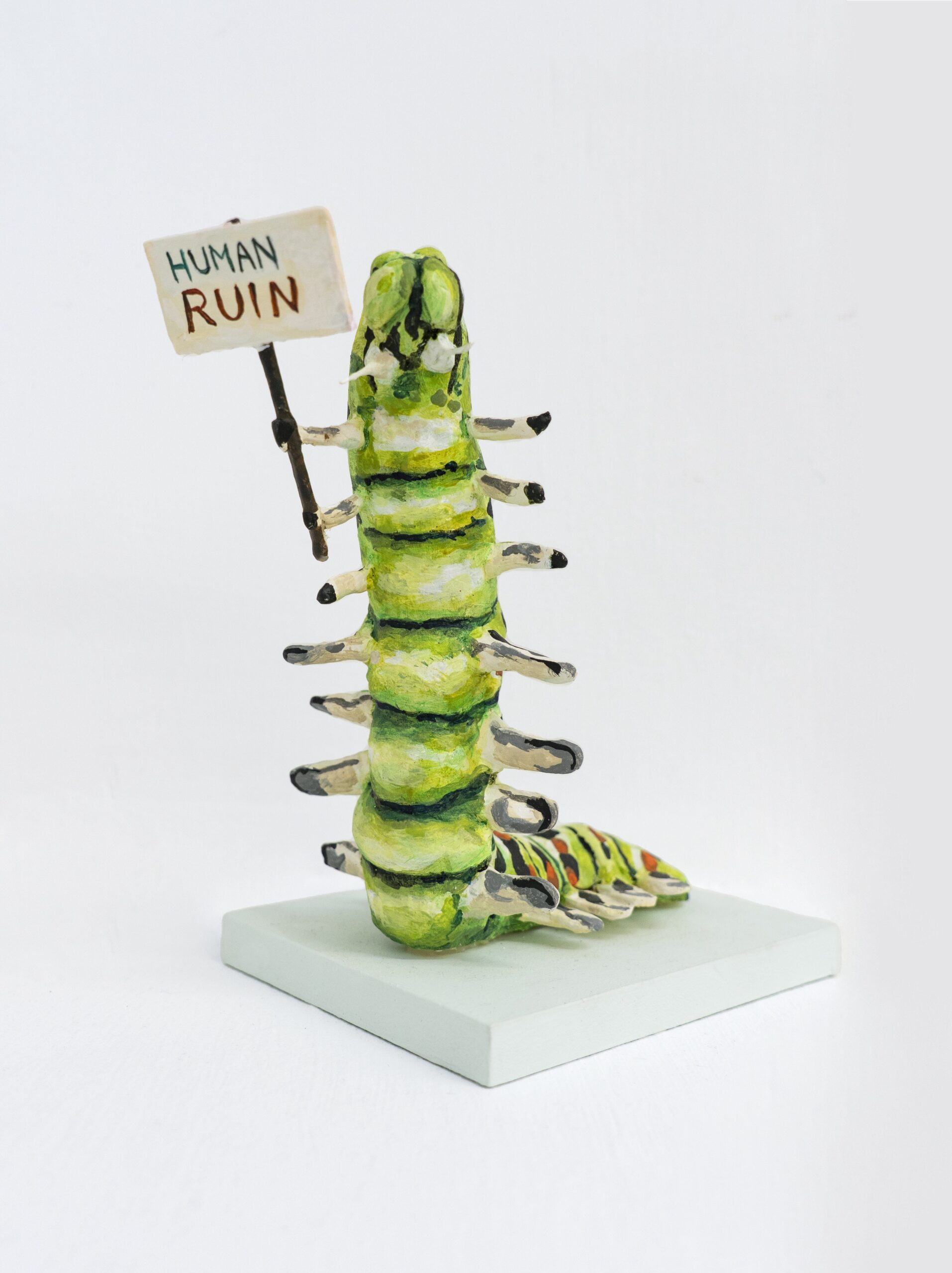
Right now, looking at a Griebel sculpture, you might feel the climate anxiety you carry quietly every day given a form you can actually look at. In five years, as the world changes in ways we can’t predict, the work will mean something different. In ten years, if you’ve had children or lost someone or watched a landscape you love disappear, it will mean something different again. The work has enough in it to grow with you because it is built from something real — a question Griebel cannot stop asking, expressed through a practice of almost incomprehensible patience and craft.
That is what it means to own something that lasts.
The question worth asking before you buy anything — not instead of asking whether you love it, but alongside it — is whether the work has enough in it to grow with you. Whether the artist was making choices or just making something pleasant. Whether there is an intention underneath the surface that will reward you for looking harder as the years go by.
So how do you tell the difference before you buy? That’s exactly what I’m going to spend the next four weeks unpacking.
I’ve developed a framework — four criteria I apply to every work I evaluate, whether I’m walking an art fair, advising a client, or adding something to The Collection. Intentionality. Novelty. Self-awareness. Relevancy. Not art world jargon — practical questions you can ask standing in front of anything, at any price point, in any gallery or fair or Instagram feed. Questions that will help you tell the difference between something made to please and something made to last.
Next week we start with intentionality. It’s probably the easiest one to recognize and appreciate if you are new to art.
This is not an argument against beauty. I believe in beauty. Some of the most lasting works I know are also breathtaking to look at. But beauty that is only beauty — that has no argument underneath it, no question it is asking, no reason it had to look exactly this way and no other way — is decoration. And decoration, however lovely, does not outlast you. It outlasts its moment, maybe. It does not outlast its trend.
The artists I think about in this context are the ones building practices around something real. A question they can’t stop asking. A material that means something beyond its surface. A way of seeing the world that you can’t get anywhere else. When you live with that kind of work, it keeps showing you things. It grows as you grow. It earns its place on the wall not once, when you buy it, but over and over, every time you walk past it and it stops you again.
That is what it means to buy something that lasts.
You don’t have to. Nobody is telling you that you owe the future a collection of significant work. But I think most of us spend so much of our lives buying things that will be forgotten — by us, by everyone — that we forget it’s possible to do otherwise. That for roughly the same money you might spend on something that will be out of style in five years, you could own something that will still be asking you questions in twenty.
When is the last time you bought something that will outlast you?
Maybe it’s time.
Know Your Type: Dear Contextual Collector, The Story Is Not Enough
All Access
This is the fourth and final post in my Know Your Type series on the four collector types I’ve identified through years of advisory work. If you missed the first three — the Venturist, the Design-Forward Collector, and the Strategic Collector — start there.
I should tell you upfront: I am a Contextual Collector.
None of my art matches my decor. None of it really matches anything. My walls are not a mood board and they are not a color story. They are a conversation — a series of arguments and agreements between works that have nothing to do with my sofa and everything to do with what I think about the world. I bought every piece because it had something to say and I wanted to live inside that conversation. (Except for 1! 1 piece was gifted to me by the artist because I loved it so much in his studio. And I still find it breathtaking but I always struggle with it because I worry it is too pretty…more on that in a second!)
That is the Contextual Collector in a nutshell. And I want to spend some time with this type because I think it is the most misunderstood of the four, and because understanding its blind spot requires me to be honest about my own.
The Contextual Collector wants to know the story. Not the market story or the spatial story, but the real story, the message: what is this artist trying to say, where does this work come from, what ideas is it in conversation with, and why does it look exactly the way it does? They may or may not care whether it matches the couch. They may or may not care about the artist’s education and CV, although if that context illuminates what the work is doing then it matters enormously. What they care about above all else is the narrative — the intellectual and emotional architecture behind the object on the wall.
The Contextual Collector is also the collector most likely to explain every work in their home to every person who walks through the door. And I mean every work. In detail. With backstory. This is not showing off. It comes from a deep and genuine passion, from the belief that if they can just get you to understand what this work is doing, you will love it as much as they do. The collection tells their story. They want you to read it. (If you’ve noticed, the tag line for Casey Monda Art Advisory is “Transforming spaces into stories.” I think that just about sums it up.)
I recognize myself in this description entirely.
The Contextual Collector collects with genuine intellectual rigor. When they fall in love with a work it is because they have followed the thread of an idea into the practice of an artist and found something that illuminates a question they have been carrying. The result, when it works, is a collection of extraordinary depth. The works do not merely coexist on the wall but speak to each other across medium and geography and time. The dialogues between works in a Contextual Collector’s home can be more interesting than the works themselves.
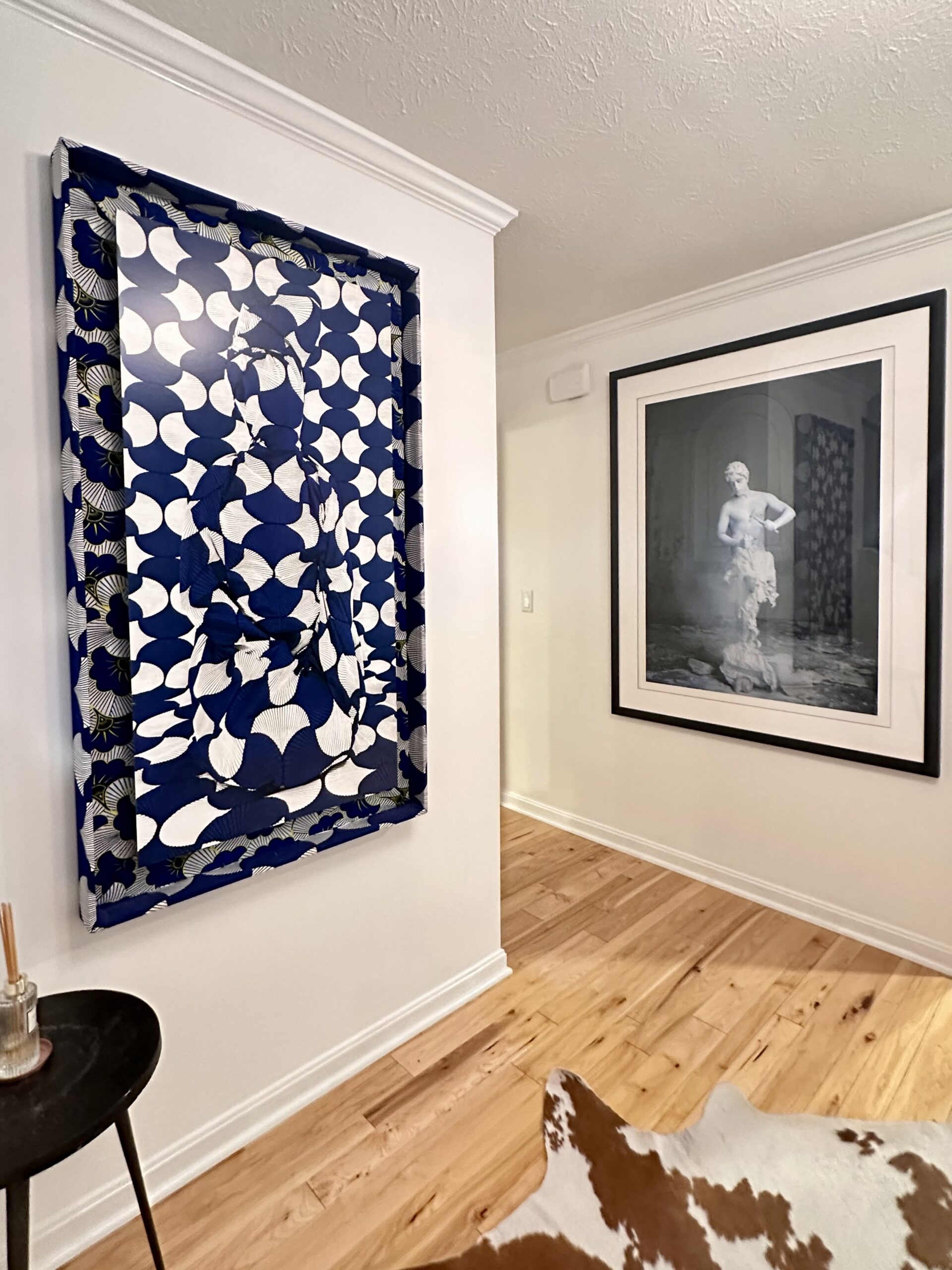
I have an Alia Ali photograph and a Lara Zankoul photograph that live near each other on my walls and create exactly this kind of conversation. Alia’s work is about colonialism and cultural appropriation. Bodies are swathed in fabric, identities obscured, representing communities whose artisanal traditions were stolen by colonizers and exported back to their home countries for financial gain. Lara’s work shows a man who appears to be carving himself out of a marble sculpture — a meditation on becoming, on creating the self you were meant to be or the persona you choose to construct. Separately they are each powerful. Together they create something neither makes alone: a dialogue about representation of self and others, about who gets to determine how a body is seen, covered, uncovered, claimed, or liberated. That conversation happens on my wall every day and I never get tired of it.
Rebecca Shore rewards the Contextual Collector because her work demands exactly the kind of looking this collector does best. Her meticulous abstract paintings look at first glance immaculate and cool, and then you find the layer of wry humor, the punning reference, the reuse of the same shape to represent multiple objects. Shore has been cultivating this practice in Chicago since the early 1980s, rooted in the fiber arts tradition, shaped by Chicago Imagism, informed by her background in quilting and her father’s scientific mind. There is more to unpack in one of her small panels than in most room-sized installations. A Contextual Collector will never run out of things to find.
Nicolas Grenier rewards them because the work is literally built from ideas. His paintings use the visual language of architectural diagrams, color coding, arrows, and legends to investigate the dysfunctional connections between the political, economic, cultural, and social systems we inhabit. There is no way to understand a Grenier painting without understanding what it is arguing. The surface is compelling on its own terms — the color is precise, the composition considered, the scale carefully calibrated — but the full depth of the work only opens up when you follow the argument. A Contextual Collector who does that work gets access to an intellectually ambitious painting practice.
Ana Won rewards them because her practice is rooted in a specific and deeply personal cosmology — Catholic upbringing, the hieroglyphic cave art of her native Tucumán in Argentina, the spiritual and alchemical traditions of indigenous Northwestern Argentine culture. Her paintings and the carved wooden structures she builds to contain and frame them are not decorative objects. They are mediators between the living and the dead, between humans and gods, between communities and their cosmologies. The Contextual Collector who follows that thread discovers a practice that is simultaneously ancient and urgent, local and universal, deeply personal and radically open.
But here is the blind spot.
The Contextual Collector has a hard time accepting beauty for beauty’s sake. They are wary of being moved by something they cannot fully explain — not because they are cold, but because they do not want to be fooled. They do not want to fall in love with something that lacks intellectual depth and discover later that they were seduced by the surface. They do not fall in love easily. They wait until they understand.
And in waiting, they sometimes let the most moving things pass them by.
Anthony Miserendino makes work that is beautiful. Genuinely, arrestingly, unambiguously beautiful, the kind of beauty that stops you before you have a thought, before you have a question, before you have a framework for what you are feeling. A Contextual Collector looks at it and gets nervous. Where is the concept? Where is the argument? What is the intellectual architecture? And while they are asking those questions the work is doing something that doesn’t need questions — it is just landing, directly, in the body, in the way that the most powerful experiences do before the mind gets involved.
The Contextual Collector walks past Anthony Miserendino. Not because the work is shallow. Because they don’t trust beauty that arrives before the story.
This is the thing I have had to learn about myself as a collector: the need to narrate is also a defense. When I can explain a work — when I have the story, the context, the argument — I feel safe with it. But some of the most important things a work can do happen before language. They happen in that fraction of a second before you know what you are looking at, before you have decided whether to like it or not. The Contextual Collector who is always reaching for the story misses what lives in that moment.
The best Contextual collections I can imagine are the ones where the intellectual depth and the wordless resonance arrive together — where a work stops you first and then rewards every question you bring to it afterward. That is the standard worth holding. Not concept over feeling, not feeling over concept, but both at once, in dialogue, the way the best works always are.
Your collection tells your story. Just make sure some of the chapters surprise even you.
Know Your Type: Dear Strategic Collector, The Spreadsheet Is Not Enough
All Access
This is the third post in my Know Your Type series on the four collector types I’ve identified through years of advisory work. If you missed the first two — the Venturist and the Design-Forward Collector — start there.
Let me say something that might be unpopular in certain corners of the contemporary art world: I am not opposed to the Strategic Collector’s approach to buying art.
I know that’s not what you expected to hear. The art world has spent decades telling collectors that art beats the index in the same breath as telling them to buy what you love regardless of investment potential. It is a tired story about art as investment that I cannot tell you how many times I heard during New York Art Week this week. The idea of buying contemporary art to make money, coupled with the practice of asking for discounts on works under $5,000, really shows how little regard so many have for the artist’s time, skill, and simple cost of goods. But that is a separate soap box I will stand on at a later date.
Here is what I will say about collecting art as investment at the emerging end of the market: no one has a crystal ball. These artists are so early in their practice that often they are still working out what they want to say and how they want to say it. Buying emerging art is patronage. It is casting a vote for the voices you feel should be a part of our moment’s chorus. It is supporting an artist’s practice that you think deserves to live to see another day. It is supporting a gallery’s program that you really believe in. It is helping shape the legacy and the story that our moment will tell about ourselves.
But here is why I also don’t have a problem with the way a Strategic Collector thinks about buying art.
The Strategic Collector has a genuine commitment to quality. If you’re going to put serious money into something and expect it to hold or increase in value, you cannot afford to be sloppy about what you buy. You have to develop real discernment. You have to understand the market, the institutional landscape, the gallery ecosystem, the difference between an artist on a genuine trajectory and an artist who is having a moment. That discipline, applied rigorously, produces serious collections. I have seen it happen.
But here’s the question I want to sit with for a moment: why do we expect art to hold its value?
We don’t expect that of almost anything else we spend money on. A very expensive car depreciates the moment you drive it off the lot. Furniture depreciates. Real estate sometimes appreciates and sometimes doesn’t, and we accept that as a feature of the market rather than a moral failing. We understand that an investment in a startup might go to zero, might do fine, or might shoot the moon — and we don’t consider the zero outcome a sign that we shouldn’t have invested.
Why is art different?
If you view art as an asset class then you need to take a more honest view of the potential outcomes. Some works appreciate dramatically. Some hold their value. Some don’t. That’s not a failure of the art or the artist, but the nature of any market that is as opaque, relational, and culturally contingent as the contemporary art market. The difference is that art has power beyond its market performance. It has the capacity to change how you see the world, to give you a conversation partner that never runs out of things to say, to connect you to the humanity of the person who made it. That’s not nothing. That’s actually everything — and it’s available regardless of what the work does at auction in twenty years.
So I’ll say it plainly: every acquisition should be something you believe in and want to support. The financial upside is a legitimate consideration when buying art. It should just never be the first or the only one.
The Strategic Collector at their best is a researcher. They want to know everything — the artist’s education, exhibition history, gallery representation, museum acquisitions, critical reception, market trajectory. They are institutionally fluent in a way that most collectors aren’t. And when that research leads them somewhere genuinely important, the result is a collection with real depth and real staying power.
Molly Greene is that kind of artist. Three degrees from Yale — environmental science, philosophy, American studies — before she picked up a brush. A practice that looks at first glance like it might be decorative: soft, airbrushed, pastel, organic forms that feel botanical and slightly surreal. A Strategic Collector doing their homework finds serious gallery representation, impressive CV for an artist at her career stage, solo shows in Paris and London. They buy on the credentials. And then they live with the work and discover that what appeared decorative is actually a sustained philosophical investigation into the porous boundary between the human and the non-human, the natural and the artificial — exactly the questions that matter most as we navigate the future of humanity and AI. The Strategic Collector got there for the right reasons and then got significantly more than they bargained for.
LaKela Brown is the case where the research confirms what the work already announces, but you have to feel it to understand why it matters. Her plaster reliefs — door-knocker earrings, rope chains, culinary plants, ancestral foods — are in the permanent collections of the Museum of Fine Arts Boston, The Studio Museum in Harlem, and the Mint Museum. A Strategic Collector doing their homework finds serious institutional validation at every turn. But the credentials can’t tell you what it actually feels like to stand in front of one of these works and understand that you’re looking at something that is simultaneously an artifact, a monument, a feminist statement, and a love letter to Black American culture — using the iconography of 1990s hip-hop and the language of ethnobotany to draw a line between African Americans and West Africa that is both deeply personal and historically profound. The research leads you there. The looking does the rest.
And then there is Katie Paterson. An hourglass filled with stardust. Watercolors made with water drawn from ancient ice cores. A piano piece transmitted to the moon and reflected back to Earth, played on a digital grand piano whose keys move of their own accord. Work in the Guggenheim, the Whitney, the Art Institute of Chicago. The Future Library project — a 100-year artwork in Oslo in which writers contribute manuscripts that won’t be read until 2114. With Katie Paterson, the research and the emotional experience are perfectly aligned. The institutional credentials are extraordinary and the work delivers on every one of them and then some. This is what strategic collecting looks like when it works: the data and the feeling arrive at the same place and confirm each other.
But here’s where the Strategic Collector’s blind spot lives.
The research only finds what has already been found. Institutional validation, by definition, comes after the fact. A museum acquires work that has already been recognized. A major gallery represents artists who have already demonstrated a trajectory. The critical apparatus catches up to artists over time — sometimes years, sometimes decades after the work first appeared.
Which means the Strategic Collector is almost always buying after the most important moment has passed.
Bongsu Park grows flowers in her garden at her flat in London. She makes pigment from those flowers and uses it to paint them. She distills their oils into scent and throws small ceramic vessels to house the oil, which she places on a ledge beside the painting. The whole practice is a meditation on memory — on how scent evokes it, how it shifts and changes over time, how what we believe we remember may not be what actually happened. The work is impeccably crafted and completely self-contained: a world in miniature, built from the most perishable materials and the most permanent questions. There is no major institutional trail. There is no market trajectory to analyze. There is just the work — and the work is phenomenal.
A Strategic Collector walks past Bongsu Park. Not because the work isn’t strong enough. Because the spreadsheet doesn’t know what to do with her yet.
Yunji Park makes quiet, evocative work about mundane moments. She is young. The institutional trail is thin. But the work is expertly executed and genuinely moving — about the fleeting nature of time, the moments that pass before we’ve registered them, the ordinary rendered with such precision and care that it becomes extraordinary. In twenty years someone will look back at who was buying Yunji Park’s work right now and ask the same question they ask about the Venturist’s great discoveries: how did you know?
Here’s the honest tension at the heart of strategic collecting: the artists most likely to have significant financial upside are often the ones who don’t yet have the institutional context to justify the purchase on research alone. They require something the spreadsheet can’t provide — an eye, a gut, a willingness to be moved by something before the world has told you it’s okay to be moved by it.
That’s not a reason to abandon the research. It’s a reason to let the research be the beginning of the conversation rather than the end of it.
The best strategic collection I can imagine is one where the data and the feeling are always in dialogue. Where you know the institutional landscape well enough to recognize when an artist is on a genuine trajectory — and where you trust your own response enough to act before the trajectory is complete.
Art is not a stock. It is not a car. It is not real estate. It is an object made by a human being who was trying to say something that couldn’t be said any other way. Buy it because you believe in what they’re saying. The financial case, if there is one, will follow.