
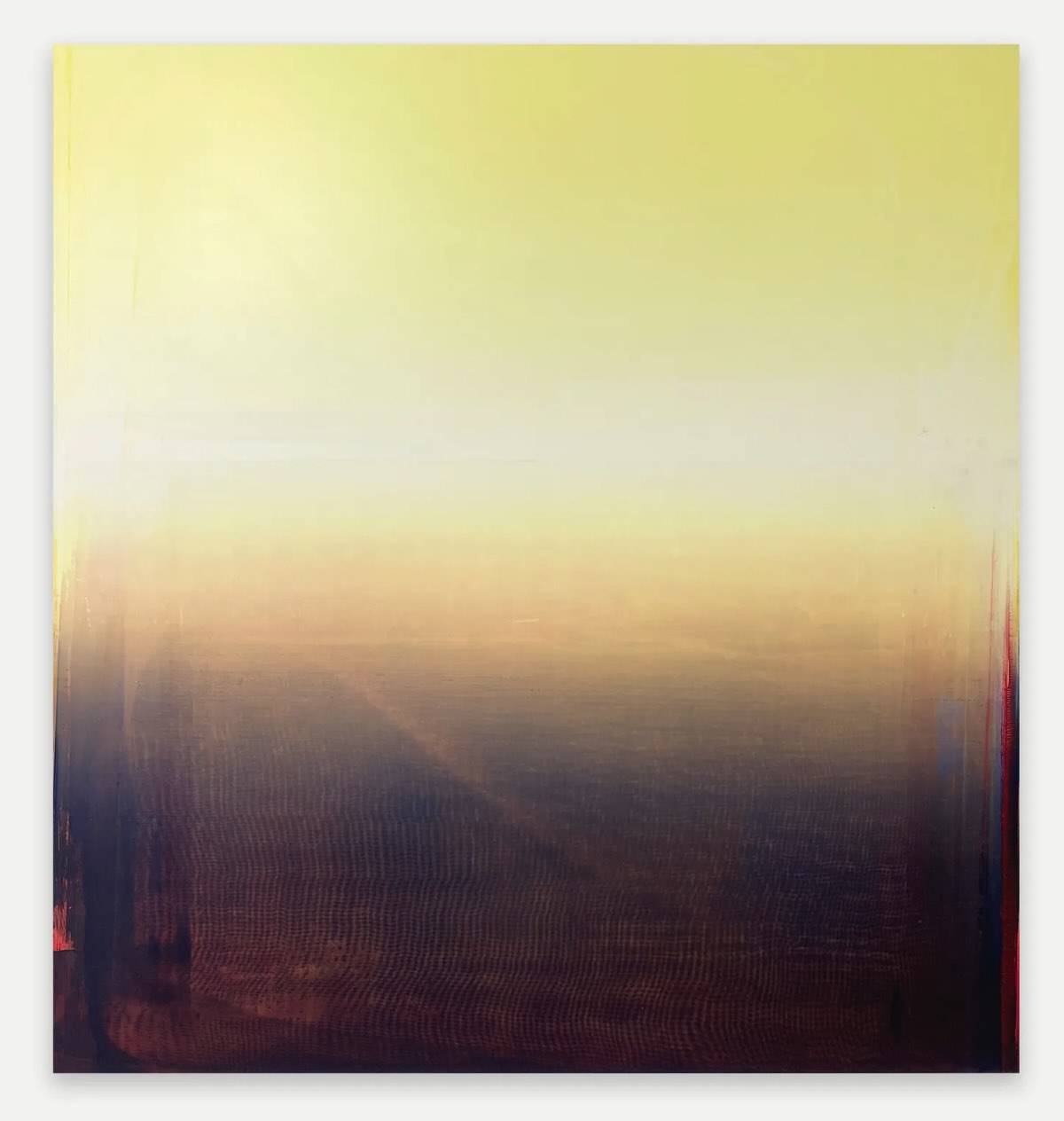
How to Know If It's Good, Part 2: Novelty
Casey Monda
This is the second post in a four-part series on the framework I use to evaluate whether a work of art has staying power. If you missed Part 1 on Intentionality, start there. And if you missed the introduction — When Is the Last Time You Bought Something That Will Outlast You? — that’s a good place to begin
In 1917 Marcel Duchamp submitted a urinal to an art exhibition. He turned it upside down, signed it with a fake name, called it Fountain, and submitted it as a work of art.
The selection committee rejected it. Of course they did. It was a urinal.
But Duchamp’s point wasn’t the object. It was the question. What makes something art? Is it the skill of the maker? The beauty of the form? The intention behind it? If an artist declares something art — if the concept is the work — does the object even matter?
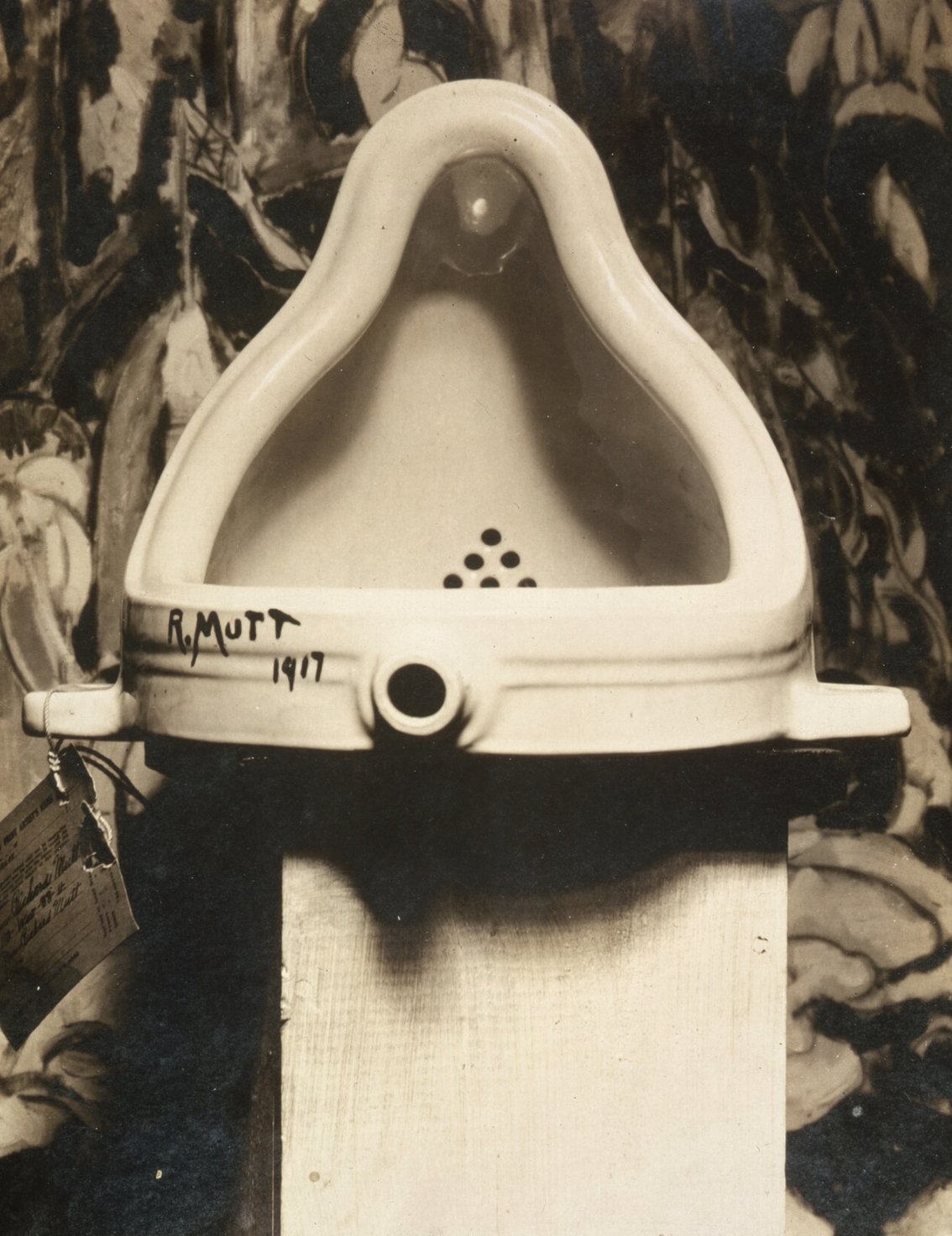
That question changed the entire conversation about what art is and can be. Not because a urinal is shocking or strange, because it is, but because there was a reason for the shock and strangeness. The provocation was in service of an idea that had no other way of being said. That’s novelty. It is not weirdness for its own sake, or shock for the sake of reaction, but a genuinely new way of saying something, thinking about something, or presenting an idea that couldn’t be said any other way.
When someone looks at Duchamp’s Fountain and says “my kid could do that,” they sound like idiots, to be honest, and they are missing the point entirely. Yes, your kid could probably turn a urinal upside down. Your kid could not have asked that question in 1917 in a way that changed how every artist and every viewer thought about art for the next century.
That’s what novelty looks like at its most extreme. In practice, standing in a gallery or a fair, it looks more like this: is this artist doing something I haven’t seen before? Are they using a material, a process, a visual language that feels genuinely distinct from everything around it? Are they advancing a conversation or just entering one that’s already crowded?
What Novelty Is Not
Before we talk about what novelty looks like, it’s worth naming what it isn’t.
Novelty is not trend-following. An artist whose work looks new because it looks like whatever is popular right now isn’t making novel work — they’re making timely work. Those are different things. Timely work dates. Novel work doesn’t.
Novelty is not bombast. It is not gimmicky edginess for shock value’s sake. Don’t mistake loudness for vision. You know who could scrawl the F word in spray paint on a Normal Rockwell print? Your kid. That’s not novelty.
Novelty is not strangeness for its own sake. A work can be bizarre, difficult, unsettling, and also completely derivative. The question isn’t whether something surprises you. It’s whether the surprise is actually achieving a real objective.
True novelty is specific. It’s an artist who found a visual language that is distinctly, identifiably theirs, and that nobody else got to first.
What Novelty Looks Like In Practice
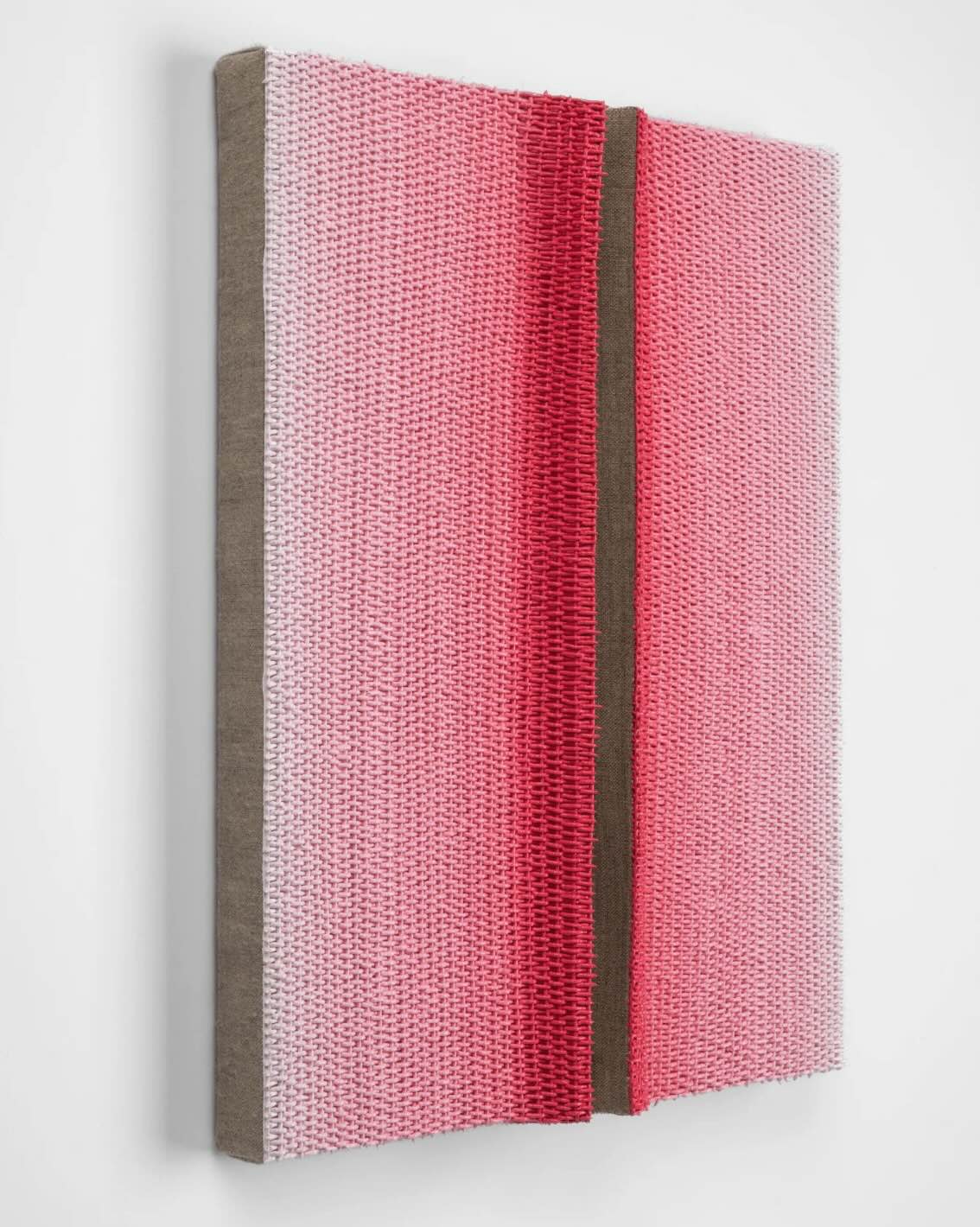
The first time I stood in front of Danielle Mysliwiec‘s work I genuinely didn’t know what I was looking at. She makes weavings out of extruded oil paint. Not weavings that look like paint. Not paint that references weaving. She physically extrudes paint into long strands and weaves them together the way you would weave thread — interlocking, layering, building a surface that is simultaneously a painting and a textile and neither one.
I had never seen anything like it. Not in twenty years of walking galleries and fairs.
But the novelty isn’t just the material trick. It’s what the material trick is saying. Mysliwiec is working within a long art historical conversation about the hierarchy between painting — traditionally the domain of high art, of men, of serious ideas — and weaving and textile, traditionally feminized, classified as craft, pushed to the margins. She’s not referencing that conversation. She’s physically enacting it. The paint and the fiber are literally the same thing in her hands. The hierarchy collapses in the making.
That’s novelty doing real work. The surprise is in service of an idea. No one has said what she is saying in this way.
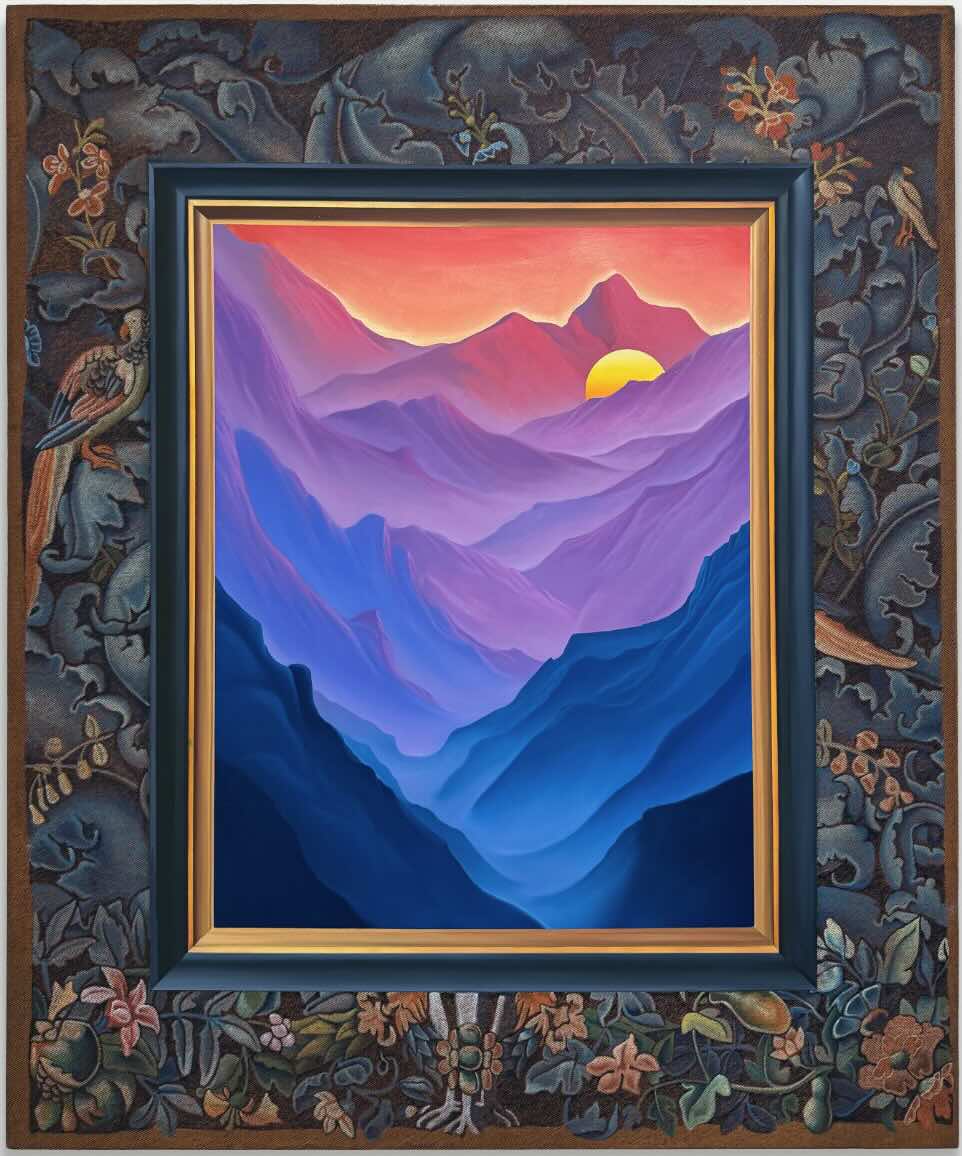
Kate McQuillen approaches novelty from a completely different direction. She is a printmaker by training who applies printmaking principles to painting — which means her painted surfaces have no brushwork, no impasto, no visible layering. They are as smooth as a print. She has invented a way of making gestural abstract painting that looks like it was never touched by a brush, which creates a deeply strange and beautiful friction between the physicality of paint and the mechanical precision of print.
McQuillen is also a reader and a thinker who draws on ancient Greek epics and tragedies — specifically the way those stories move between disparate emotional registers within a single scene. She uses that source material as a way into abstract painting: how can an image bring to mind a specific feeling even when it’s entirely removed from recognizable form?
The novelty in McQuillen’s work is layered. It’s the surface technique. It’s the conceptual framework. It’s the way those two things work together to produce something that exists liminally between the things it draws from — between painting and printmaking, between abstraction and narrative, between the ancient and the present.
Neither Mysliwiec nor McQuillen looks like anyone else. That’s the signature of novelty — work that is identifiably, specifically, irreducibly itself.
The Venturist and The Novelty Trap
If you’ve taken the collector type quiz on this site, you may already know you’re a Venturist. The Venturist collector often leads with novelty above everything else. They walk into a booth and something stops them — an energy, an unexpectedness, a “wow, I’ve never seen that before” that bypasses the analytical brain entirely. They trust that instinct and they act on it. Some of the most exciting collections I’ve ever seen belong to Venturist collectors.
But novelty is also the Venturist’s blind spot. Because novelty alone doesn’t tell you whether a work has staying power. It tells you the artist found something new. It doesn’t tell you whether what they found is grounded in something real, whether the intentionality is there, whether the work knows where it sits in the broader conversation, whether it has something urgent to say about the world we’re actually living in.
The Venturist who leads with novelty and stops there ends up with a collection full of work that was exciting, edgy, and surprising in the moment but fails to hold on to that moment for much longer.
Novelty is the entry point for you Venturists, but it’s not the whole conversation.
The Practical Question
When you’re standing in front of anything and trying to evaluate novelty, the question worth asking is: have I seen this before? Not “is this good?” Not “do I like it?” Just: is this doing something I haven’t seen done?
If the answer is yes — if you can immediately think of five artists making work that looks like this — then novelty isn’t the thing that’s going to make this work last. It might have other things going for it. But it’s entering a crowded conversation rather than advancing one.
If the answer is no — if you can’t quite place it, if it doesn’t fit neatly into a category, if you find yourself saying “I don’t know what this is exactly” — pay attention. That disorientation is worth investigating. It might be novelty. It might be the beginning of something.
A second question worth asking: does this artist have a visual language that is distinctly theirs? Could you identify their work in a group show without looking at the label? Artists who have developed genuine novelty tend to be immediately recognizable — not because they repeat themselves, but because they’ve found something that belongs to them and only them.
That distinctiveness is what you’re looking for. Not weirdness. Not shock. Not trend. Just: this person found something nobody else got to first.
Next week: Self-Awareness. Does this artist know where their work sits in the broader conversation? And why does that really matter?

How To Know If It’s Good? Part 1: Intentionality
Casey Monda
This is the first post in a four-part series on the framework I use to evaluate whether a work of art has staying power. If you missed the introduction — When Is the Last Time You Bought Something That Will Outlast You? — start there. And if you’d rather watch than read, the masterclass video is coming soon. I’ll link it here when it’s live.
I had a professor at Davidson College who gave me the single most useful tool I know for understanding how to know if art is good — not a checklist, not a theory, just one question he asked about everything. Not “is this beautiful?” Not “is this technically accomplished?” Not even “do you like it?”
Why does this image look the way it does?
At eighteen I thought he meant historical context — the forces that shaped an artist’s moment, the movements they were responding to, the world they were making work inside. And that’s part of it. But as I grew in my understanding of art I came to realize the question was really about something more internal. It was about choice, the choices an artist made in response to those external forces. What were they controlling inside the studio amidst the uncontrollable external forces of the times in which they lived?
That question became the foundation for the first criterion I use when evaluating whether a work has staying power: intentionality. It won’t tell you everything about whether a work is good. But without it, nothing else matters much.
Here’s the core concept: is the artist in command of their choices?
If you think about a work of art less as a finished product and more as a series of decisions a person made to communicate a particular message, intentionality snaps into focus. Every decision — scale, material, mark, color, composition — should feel considered rather than accidental or decorative. The question isn’t “is this skillful?” It’s “does this artist know exactly what they’re doing and why?”
Craft without intention is decoration. Intention without craft can still produce powerful work. But when you get both, you get something worth stopping for.
The Picasso Problem
The clearest example of intentionality in art history is also the most misunderstood.
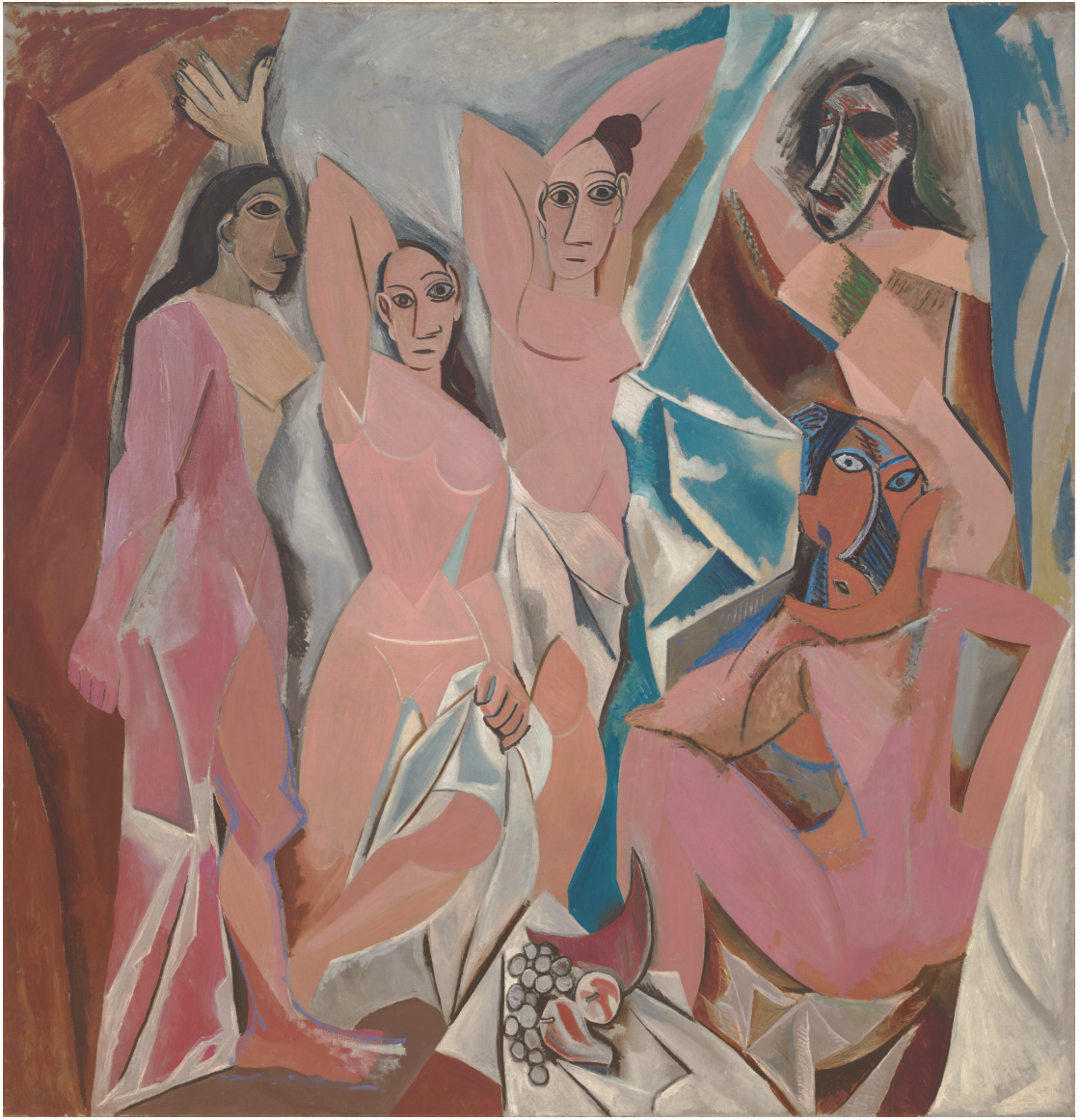
Everyone knows Cubism looks strange. The fractured planes, the multiple perspectives simultaneously visible, the figures that seem to be coming apart and reassembling at the same time. Most people assume it looks strange because Picasso was doing something new and difficult — that the strangeness is the symptom of a learning curve.
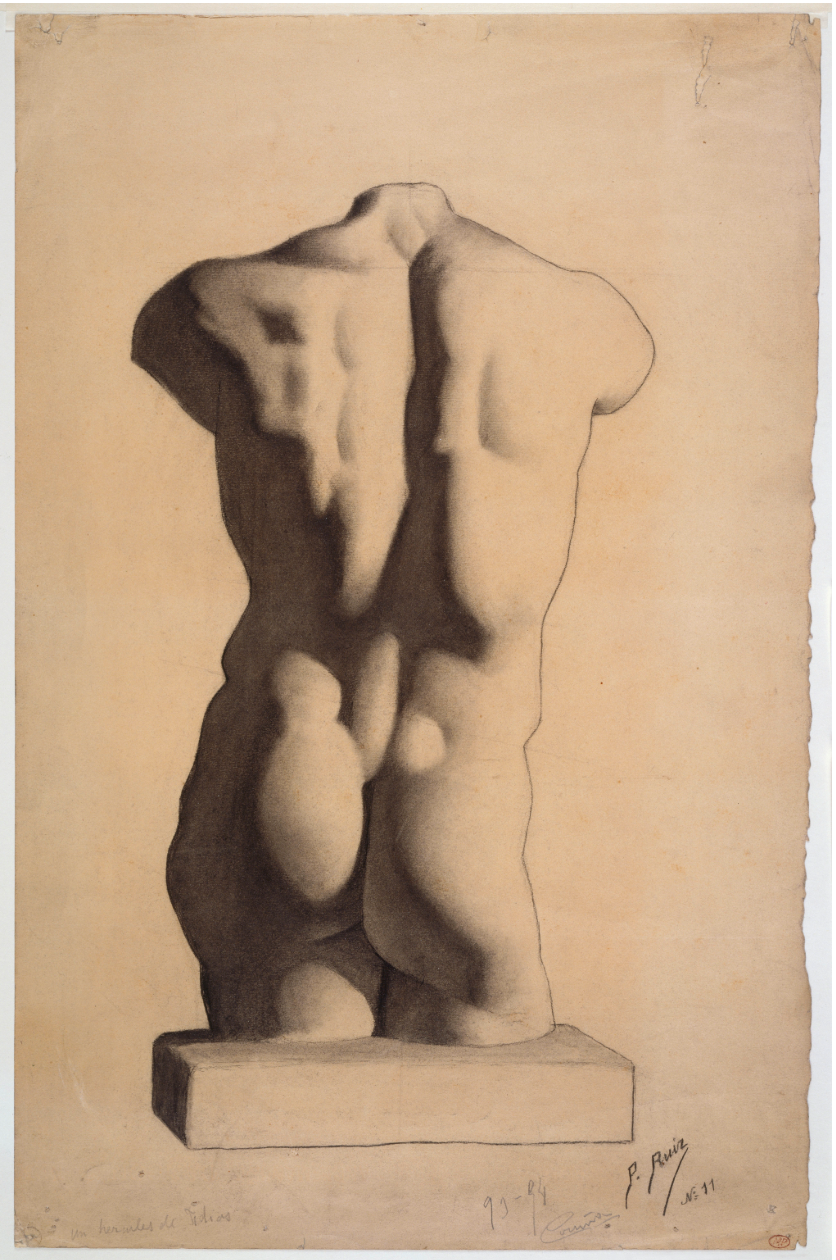
It isn’t. Picasso was one of the greatest draftsmen who ever lived, on par with Michelangelo. He was a prodigy who could render the human figure with photographic accuracy by the time he was a teenager. Cubism doesn’t look the way it does because it had to. It looks the way it does because Picasso chose it. Every fractured plane, every impossible angle, every figure that refuses to resolve into legibility — that was a decision made by someone who knew exactly what he was giving up and why.
That’s intentionality. Not the inability to do something else. The deliberate choice to do this instead.
Intentionality in Representational Work
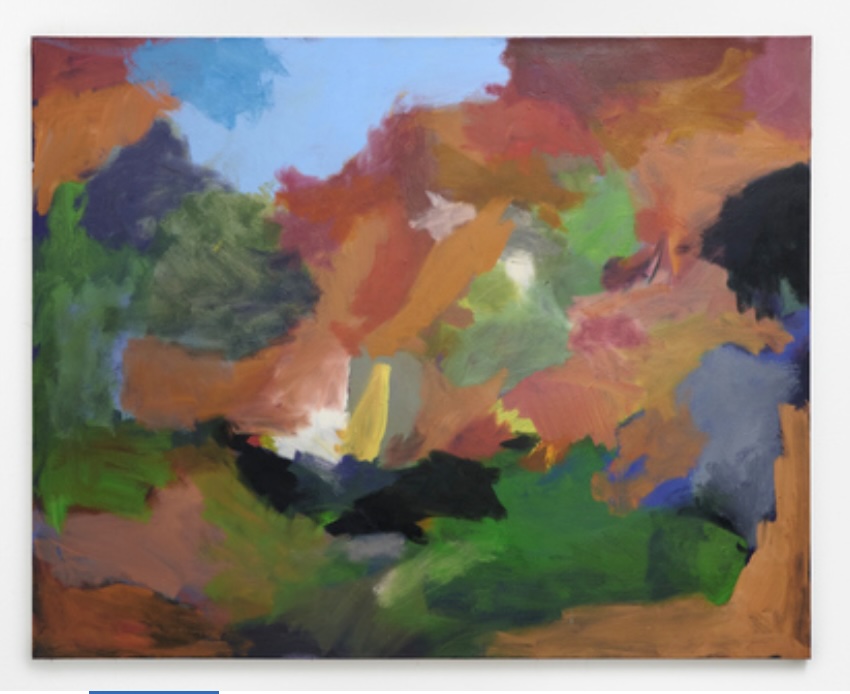
Stephen Thorpe makes it easy. His paintings are representational — you can read the landscapes, the atmospheric shifts between interior and exterior, the collision between the natural world and the psychological one. When you look at a Thorpe, you feel almost immediately that someone is in complete command of what you’re seeing. The gradations of color are deliberate. The compositional tension is deliberate. The way the work sits at the border between the recognizable and the dissolving is deliberate.
Thorpe’s gallery describes his work as “deliberately rendered to represent the dualities, synergies, and contradictions of relation between environment and human interiority.” That sentence is doing what the best artist statements do — it confirms what you already felt standing in front of the work. The form and the concept are in alignment. There is a reason this looks the way it does, and once you understand the reason, you see it everywhere in the work.
That alignment — between what an artist is trying to say and the choices they make to say it — is the signature of intentionality.
Intentionality in Abstract Work
Abstract work is harder. When there’s no subject to anchor you — no figure, no landscape, no recognizable object — it can be tempting to assume that whatever happened on the canvas was more or less accidental. Paint flew, gravity pulled, the artist responded to what emerged. And sometimes that’s true. Sometimes a work really is just what happened.
But sometimes the apparent chaos is the most intentional thing in the room.
Demetrius Wilson‘s paintings look, at first encounter, like pure energy. Paint flies across his canvases like a collision. Fragments of bodies and beasts emerge from turbulence and dissolve back into it. The work is saturated with color, driven by restless mark-making, full of violence and movement and something that feels almost uncontrolled.
It isn’t.
Wilson is investigating specific ideas — truth, beauty, and violence, and whether they exist independently from humankind. His abstractions represent a deliberate departure from his earlier figurative work. He could paint a figure. He chooses not to, because the abstraction opens the canvas as a laboratory for the ideas he’s working with in a way that figuration wouldn’t. The marks that look accidental are in fact choices made in service of a very specific inquiry. The turbulence is the point. The fragmentation is the point. The violence that feels generative rather than destructive — that is absolutely the point.
This is how you apply the intentionality lens to abstract work: you ask whether the form supports the concept. Not whether you can explain the concept without reading the wall card, but whether the work makes you feel like the artist intended — whether the choices they made reflect or support their end goal. Does this look the way it does because the artist chose it, or because they stumbled onto it?
Wilson’s work answers that question with complete confidence. Even if you don’t know what he’s investigating, you feel that someone is in command. That’s intentionality operating below the level of conscious understanding — which is, arguably, where the most powerful work happens.
The Practical Question
When you’re standing in front of anything — representational or abstract, figurative or conceptual — the question worth asking is simple: could this have been made differently and been equally strong?
If the answer is yes — if the colors could have been different, the scale could have been smaller, the mark could have been looser, and none of it would have mattered — then the choices aren’t doing necessary work. The craft may be impressive. The result may be beautiful. But it’s decoration.
If the answer is no — if this work could only be this and nothing else, if every decision feels load-bearing, if changing anything would change everything — then you’re probably looking at intentionality.
That’s the test. It won’t always give you a clean answer. But it will always make you look harder. And looking harder is the whole point.
When Is the Last Time You Bought Something That Will Outlast You?
Casey Monda
Like something that was specifically designed to last a lifetime and beyond?
We hear it a lot. “They just don’t make things like they used to.” The maxim feels truer today than it ever has before. Cars, washing machines, clothes — nothing is made to last anymore. Everything is fast, made for an ever-changing and evolving world, and largely disposable despite price tags that might suggest otherwise.
And yet we keep spending. On things that will be out of style in three years, worn out in five, forgotten in ten. Most of us have never stopped to ask: is there anything I could buy right now that would actually outlast me? That would still mean something in twenty years — not because it held its value on a spreadsheet, but because it kept giving something back?
I’ve been thinking about this question a lot lately, particularly as someone who spends most of her waking hours thinking about how to buy art that lasts. We live in a culture of extraordinary consumption and almost no permanence. We spend freely on things designed to be replaced — clothes that go out of style, furniture that follows trends, art that matches the sofa. None of it is wrong exactly. But none of it lasts either.
And yet there is a category of object that was specifically designed to outlast its moment. The object is made by someone trying to say something true about their time, their experience, or their way of seeing the world. It is something that leaves its mark on the world by, in the words of art critic Jerry Saltz, “expanding consciousness, deepening experience, and destabilizing certainty.”
That object is a work of art. A real one.
I want to be careful here because I’m not talking about all art. I’m not even talking about expensive art. If you want to know how to buy art that lasts, the distinction I’m making has nothing to do with price and everything to do with intention — the difference between something made to decorate and something made to endure.
Here’s the most honest way I know to explain it.
There is work being made right now — and sold, in galleries, for thousands of dollars — that will look exactly the same in ten years as it does today. You’ll walk past it on your wall and feel the same pleasant feeling you felt the first day. You might marvel at the artist’s unique material or process or reminisce over a particularly lovely vacation to your favorite beach. It will still be pretty. It will still work with the room. And that’s all it will ever do.
And there is other work being made right now — sometimes by artists no one has heard of, sometimes for less money than you’d expect — that will look different in ten years, not because the work changed but because you did. You went through something, or lost something, or became someone slightly different than the person who hung it, and the work has enough in it to meet you where you are now rather than where you were then.
That second kind of work is what I think of when I think about art that lasts.
When you’re buying original art for the first time, the question of what lasts versus what doesn’t is rarely part of the conversation anyone has with you. Most advice stops at “buy what you love.” That’s true — but it doesn’t help you understand what you’re actually choosing between.
Consider Jude Griebel. He is a Canadian sculptor — a 2026 Guggenheim Fellow — who spends months hand-carving miniature figures from wood, clay, textiles, and papier-mâché, merging human bodies with landscapes, consumed species, and the wreckage of the natural world. His sculptures are simultaneously grotesque and tender, darkly funny and genuinely heartbreaking. They are about what we are doing to the planet and to each other — about consumption, erasure, and the strange entanglement between human bodies and the living world around them.
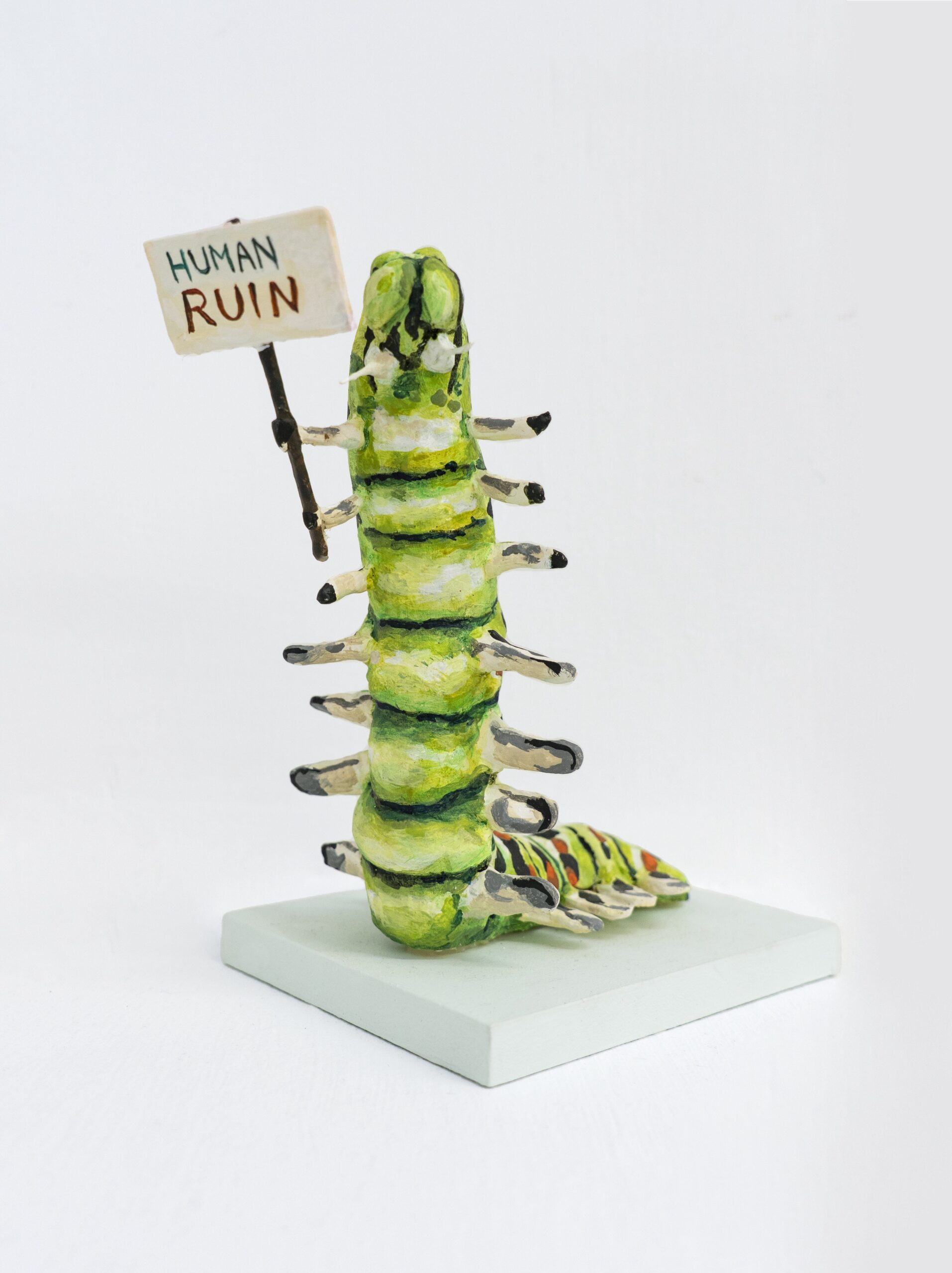
Right now, looking at a Griebel sculpture, you might feel the climate anxiety you carry quietly every day given a form you can actually look at. In five years, as the world changes in ways we can’t predict, the work will mean something different. In ten years, if you’ve had children or lost someone or watched a landscape you love disappear, it will mean something different again. The work has enough in it to grow with you because it is built from something real — a question Griebel cannot stop asking, expressed through a practice of almost incomprehensible patience and craft.
That is what it means to own something that lasts.
The question worth asking before you buy anything — not instead of asking whether you love it, but alongside it — is whether the work has enough in it to grow with you. Whether the artist was making choices or just making something pleasant. Whether there is an intention underneath the surface that will reward you for looking harder as the years go by.
So how do you tell the difference before you buy? That’s exactly what I’m going to spend the next four weeks unpacking.
I’ve developed a framework — four criteria I apply to every work I evaluate, whether I’m walking an art fair, advising a client, or adding something to The Collection. Intentionality. Novelty. Self-awareness. Relevancy. Not art world jargon — practical questions you can ask standing in front of anything, at any price point, in any gallery or fair or Instagram feed. Questions that will help you tell the difference between something made to please and something made to last.
Next week we start with intentionality. It’s probably the easiest one to recognize and appreciate if you are new to art.
This is not an argument against beauty. I believe in beauty. Some of the most lasting works I know are also breathtaking to look at. But beauty that is only beauty — that has no argument underneath it, no question it is asking, no reason it had to look exactly this way and no other way — is decoration. And decoration, however lovely, does not outlast you. It outlasts its moment, maybe. It does not outlast its trend.
The artists I think about in this context are the ones building practices around something real. A question they can’t stop asking. A material that means something beyond its surface. A way of seeing the world that you can’t get anywhere else. When you live with that kind of work, it keeps showing you things. It grows as you grow. It earns its place on the wall not once, when you buy it, but over and over, every time you walk past it and it stops you again.
That is what it means to buy something that lasts.
You don’t have to. Nobody is telling you that you owe the future a collection of significant work. But I think most of us spend so much of our lives buying things that will be forgotten — by us, by everyone — that we forget it’s possible to do otherwise. That for roughly the same money you might spend on something that will be out of style in five years, you could own something that will still be asking you questions in twenty.
When is the last time you bought something that will outlast you?
Maybe it’s time.
Know Your Type: Dear Contextual Collector, The Story Is Not Enough
Casey Monda
This is the fourth and final post in my Know Your Type series on the four collector types I’ve identified through years of advisory work. If you missed the first three — the Venturist, the Design-Forward Collector, and the Strategic Collector — start there.
I should tell you upfront: I am a Contextual Collector.
None of my art matches my decor. None of it really matches anything. My walls are not a mood board and they are not a color story. They are a conversation — a series of arguments and agreements between works that have nothing to do with my sofa and everything to do with what I think about the world. I bought every piece because it had something to say and I wanted to live inside that conversation. (Except for 1! 1 piece was gifted to me by the artist because I loved it so much in his studio. And I still find it breathtaking but I always struggle with it because I worry it is too pretty…more on that in a second!)
That is the Contextual Collector in a nutshell. And I want to spend some time with this type because I think it is the most misunderstood of the four, and because understanding its blind spot requires me to be honest about my own.
The Contextual Collector wants to know the story. Not the market story or the spatial story, but the real story, the message: what is this artist trying to say, where does this work come from, what ideas is it in conversation with, and why does it look exactly the way it does? They may or may not care whether it matches the couch. They may or may not care about the artist’s education and CV, although if that context illuminates what the work is doing then it matters enormously. What they care about above all else is the narrative — the intellectual and emotional architecture behind the object on the wall.
The Contextual Collector is also the collector most likely to explain every work in their home to every person who walks through the door. And I mean every work. In detail. With backstory. This is not showing off. It comes from a deep and genuine passion, from the belief that if they can just get you to understand what this work is doing, you will love it as much as they do. The collection tells their story. They want you to read it. (If you’ve noticed, the tag line for Casey Monda Art Advisory is “Transforming spaces into stories.” I think that just about sums it up.)
I recognize myself in this description entirely.
The Contextual Collector collects with genuine intellectual rigor. When they fall in love with a work it is because they have followed the thread of an idea into the practice of an artist and found something that illuminates a question they have been carrying. The result, when it works, is a collection of extraordinary depth. The works do not merely coexist on the wall but speak to each other across medium and geography and time. The dialogues between works in a Contextual Collector’s home can be more interesting than the works themselves.
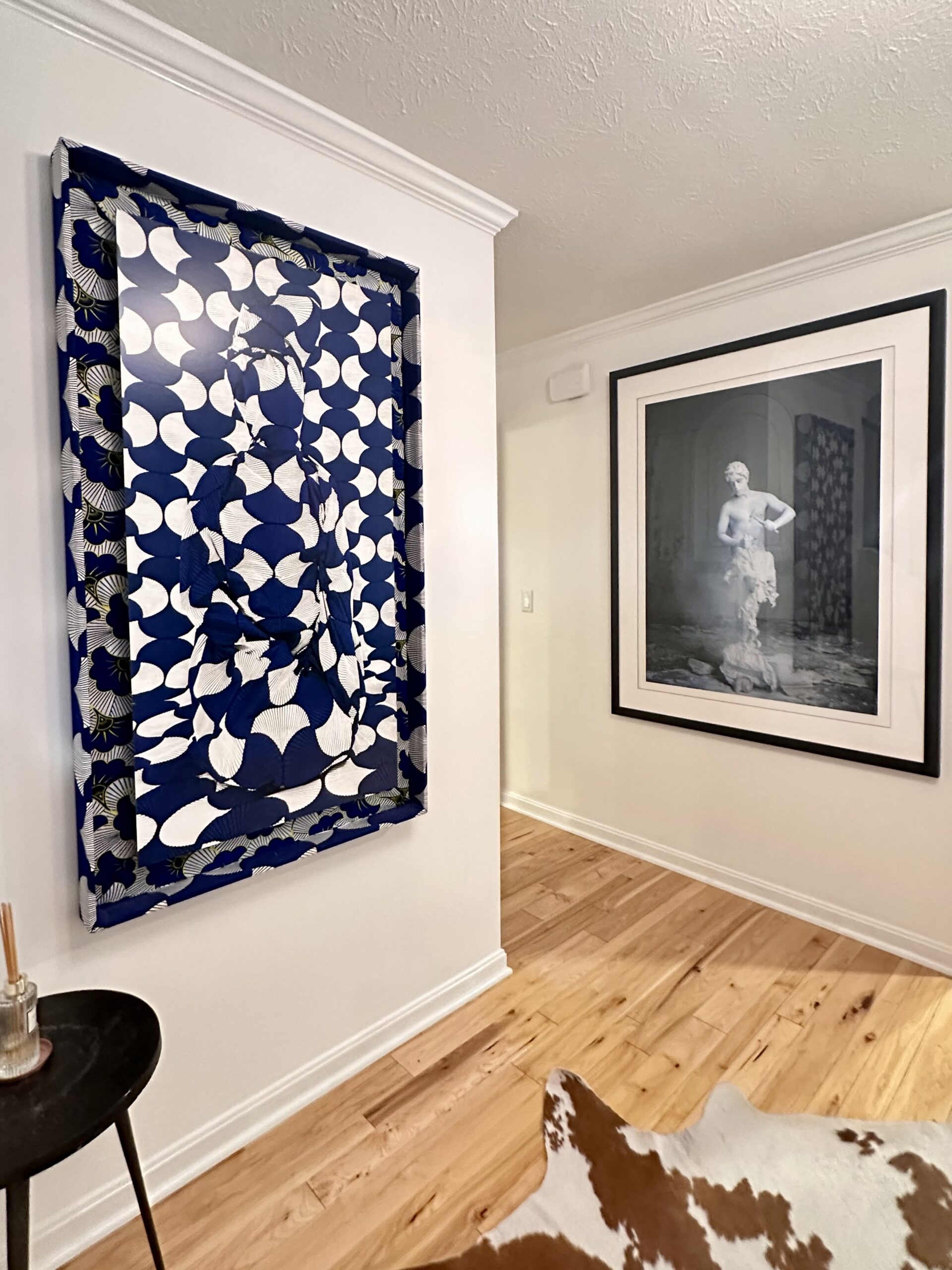
I have an Alia Ali photograph and a Lara Zankoul photograph that live near each other on my walls and create exactly this kind of conversation. Alia’s work is about colonialism and cultural appropriation. Bodies are swathed in fabric, identities obscured, representing communities whose artisanal traditions were stolen by colonizers and exported back to their home countries for financial gain. Lara’s work shows a man who appears to be carving himself out of a marble sculpture — a meditation on becoming, on creating the self you were meant to be or the persona you choose to construct. Separately they are each powerful. Together they create something neither makes alone: a dialogue about representation of self and others, about who gets to determine how a body is seen, covered, uncovered, claimed, or liberated. That conversation happens on my wall every day and I never get tired of it.
Rebecca Shore rewards the Contextual Collector because her work demands exactly the kind of looking this collector does best. Her meticulous abstract paintings look at first glance immaculate and cool, and then you find the layer of wry humor, the punning reference, the reuse of the same shape to represent multiple objects. Shore has been cultivating this practice in Chicago since the early 1980s, rooted in the fiber arts tradition, shaped by Chicago Imagism, informed by her background in quilting and her father’s scientific mind. There is more to unpack in one of her small panels than in most room-sized installations. A Contextual Collector will never run out of things to find.
Nicolas Grenier rewards them because the work is literally built from ideas. His paintings use the visual language of architectural diagrams, color coding, arrows, and legends to investigate the dysfunctional connections between the political, economic, cultural, and social systems we inhabit. There is no way to understand a Grenier painting without understanding what it is arguing. The surface is compelling on its own terms — the color is precise, the composition considered, the scale carefully calibrated — but the full depth of the work only opens up when you follow the argument. A Contextual Collector who does that work gets access to an intellectually ambitious painting practice.
Ana Won rewards them because her practice is rooted in a specific and deeply personal cosmology — Catholic upbringing, the hieroglyphic cave art of her native Tucumán in Argentina, the spiritual and alchemical traditions of indigenous Northwestern Argentine culture. Her paintings and the carved wooden structures she builds to contain and frame them are not decorative objects. They are mediators between the living and the dead, between humans and gods, between communities and their cosmologies. The Contextual Collector who follows that thread discovers a practice that is simultaneously ancient and urgent, local and universal, deeply personal and radically open.
But here is the blind spot.
The Contextual Collector has a hard time accepting beauty for beauty’s sake. They are wary of being moved by something they cannot fully explain — not because they are cold, but because they do not want to be fooled. They do not want to fall in love with something that lacks intellectual depth and discover later that they were seduced by the surface. They do not fall in love easily. They wait until they understand.
And in waiting, they sometimes let the most moving things pass them by.
Anthony Miserendino makes work that is beautiful. Genuinely, arrestingly, unambiguously beautiful, the kind of beauty that stops you before you have a thought, before you have a question, before you have a framework for what you are feeling. A Contextual Collector looks at it and gets nervous. Where is the concept? Where is the argument? What is the intellectual architecture? And while they are asking those questions the work is doing something that doesn’t need questions — it is just landing, directly, in the body, in the way that the most powerful experiences do before the mind gets involved.
The Contextual Collector walks past Anthony Miserendino. Not because the work is shallow. Because they don’t trust beauty that arrives before the story.
This is the thing I have had to learn about myself as a collector: the need to narrate is also a defense. When I can explain a work — when I have the story, the context, the argument — I feel safe with it. But some of the most important things a work can do happen before language. They happen in that fraction of a second before you know what you are looking at, before you have decided whether to like it or not. The Contextual Collector who is always reaching for the story misses what lives in that moment.
The best Contextual collections I can imagine are the ones where the intellectual depth and the wordless resonance arrive together — where a work stops you first and then rewards every question you bring to it afterward. That is the standard worth holding. Not concept over feeling, not feeling over concept, but both at once, in dialogue, the way the best works always are.
Your collection tells your story. Just make sure some of the chapters surprise even you.
Know Your Type: Dear Strategic Collector, The Spreadsheet Is Not Enough
Casey Monda
This is the third post in my Know Your Type series on the four collector types I’ve identified through years of advisory work. If you missed the first two — the Venturist and the Design-Forward Collector — start there.
Let me say something that might be unpopular in certain corners of the contemporary art world: I am not opposed to the Strategic Collector’s approach to buying art.
I know that’s not what you expected to hear. The art world has spent decades telling collectors that art beats the index in the same breath as telling them to buy what you love regardless of investment potential. It is a tired story about art as investment that I cannot tell you how many times I heard during New York Art Week this week. The idea of buying contemporary art to make money, coupled with the practice of asking for discounts on works under $5,000, really shows how little regard so many have for the artist’s time, skill, and simple cost of goods. But that is a separate soap box I will stand on at a later date.
Here is what I will say about collecting art as investment at the emerging end of the market: no one has a crystal ball. These artists are so early in their practice that often they are still working out what they want to say and how they want to say it. Buying emerging art is patronage. It is casting a vote for the voices you feel should be a part of our moment’s chorus. It is supporting an artist’s practice that you think deserves to live to see another day. It is supporting a gallery’s program that you really believe in. It is helping shape the legacy and the story that our moment will tell about ourselves.
But here is why I also don’t have a problem with the way a Strategic Collector thinks about buying art.
The Strategic Collector has a genuine commitment to quality. If you’re going to put serious money into something and expect it to hold or increase in value, you cannot afford to be sloppy about what you buy. You have to develop real discernment. You have to understand the market, the institutional landscape, the gallery ecosystem, the difference between an artist on a genuine trajectory and an artist who is having a moment. That discipline, applied rigorously, produces serious collections. I have seen it happen.
But here’s the question I want to sit with for a moment: why do we expect art to hold its value?
We don’t expect that of almost anything else we spend money on. A very expensive car depreciates the moment you drive it off the lot. Furniture depreciates. Real estate sometimes appreciates and sometimes doesn’t, and we accept that as a feature of the market rather than a moral failing. We understand that an investment in a startup might go to zero, might do fine, or might shoot the moon — and we don’t consider the zero outcome a sign that we shouldn’t have invested.
Why is art different?
If you view art as an asset class then you need to take a more honest view of the potential outcomes. Some works appreciate dramatically. Some hold their value. Some don’t. That’s not a failure of the art or the artist, but the nature of any market that is as opaque, relational, and culturally contingent as the contemporary art market. The difference is that art has power beyond its market performance. It has the capacity to change how you see the world, to give you a conversation partner that never runs out of things to say, to connect you to the humanity of the person who made it. That’s not nothing. That’s actually everything — and it’s available regardless of what the work does at auction in twenty years.
So I’ll say it plainly: every acquisition should be something you believe in and want to support. The financial upside is a legitimate consideration when buying art. It should just never be the first or the only one.
The Strategic Collector at their best is a researcher. They want to know everything — the artist’s education, exhibition history, gallery representation, museum acquisitions, critical reception, market trajectory. They are institutionally fluent in a way that most collectors aren’t. And when that research leads them somewhere genuinely important, the result is a collection with real depth and real staying power.
Molly Greene is that kind of artist. Three degrees from Yale — environmental science, philosophy, American studies — before she picked up a brush. A practice that looks at first glance like it might be decorative: soft, airbrushed, pastel, organic forms that feel botanical and slightly surreal. A Strategic Collector doing their homework finds serious gallery representation, impressive CV for an artist at her career stage, solo shows in Paris and London. They buy on the credentials. And then they live with the work and discover that what appeared decorative is actually a sustained philosophical investigation into the porous boundary between the human and the non-human, the natural and the artificial — exactly the questions that matter most as we navigate the future of humanity and AI. The Strategic Collector got there for the right reasons and then got significantly more than they bargained for.
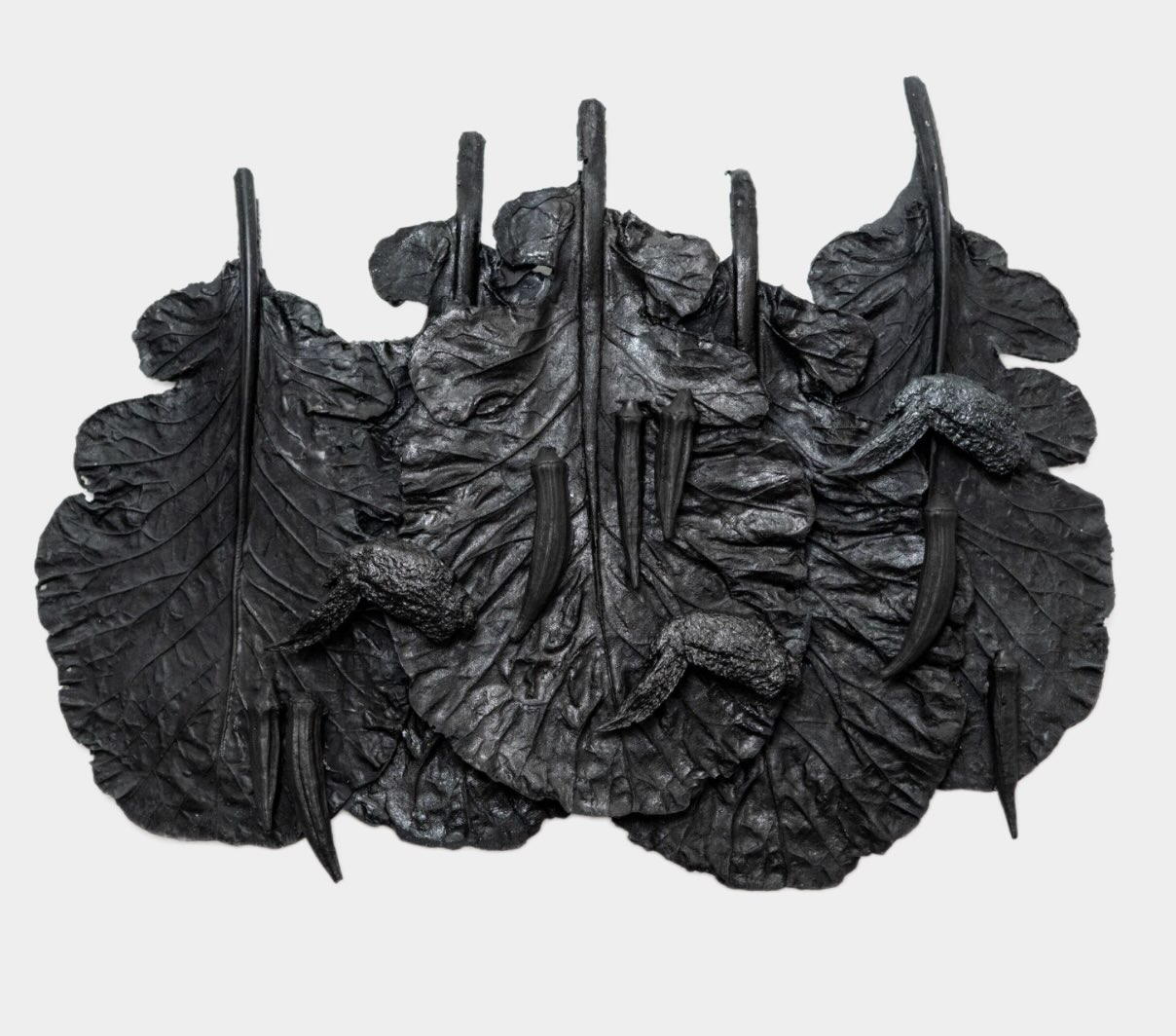
LaKela Brown is the case where the research confirms what the work already announces, but you have to feel it to understand why it matters. Her plaster reliefs — door-knocker earrings, rope chains, culinary plants, ancestral foods — are in the permanent collections of the Museum of Fine Arts Boston, The Studio Museum in Harlem, and the Mint Museum. A Strategic Collector doing their homework finds serious institutional validation at every turn. But the credentials can’t tell you what it actually feels like to stand in front of one of these works and understand that you’re looking at something that is simultaneously an artifact, a monument, a feminist statement, and a love letter to Black American culture — using the iconography of 1990s hip-hop and the language of ethnobotany to draw a line between African Americans and West Africa that is both deeply personal and historically profound. The research leads you there. The looking does the rest.
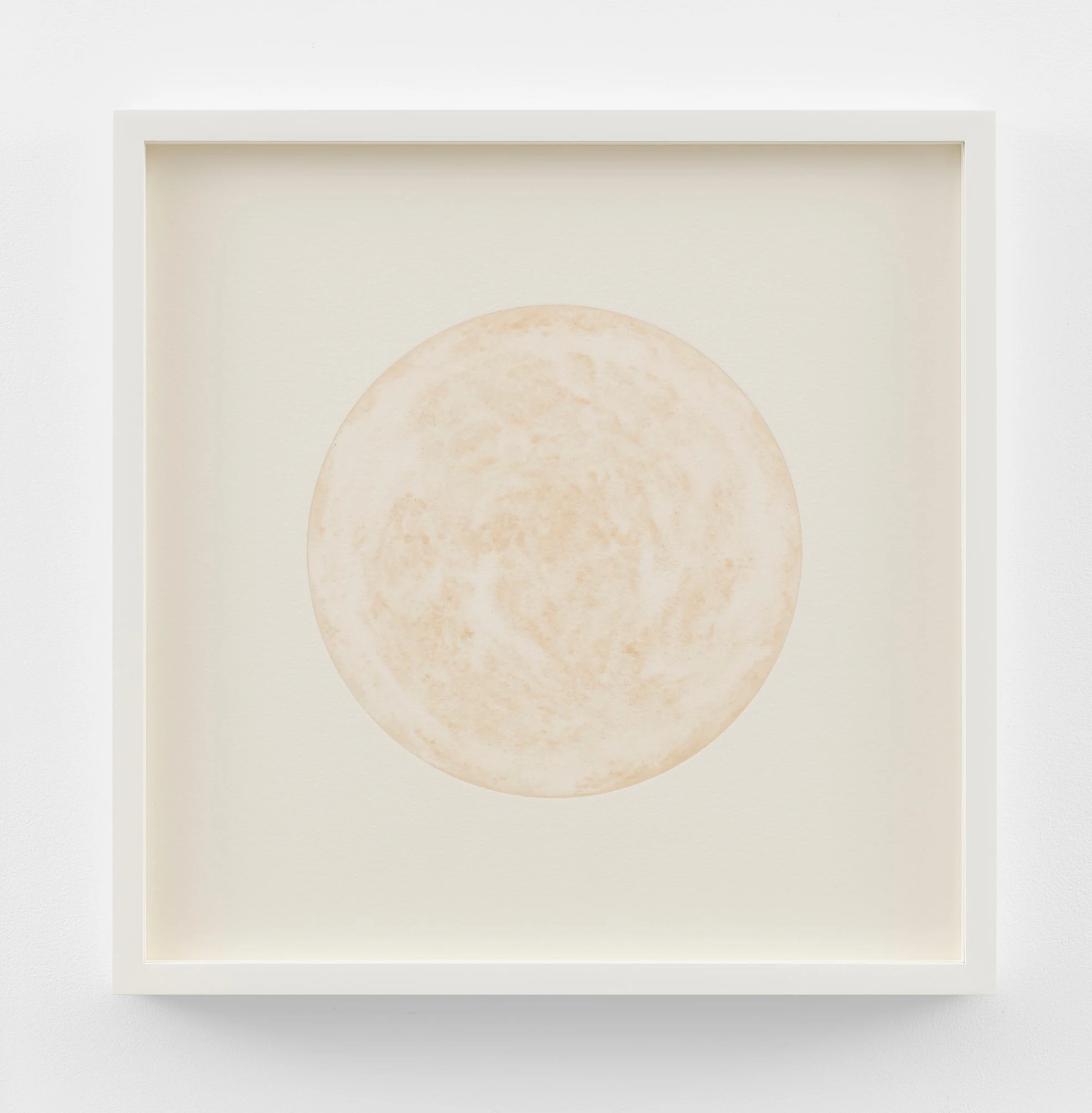
And then there is Katie Paterson. An hourglass filled with stardust. Watercolors made with water drawn from ancient ice cores. A piano piece transmitted to the moon and reflected back to Earth, played on a digital grand piano whose keys move of their own accord. Work in the Guggenheim, the Whitney, the Art Institute of Chicago. The Future Library project — a 100-year artwork in Oslo in which writers contribute manuscripts that won’t be read until 2114. With Katie Paterson, the research and the emotional experience are perfectly aligned. The institutional credentials are extraordinary and the work delivers on every one of them and then some. This is what strategic collecting looks like when it works: the data and the feeling arrive at the same place and confirm each other.
But here’s where the Strategic Collector’s blind spot lives.
The research only finds what has already been found. Institutional validation, by definition, comes after the fact. A museum acquires work that has already been recognized. A major gallery represents artists who have already demonstrated a trajectory. The critical apparatus catches up to artists over time — sometimes years, sometimes decades after the work first appeared.
Which means the Strategic Collector is almost always buying after the most important moment has passed.
Bongsu Park grows flowers in her garden at her flat in London. She makes pigment from those flowers and uses it to paint them. She distills their oils into scent and throws small ceramic vessels to house the oil, which she places on a ledge beside the painting. The whole practice is a meditation on memory — on how scent evokes it, how it shifts and changes over time, how what we believe we remember may not be what actually happened. The work is impeccably crafted and completely self-contained: a world in miniature, built from the most perishable materials and the most permanent questions. There is no major institutional trail. There is no market trajectory to analyze. There is just the work — and the work is phenomenal.
A Strategic Collector walks past Bongsu Park. Not because the work isn’t strong enough. Because the spreadsheet doesn’t know what to do with her yet.
Yunji Park makes quiet, evocative work about mundane moments. She is young. The institutional trail is thin. But the work is expertly executed and genuinely moving — about the fleeting nature of time, the moments that pass before we’ve registered them, the ordinary rendered with such precision and care that it becomes extraordinary. In twenty years someone will look back at who was buying Yunji Park’s work right now and ask the same question they ask about the Venturist’s great discoveries: how did you know?
Here’s the honest tension at the heart of strategic collecting: the artists most likely to have significant financial upside are often the ones who don’t yet have the institutional context to justify the purchase on research alone. They require something the spreadsheet can’t provide — an eye, a gut, a willingness to be moved by something before the world has told you it’s okay to be moved by it.
That’s not a reason to abandon the research. It’s a reason to let the research be the beginning of the conversation rather than the end of it.
The best strategic collection I can imagine is one where the data and the feeling are always in dialogue. Where you know the institutional landscape well enough to recognize when an artist is on a genuine trajectory — and where you trust your own response enough to act before the trajectory is complete.
Art is not a stock. It is not a car. It is not real estate. It is an object made by a human being who was trying to say something that couldn’t be said any other way. Buy it because you believe in what they’re saying. The financial case, if there is one, will follow.
Know Your Type: Dear Design-Forward Collector, The Room Is Not the Point
Casey Monda
This is the second post in my Know Your Type series on the four collector types I’ve identified through years of advisory work. If you missed the first one on the Venturist collector, start there.
There is a moment I have watched happen like it’s Groundhog Day — and it tells me immediately that I’m looking at a Design-Forward Collector. They walk into a gallery or a fair booth, stop in front of a work, and before they’ve spent more than ten seconds with it, they say — sometimes out loud, sometimes just with their body — “I don’t know where I’d put that.”
That’s the Design-Forward Collector. And before I say anything else, I want to say this clearly: there is absolutely nothing wrong with wanting art that looks good in your home. I have said it before and I will keep saying it. It’s okay for the art to match the couch, or not match the couch, whichever way your interior design swings. The art world has spent decades making people feel lesser for caring about how a work looks in their living room, and I think that’s one of the most damaging things it has done to its own future.
So this is not a post about why you should stop caring about how your art collection lives in your interior design schema.
It’s a post about what you might be doing before you even get to the walls.
The Design-Forward Collector has genuine skills that more intellectually driven collectors often lack. They think spatially. They curate instinctively — mixing media, varying scale, understanding that a room full of paintings on canvas is not very interesting. They are drawn to beauty and coherence and what I’d call a spatial story: the way objects in a room speak to each other, create tension, and establish a mood. Some of the most considered collections I’ve ever seen belong to Design-Forward Collectors. They understand that art lives in the world, not in a white cube, and that the experience of living with work every day is as important as the experience of encountering it for the first time.
They are also the ones who often approach an art fair with their Pinterest board in hand, trying to match a specific spatial vision with what is available to buy right now.
They are often the collectors the art world looks down on most. And I want to acknowledge something uncomfortable here: I have contributed to that problem.
Like most advisors who work on beautiful projects, I post the beautiful projects. The stunning living rooms, the carefully considered installations, the spaces where art and architecture and interior design have come together in a way that makes you want to sit down and never leave. I post these because they’re beautiful and because the algorithm rewards them and because, honestly, they’re what a lot of people want to see. But what I’m inadvertently doing — what we’re all inadvertently doing — is creating a visual culture that tells new collectors this is what collecting looks like. And so they go out into the world trying to replicate an image they saw on Instagram rather than trying to understand what they actually respond to.
It’s a vicious cycle and I’m part of it. I’m naming that because I think it’s worth naming.
Here’s what the Design-Forward Collector does brilliantly: they bring taste and intention to the spatial experience of living with art. These three artists are in The Collection for exactly that reason — they reward the Design-Forward eye while also checking the harder boxes.
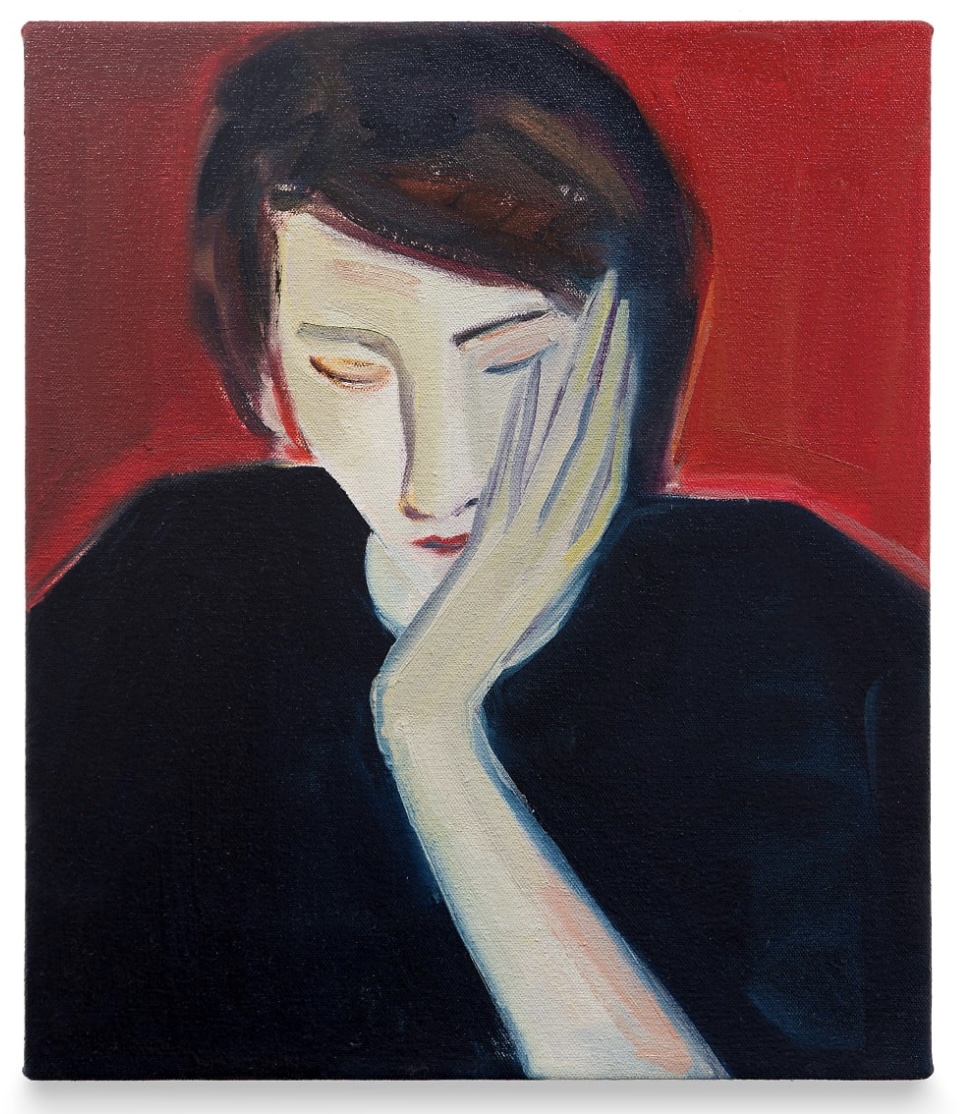
Eve Ackroyd’s The Evening Before — a figure withdrawn against a field of deep red, painted with subtle psychological intensity — works for them because it has a clear emotional temperature that anchors a room without dominating it. The color story is strong but livable, the scale is considered, and there’s a melancholy in it that deepens over time.
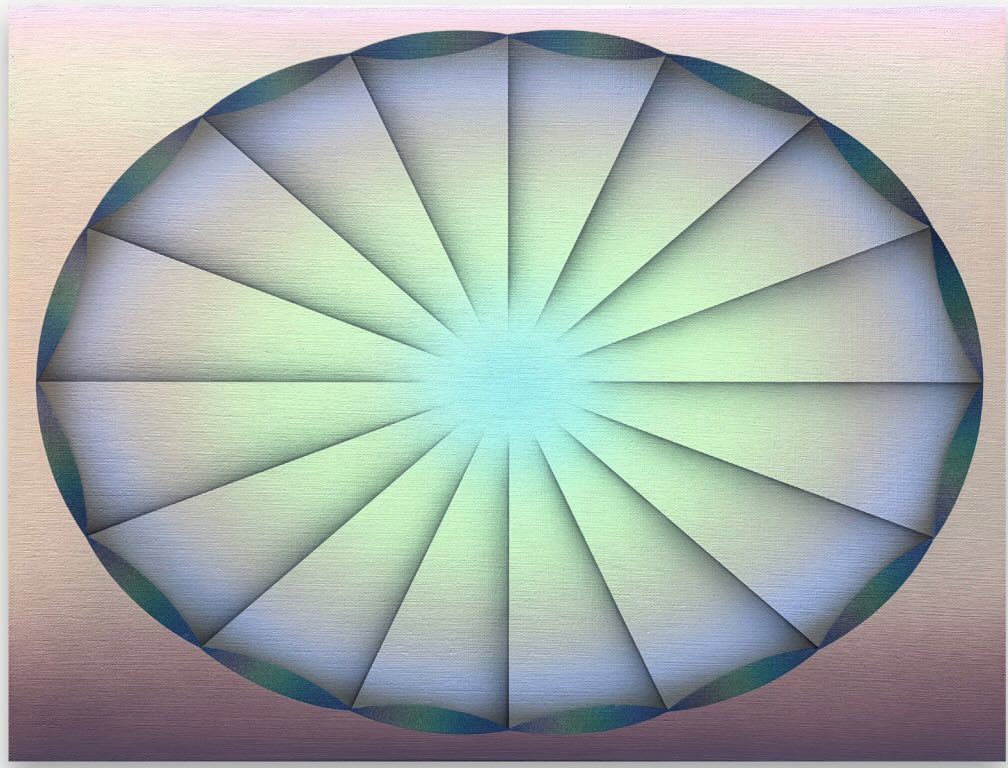
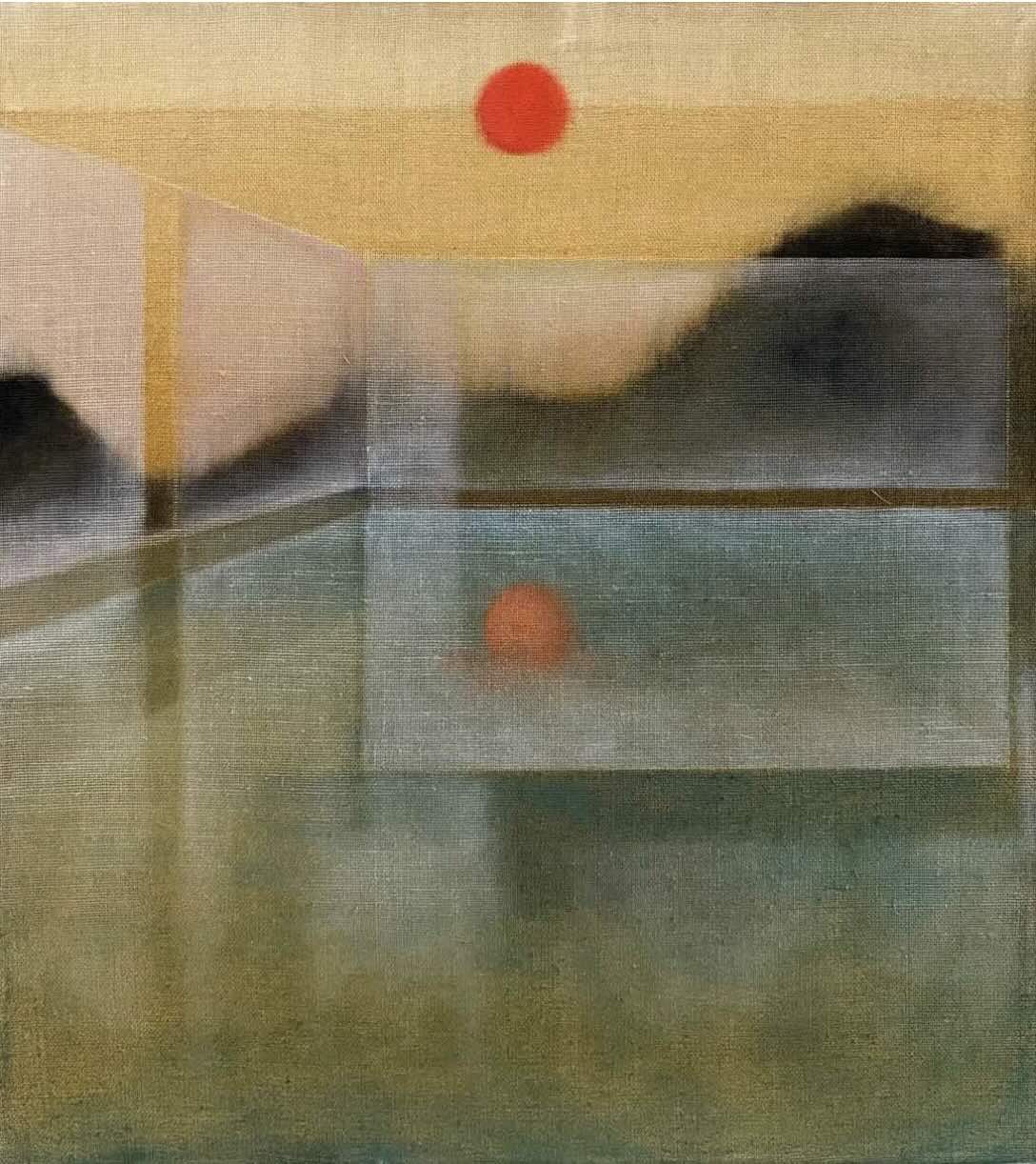
Kristen Giorgi’s Mirror Field works for them because it’s atmospheric and geometric at once, soft and structured in equal measure, and the color palette is just bright enough to bring warmth to a room but not overly saturated or saccharine. It is the kind of painting that changes depending on the light and the hour, which makes it endlessly livable.
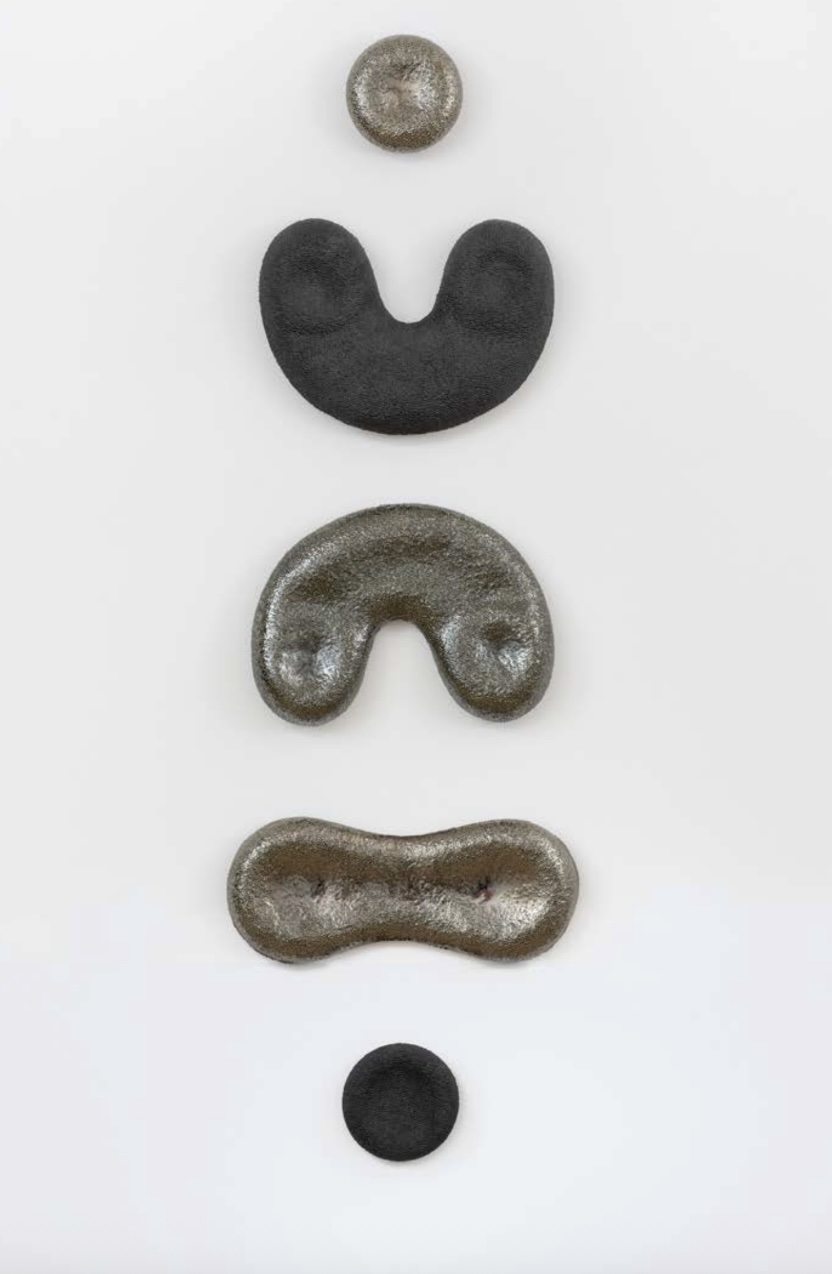
Lana Kova’s Totem III works for them because it breaks the tyranny of the rectangular painting — organic, textural, wall-mounted forms that create rhythm and shadow in a way that a flat canvas never could.
These are not compromises. These are genuinely strong works that also happen to live beautifully. That’s not a lower bar. That’s a harder one.
But here’s what the Design-Forward Collector sometimes does before any of this: they edit.
They look at a work and decide — in seconds, before the work has had a chance to speak — that it doesn’t go anywhere. That it’s too much, too difficult, too something. And in doing so they eliminate entire categories of experience from their consideration before taste even enters the equation.
Take Vaughn Davis Jr.’s sculptural paintings. Canvas and cardboard torn, painted, and cascading off the wall onto the floor in colors that are simultaneously beautiful and aggressive. A Design-Forward Collector looks at this and thinks: where would that even go? And I understand that response. It refuses to be contained. It won’t stay flat. It demands not just wall space but floor space and airspace and a certain willingness to let the work be uncomfortable in the room.
But what they’re walking past is a work that is asking something profound about the human process of becoming and unbecoming — the way we as people change and morph and become our truest selves with everything that happens to us. Living with that question every day changes how you think about everything you’ve hung on every other wall. That’s not a decoration. That’s a conversation partner.
Or consider Heekyoung Jeon, whose luminous blue and green landscape paintings a Design-Forward Collector might dismiss as too saturated, too exuberant, too much. And here’s where it gets interesting — because that’s not a spatial judgment. That’s an aesthetic one. They’re not saying it won’t fit the room. They’re saying it won’t fit their idea of what good taste looks like. Which means they are capable of making that distinction. They just apply it inconsistently: they’ll accept quiet decorative work without interrogating it, and reject loud challenging work without interrogating that either.
What Jeon’s paintings actually are is joyful in a way that takes genuine artistic confidence to pull off. The exuberance is not naivety. It’s a position. And a collector who has trained themselves to distrust joy in painting because the art world has taught them that serious art is restrained art is a collector who has let someone else’s taste override their own.
Here’s the thing about the Design-Forward Collector that I want to leave you with.
The room is not the point. The room is the context. And there is a difference.
The best collections I’ve seen in beautifully designed homes are not the ones where every work was chosen to complement the space. They’re the ones where the space was slowly, sometimes reluctantly, organized around the works. Where a collector fell in love with something that didn’t go anywhere and then figured out how to make it go somewhere. Where the art shaped the room rather than the room shaping the art.
That’s a different way of collecting. It starts not with the wall but with the work. Not with “where would I put this” but with “what is this doing to me.” And once you start asking that second question — even as a Design-Forward Collector, even knowing that you care deeply about how your home looks and feels — you find that the works you end up with are both more beautiful and more meaningful than anything you would have chosen by starting with the room.
It’s okay to want art that looks good in your house. It’s okay to want art that tells your personal story. In this case, you can have your cake and eat it too.
Know Your Type: Dear Venturist, There's More To Art Than Energy
Casey Monda
There is a particular kind of art collector who walks into a booth and knows within ten seconds. Not because they’ve done the research or read the wall text or recognized the gallery name. Because something in the work is alive in a way that everything around it isn’t. They feel it before they can explain it, and they trust that feeling in a way that more cautious collectors never quite manage.
I call this collector type the Venturist. And in my experience, they build some of the most exciting collections I’ve ever seen. This is the person who, in 20 years, you’ll be asking, “How did you know to buy that then?!”
They also build some of the most disappointing ones.
Here’s the thing about following energy: energy is real, but it isn’t always the same thing as quality. What feels electric in the booth — the rawness, the unrest, perhaps the slightly unresolved quality, the sense that you’re seeing something nobody else has noticed yet — can feel thin on the wall six months later. Not because your instinct was wrong. But because instinct alone doesn’t always tell you what’s actually there versus what you wanted to be there.
Typically, the Venturist is drawn to novelty above everything else. And novelty is one of the four criteria I use to evaluate whether a work has staying power, so there’s nothing wrong with leading with it. The problem is when novelty becomes the only question. When the thrill of seeing something you’ve never seen before crowds out the harder questions: Is this artist grounded in something more substantive than a strong visual idea? Does the work know where it sits in a larger conversation? Is the craft in service of a concept, or is the concept papering over the absence of craft?
To put it in really cliché terms, a Venturist would have loved Jackson Pollock. No one had ever splattered paint (and pee and all sorts of other liquids) on a canvas the way he did. BUT the key is that it wasn’t splatter paint for splatter paint’s sake. It was splatter paint in service of turning the hierarchy of art history on its head, shaking it around a few times, and then chucking it out the window. It was shattering every rule, every truth, every principle into has many unrecognizable shards as possible and then seeing if there was a new way to piece it back together. Concept met craft and transformed into contemporary art. (Ok, all you art historians, do not @ me with Lee Krasner, right now. I know she did it first but I am trying to illustrate a point here.)
Without those questions, you end up with a collection full of glitter and graffiti and young energy that doesn’t resolve. Work that was exciting at the fair and restless on the wall. Smoke and mirrors that looked like vision in the moment.
That’s the Venturist’s blind spot. And it isn’t a character flaw — it’s a calibration problem.
The artists who genuinely deserve a Venturist’s attention are the ones who satisfy both impulses: they stop you with something you’ve never seen before, and they reward you when you look and think harder. I’ll highlight three artists from The Collection that do just this. Tom Jean Webb does this. His work has an immediate visual electricity — you feel it before you understand it — but the longer you spend with it the more you find. There’s a conceptual architecture underneath the surface energy that gives the work somewhere to go. Sachi Moskowitz is similar — her ceramics feels alive, relevant and slightly irreverent in the best way, but that irreverence is intentional, not accidental. She’s asking questions the work is designed to hold open, not questions she hasn’t figured out how to answer yet. Grace DeGennaro rewards the Venturist eye with something that feels genuinely singular — a visual language you think you recognize but realize you can’t resolve on your own without knowing more about how she thinks and views the world around her. The practice is grounded in a sustained investigation that gives the work weight beyond its novelty.
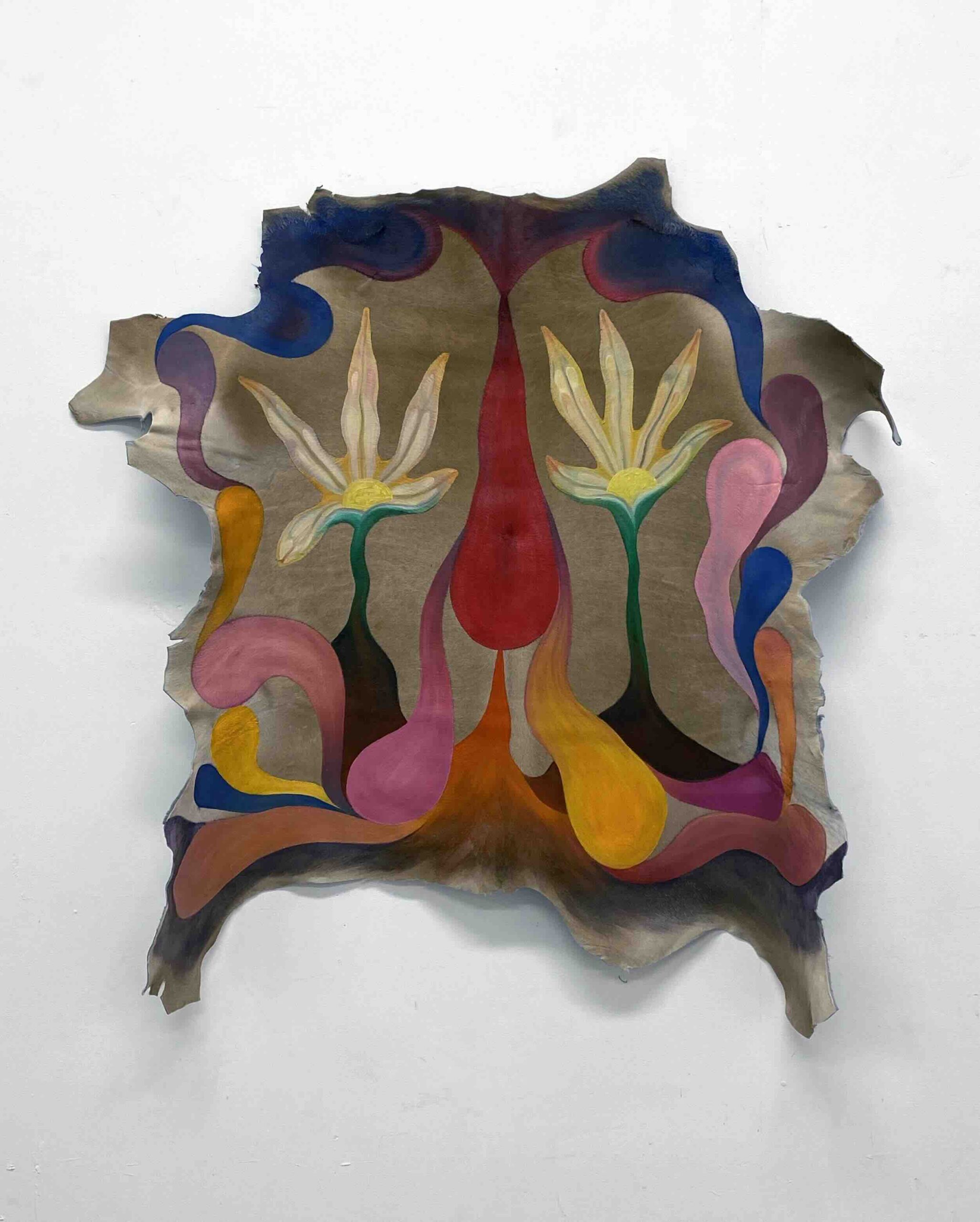
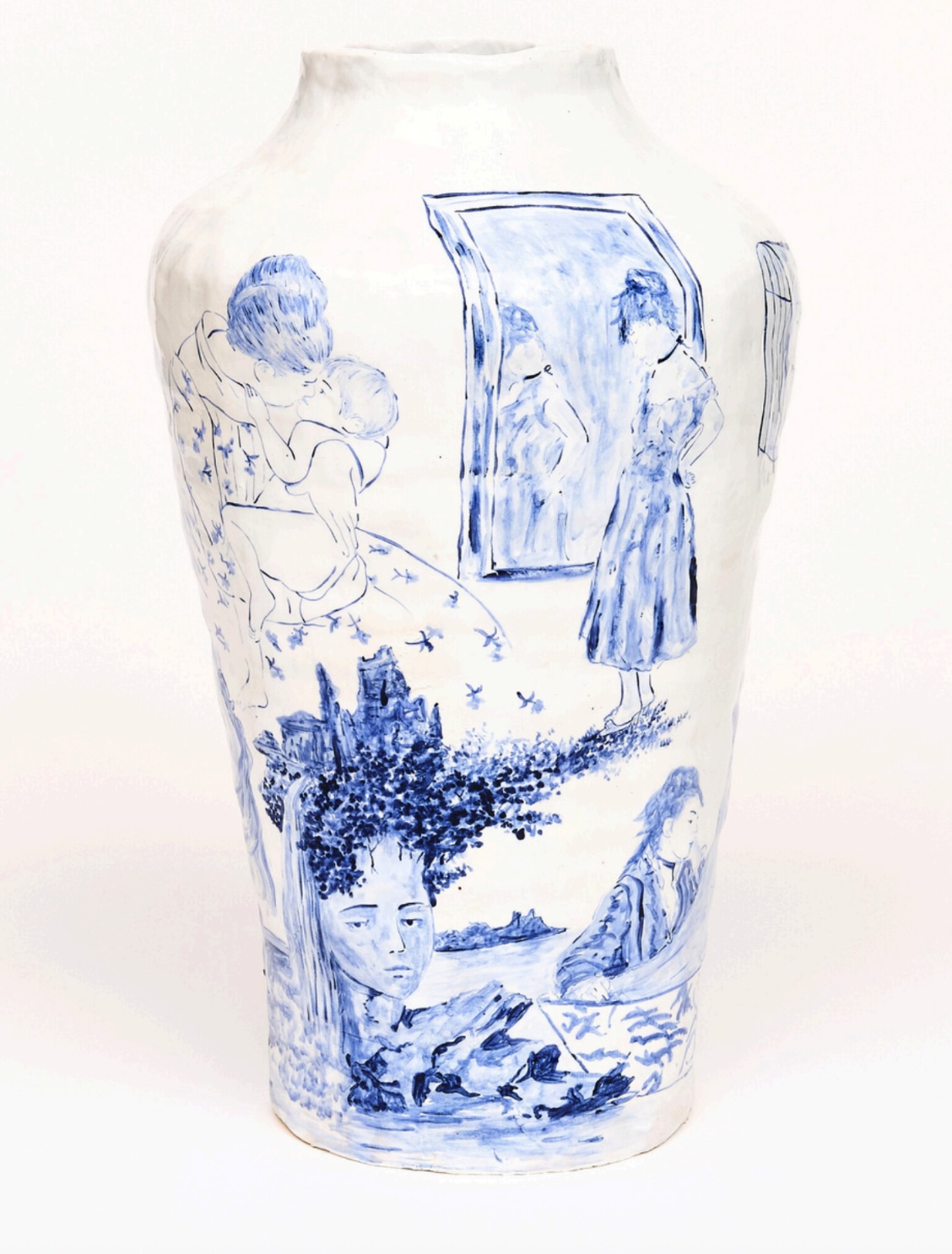
These are the artists a Venturist should be looking at. Not because they’re safe bets but because the risk is undergirded by substance rather than cosmetics.
Here’s the bottom line, if you take nothing else away. The question worth asking before you commit is NOT whether you feel something, NOT even whether you’ve seen anything like it before. But what’s actually sustaining the feeling. Is it the work itself — its intelligence, its intentionality, its awareness of what it’s doing and why — or is it the thrill of the discovery? Those are different things. They lead to different collections. And only one of them holds up over time.
I work with Venturist collectors not to take the risk away. The risk is the whole point. But to make sure the risks you take are the ones worth taking.
The Venturist is one of four collector types I’ve identified. Next week: The Design-Forward Collector.
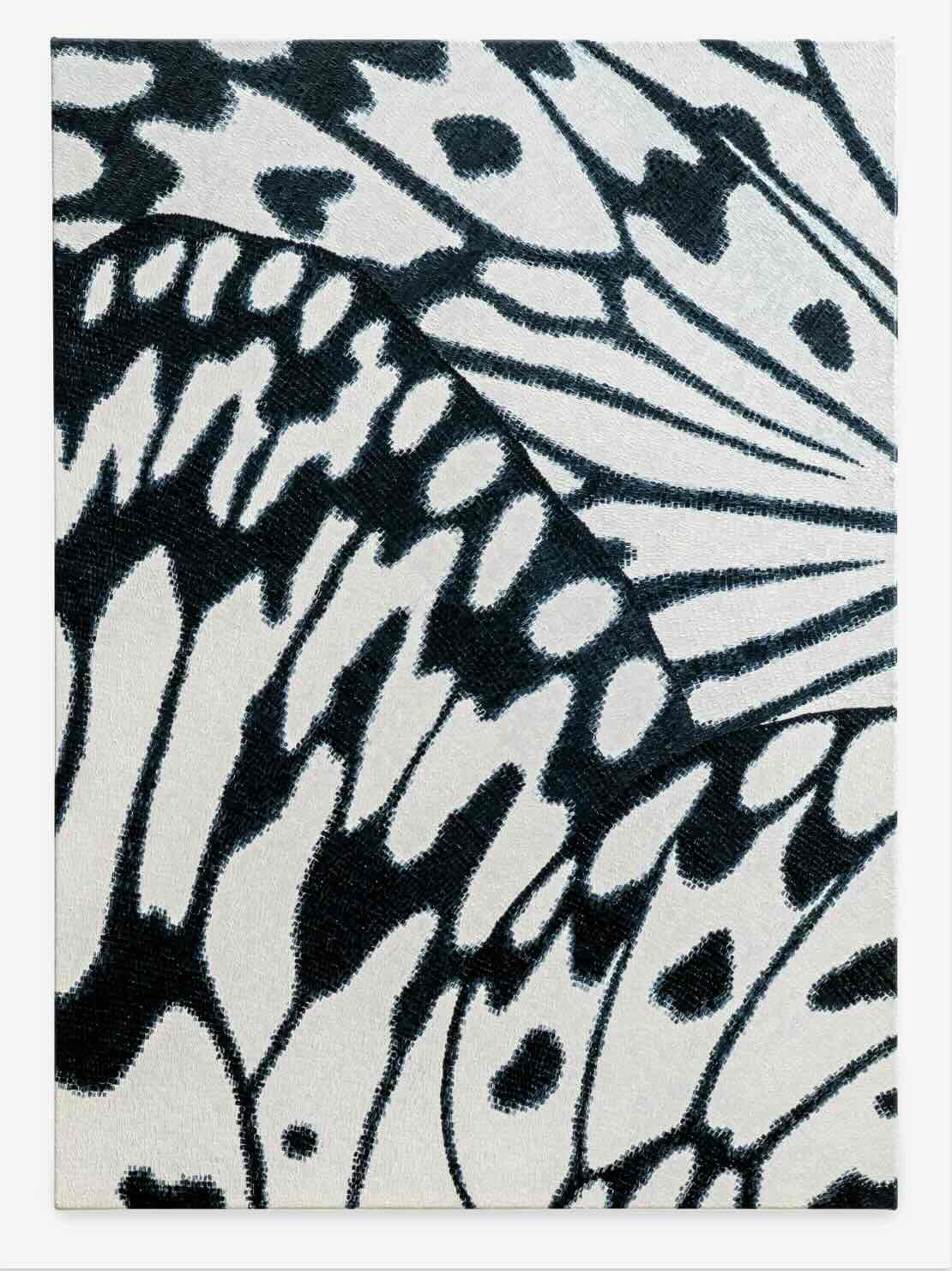
Why Is Buying a Couch Easy and a Painting So Hard?
Casey Monda
I was on a Zoom recently with a gallerist I deeply respect. We were talking about something the emerging art world can’t stop talking about right now — how to bring more art-curious people into the fold. How to meet them where they are. How to make buying art feel possible rather than intimidating. Like, why is art buying so hard?
At some point we landed on a question that really got me thinking <<cue Carrie Bradshaw moment>>:
Why is spending money, say $5,000, on a couch easy and spending the same amount on a painting so hard?
Before you say it: I know not everyone spends $5,000 on a couch. The number isn’t the point. The psychology is.
Think about the couch for a second. You find one you like, or your interior designer tells you to buy it, and you buy it. You don’t lie awake wondering if it will hold its value. You don’t question whether you know enough about furniture to deserve an opinion. You don’t worry about whether you’ll still love it in five years or whether you’re being taken advantage of. Honestly, you might just buy it off the internet and never even sit on it before it lands in your living room.
It’s just a couch.
Now think about the painting.
Suddenly there are ALLLLL of these questions. Is it good? Will it appreciate? Do I know enough to have an opinion? What will people think? Is this artist worth following? Am I paying too much? What if I’m wrong? What if I love it now and hate it in five years?
The same money. Completely different psychological experience.
Here’s what I’ve been sitting with since that Zoom call.
The collectors who built the great collections — the ones who bought with confidence, who moved decisively, who seemed to know exactly what they were doing — didn’t feel that anxiety. Not because they were born with better taste. Not because they were smarter or more culturally fluent.
Because they had someone standing next to them.
An advisor. A dealer they trusted. A friend who knew the market. Someone who looked at the work and said: this one, not that one, here’s why, here’s what to offer, here’s the call. The advisor absorbed the anxiety. That’s what advisors do. They make a complicated purchase feel like buying a couch.
That service just wasn’t available to everyone.
There’s another layer worth naming here. Art advisory, as a real profession, only emerged in the 80s or 90s and and has become essential infrastructure since 2008. Before that, the art world was smaller. The gallery scene was more contained. Collectors weren’t navigating an infinite internet of artists, platforms, and price points. You walked into a handful of galleries in your city and bought what was in front of you.
Then the internet happened.
The supply of available art became incomprehensible practically overnight. Millions of works. Thousands of artists. Global access to everything at once. Democratizing in theory. Paralyzing in practice. More choice makes decisions harder. The art buyer in 1985 had a manageable number of options. Today, they have too many to count.
The advisory infrastructure never scaled to meet it. The art advisor model — high-touch, relationship-driven, commission-based — was built for the top of the market and stayed there. The people who need the most guidance in the most complex art market in history ended up with the least access to it because budgets didn’t match the model.
The people who need guidance are not hard to identify. They are the new collector who just inherited some money and wants to do something meaningful with it. The person who walks into a gallery and feels immediately out of their depth. The one who just wants a single great piece over the mantle but has no idea where or how to even begin looking. These are not unsophisticated people. They are people the market was never designed to serve. And to add insult to injury, MOST of these people do not live in places where they have easy access to the best art being created right now.
And the old gatekeeping filled the vacuum. The opacity that made a kind of sense when the art world was small became actively harmful when it went global. Private prices. Insider knowledge. The rooms you weren’t supposed to enter without an introduction. All of it persisted — and in some ways intensified — as the market expanded.
The art world created the anxiety and sold the antidote exclusively to people who could already afford it. And now we’re all on Zooms wondering why the next generation of collectors isn’t showing up.
The people who collected with confidence didn’t have less doubt. They just had someone to hand it to.
That was never supposed to be a luxury.
And so I return to my original question: why can’t buying a painting be as simple as buying a couch? Want my honest answer?
Because as humans, our creativity is what separates us from the animals. And because of that, I believe that everyone, even someone who claims to know nothing about art, has an inherent understanding of how great art in our daily lives will transform how we live in and occupy our most intimate settings. And we really don’t want to mess that up. A couch is just a couch. But a painting is not just a painting. It is a statement about what we love, what we value, and who we are.
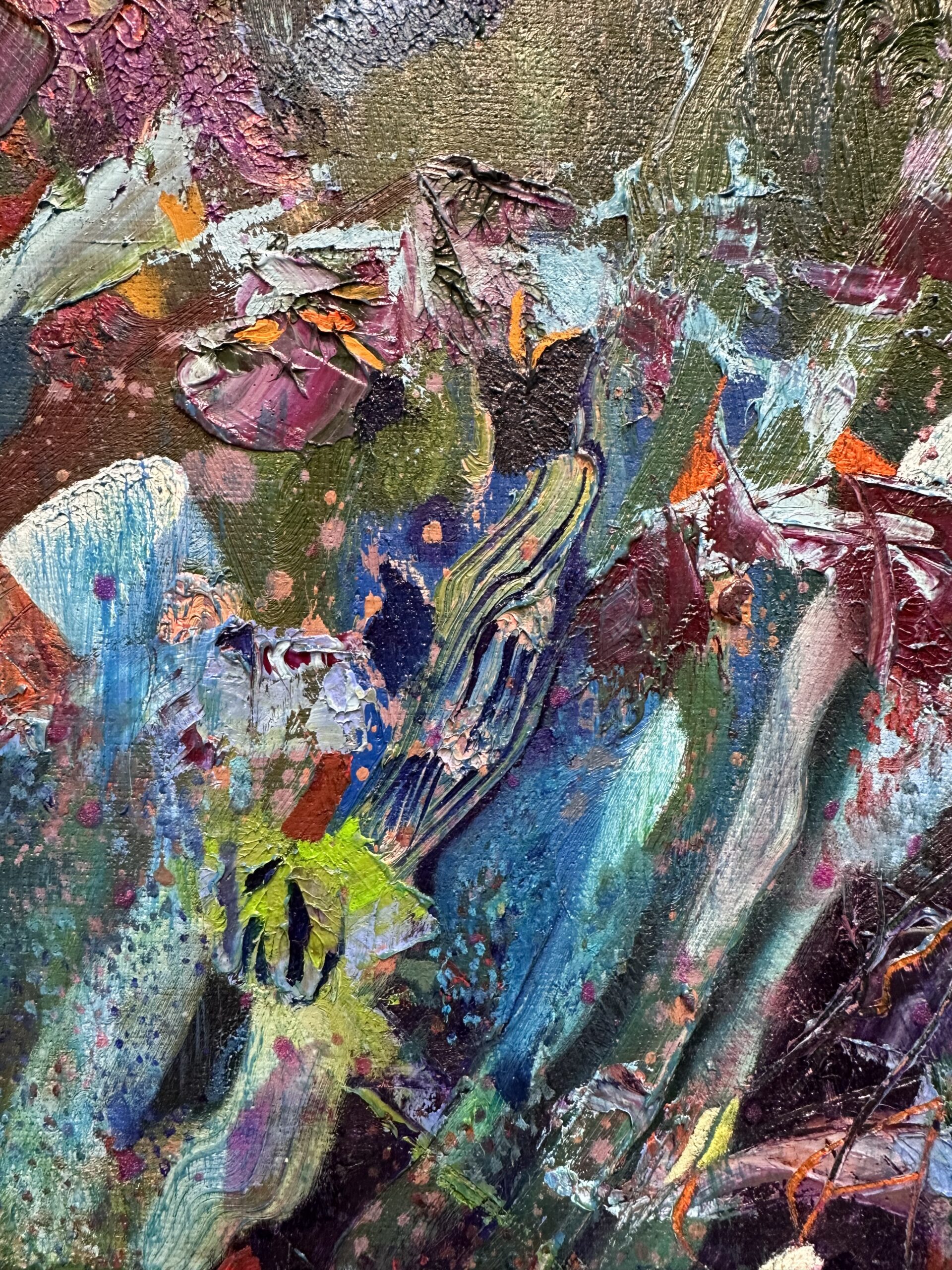
What I Told a Sotheby's Veteran That Stunned Her
Casey Monda
TBH, I really struggled to write this post. I have been thinking a lot about, what I’ve come to call, your collector type. But I just couldn’t make it land in a way that wasn’t like “y’all have no idea what you’re doing and you need to hire me.”
That’s not what I want to say.
What I want to say is: I see you. I hear you. I’m here to help. But the first step to getting better is admitting you have a problem. And your problem, mes amis, is that you have a collecting blind spot.
It’s not you. It’s not your fault. Everyone has one. How do I know this?
I know this because I’m a professional. But also because of many, many, many hours of shopping for art on behalf of clients — which, as it turns out, is the best education in the world for understanding how people actually look at art.
Sometimes when I’m walking a fair I start looking through the lens of a client. How would they approach this work? What would stop them? What would they walk past? When I do that I realize how much deserving work gets ignored because I’m looking through the eyes of someone far less experienced than I am. I have to force myself to keep my own hat on and look with my own eyes.
What this process has revealed is that everyone has a type. A filter they instinctively use to quickly evaluate whether a work is worth their time. The problem is that filter usually stops at first impression rather than working through the full picture.
Is my interior designer going to be able to design around this? What is the artist trying to say? Where did the artist get their degree? I love the energy in this one!
Sound familiar?
I was walking EXPO Chicago last week with a dear colleague who has spent decades at the highest levels of the art world — the Whitney, Sotheby’s, Freeman’s, and now an independent appraiser working on some of the most significant collections in the Midwest. By the third or fourth time she stopped to admire something I said: “That’s not surprising.”
She looked at me. “What do you mean?”
“You clearly have a type.”
She laughed. And then she realized I was right.
This isn’t just for people who call themselves collectors. Are you newly curious about art? Do you have a few blank walls you’d love to fill with something you actually love? If you’ve ever loved something and had absolutely no idea why, you have a type too.
I built a two-minute quiz around what I’ve observed. It’ll tell you your type and name the blind spot that’s probably been running the show without your knowing it. No wall text required.
For paid members — I walked EXPO Chicago with all four types in mind and filmed it. It’s not a cinematic masterpiece but it is the most useful thing I’ve made for Art I Saw & Liked so far.
Not a member yet? This is a good week to start. Seven days free, cancel anytime. →
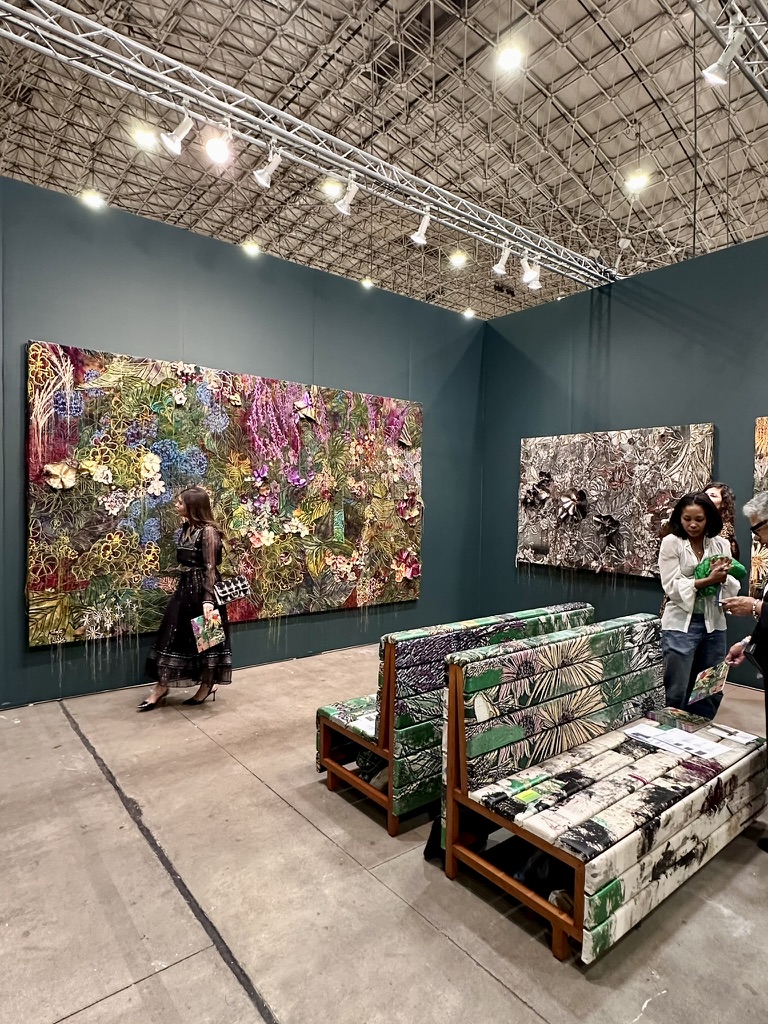
What Kind of Collector Are You? A Real-Time Walkthrough from EXPO Chicago
Casey Monda This is a real-time walkthrough from EXPO Chicago — no script on a teleprompter, no production crew, just [...]