
Know Your Type: Dear Strategic Collector, The Spreadsheet Is Not Enough
This is the third post in my Know Your Type series on the four collector types I’ve identified through years of advisory work. If you missed the first two — the Venturist and the Design-Forward Collector — start there.
Let me say something that might be unpopular in certain corners of the contemporary art world: I am not opposed to the Strategic Collector’s approach to buying art.
I know that’s not what you expected to hear. The art world has spent decades telling collectors that art beats the index in the same breath as telling them to buy what you love regardless of investment potential. It is a tired story about art as investment that I cannot tell you how many times I heard during New York Art Week this week. The idea of buying contemporary art to make money, coupled with the practice of asking for discounts on works under $5,000, really shows how little regard so many have for the artist’s time, skill, and simple cost of goods. But that is a separate soap box I will stand on at a later date.
Here is what I will say about collecting art as investment at the emerging end of the market: no one has a crystal ball. These artists are so early in their practice that often they are still working out what they want to say and how they want to say it. Buying emerging art is patronage. It is casting a vote for the voices you feel should be a part of our moment’s chorus. It is supporting an artist’s practice that you think deserves to live to see another day. It is supporting a gallery’s program that you really believe in. It is helping shape the legacy and the story that our moment will tell about ourselves.
But here is why I also don’t have a problem with the way a Strategic Collector thinks about buying art.
The Strategic Collector has a genuine commitment to quality. If you’re going to put serious money into something and expect it to hold or increase in value, you cannot afford to be sloppy about what you buy. You have to develop real discernment. You have to understand the market, the institutional landscape, the gallery ecosystem, the difference between an artist on a genuine trajectory and an artist who is having a moment. That discipline, applied rigorously, produces serious collections. I have seen it happen.
But here’s the question I want to sit with for a moment: why do we expect art to hold its value?
We don’t expect that of almost anything else we spend money on. A very expensive car depreciates the moment you drive it off the lot. Furniture depreciates. Real estate sometimes appreciates and sometimes doesn’t, and we accept that as a feature of the market rather than a moral failing. We understand that an investment in a startup might go to zero, might do fine, or might shoot the moon — and we don’t consider the zero outcome a sign that we shouldn’t have invested.
Why is art different?
If you view art as an asset class then you need to take a more honest view of the potential outcomes. Some works appreciate dramatically. Some hold their value. Some don’t. That’s not a failure of the art or the artist, but the nature of any market that is as opaque, relational, and culturally contingent as the contemporary art market. The difference is that art has power beyond its market performance. It has the capacity to change how you see the world, to give you a conversation partner that never runs out of things to say, to connect you to the humanity of the person who made it. That’s not nothing. That’s actually everything — and it’s available regardless of what the work does at auction in twenty years.
So I’ll say it plainly: every acquisition should be something you believe in and want to support. The financial upside is a legitimate consideration when buying art. It should just never be the first or the only one.
The Strategic Collector at their best is a researcher. They want to know everything — the artist’s education, exhibition history, gallery representation, museum acquisitions, critical reception, market trajectory. They are institutionally fluent in a way that most collectors aren’t. And when that research leads them somewhere genuinely important, the result is a collection with real depth and real staying power.
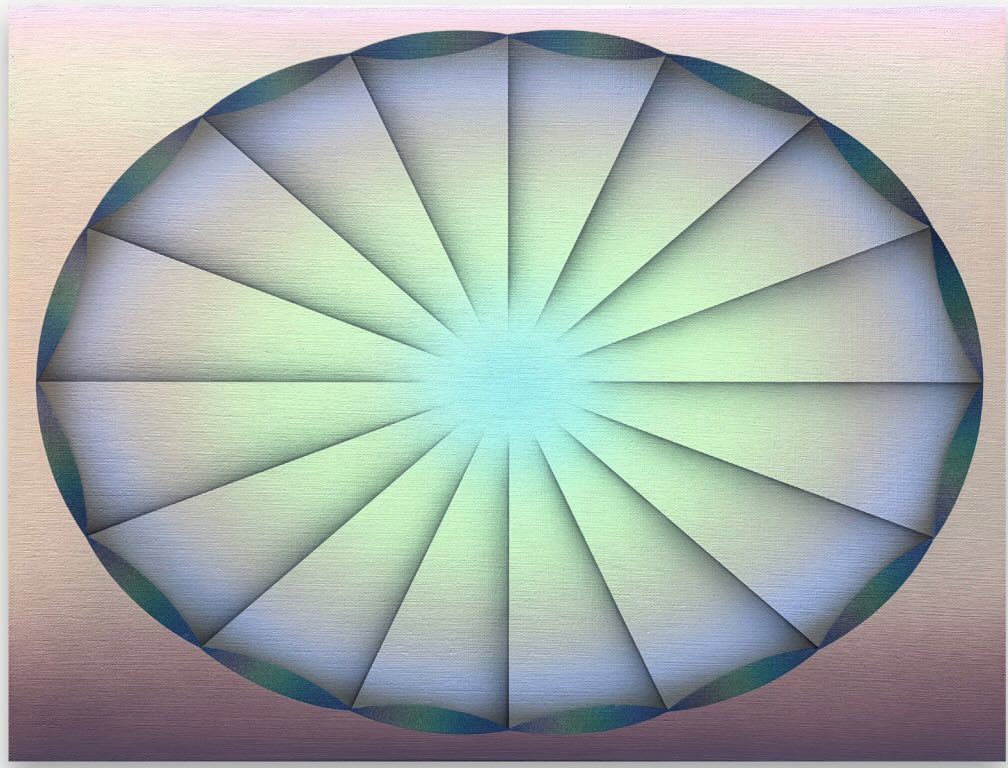
Molly Greene is that kind of artist. Three degrees from Yale — environmental science, philosophy, American studies — before she picked up a brush. A practice that looks at first glance like it might be decorative: soft, airbrushed, pastel, organic forms that feel botanical and slightly surreal. A Strategic Collector doing their homework finds serious gallery representation, impressive CV for an artist at her career stage, solo shows in Paris and London. They buy on the credentials. And then they live with the work and discover that what appeared decorative is actually a sustained philosophical investigation into the porous boundary between the human and the non-human, the natural and the artificial — exactly the questions that matter most as we navigate the future of humanity and AI. The Strategic Collector got there for the right reasons and then got significantly more than they bargained for.
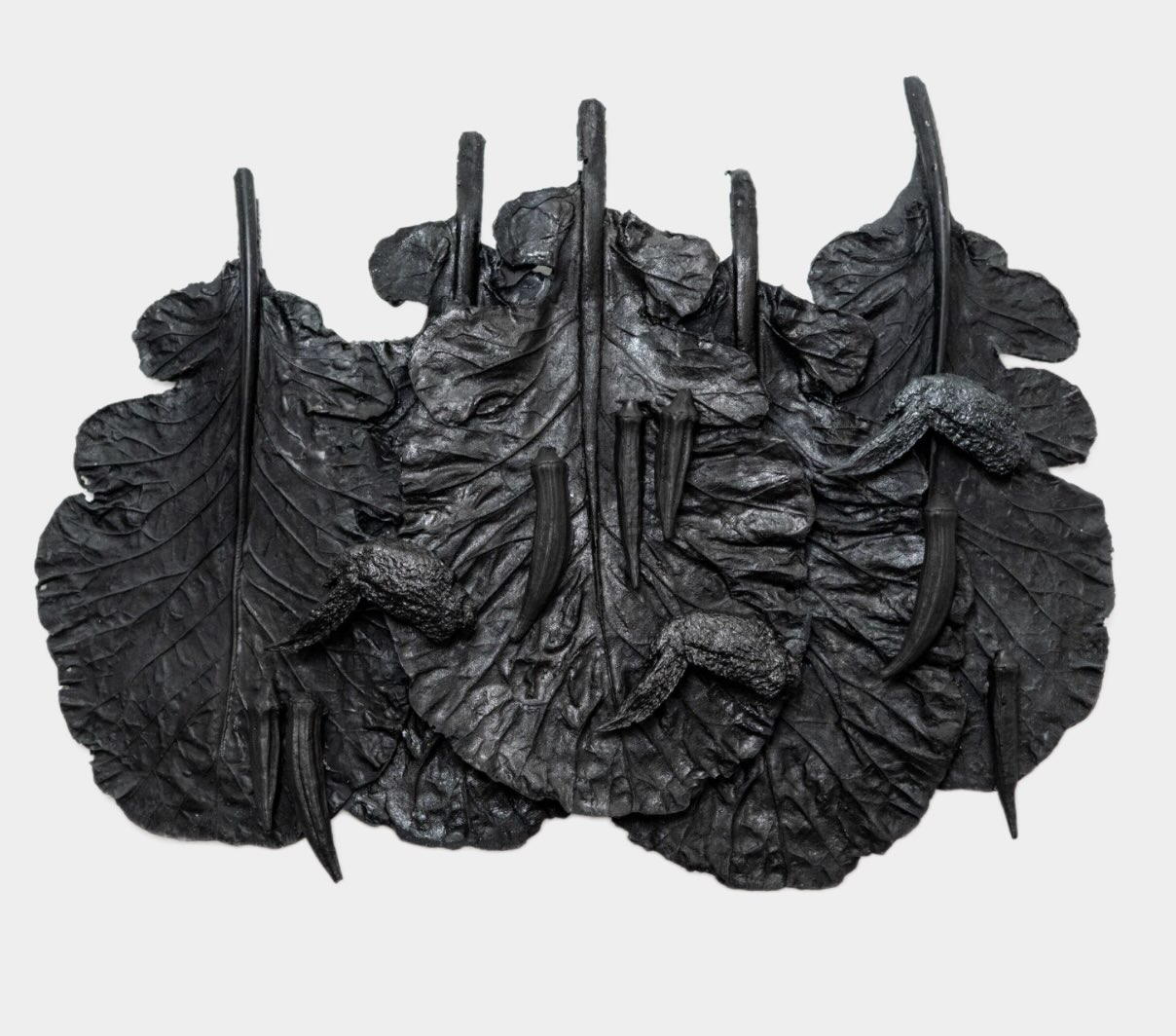
LaKela Brown is the case where the research confirms what the work already announces, but you have to feel it to understand why it matters. Her plaster reliefs — door-knocker earrings, rope chains, culinary plants, ancestral foods — are in the permanent collections of the Museum of Fine Arts Boston, The Studio Museum in Harlem, and the Mint Museum. A Strategic Collector doing their homework finds serious institutional validation at every turn. But the credentials can’t tell you what it actually feels like to stand in front of one of these works and understand that you’re looking at something that is simultaneously an artifact, a monument, a feminist statement, and a love letter to Black American culture — using the iconography of 1990s hip-hop and the language of ethnobotany to draw a line between African Americans and West Africa that is both deeply personal and historically profound. The research leads you there. The looking does the rest.
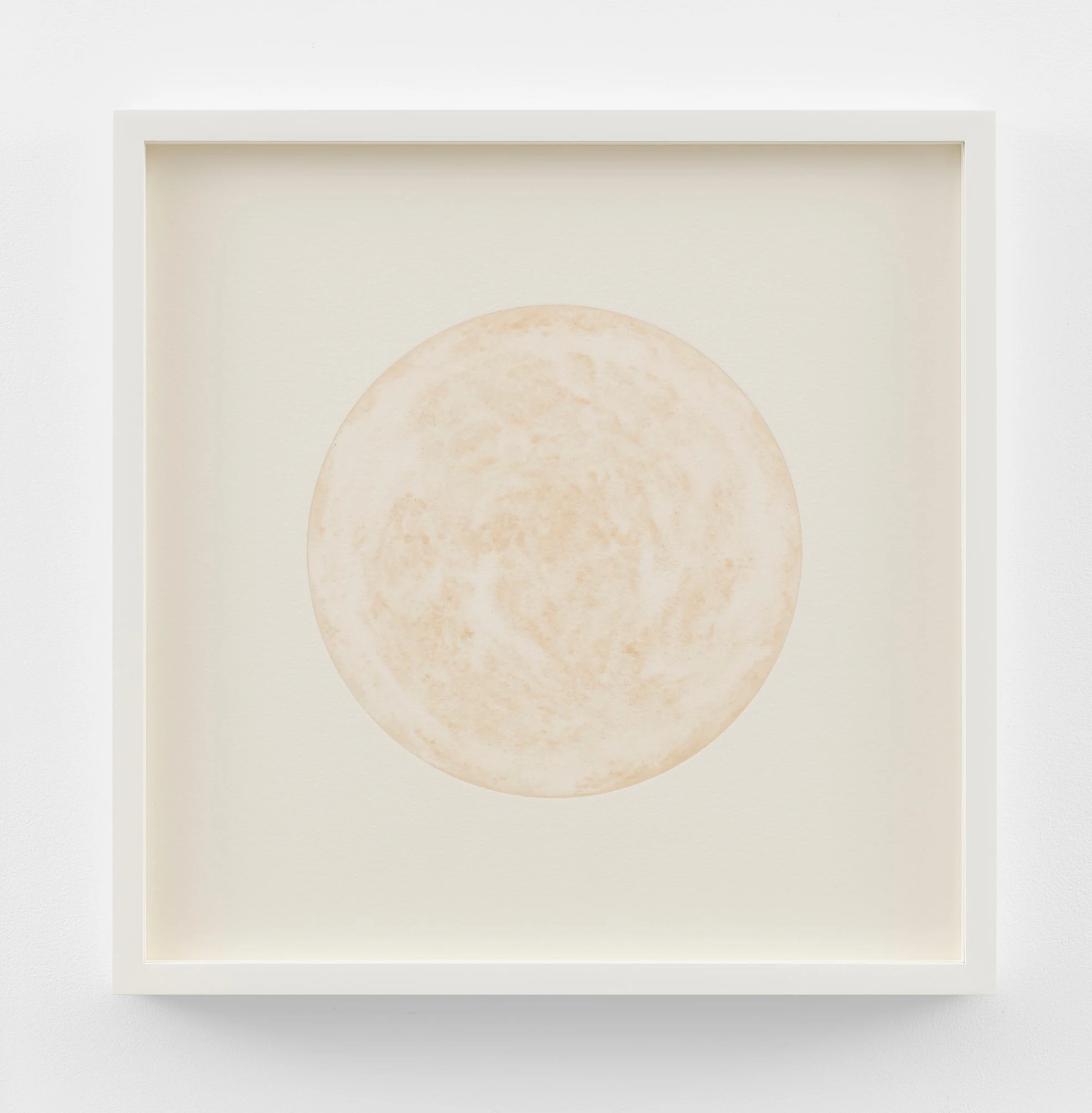
And then there is Katie Paterson. An hourglass filled with stardust. Watercolors made with water drawn from ancient ice cores. A piano piece transmitted to the moon and reflected back to Earth, played on a digital grand piano whose keys move of their own accord. Work in the Guggenheim, the Whitney, the Art Institute of Chicago. The Future Library project — a 100-year artwork in Oslo in which writers contribute manuscripts that won’t be read until 2114. With Katie Paterson, the research and the emotional experience are perfectly aligned. The institutional credentials are extraordinary and the work delivers on every one of them and then some. This is what strategic collecting looks like when it works: the data and the feeling arrive at the same place and confirm each other.
But here’s where the Strategic Collector’s blind spot lives.
The research only finds what has already been found. Institutional validation, by definition, comes after the fact. A museum acquires work that has already been recognized. A major gallery represents artists who have already demonstrated a trajectory. The critical apparatus catches up to artists over time — sometimes years, sometimes decades after the work first appeared.
Which means the Strategic Collector is almost always buying after the most important moment has passed.
Bongsu Park grows flowers in her garden at her flat in London. She makes pigment from those flowers and uses it to paint them. She distills their oils into scent and throws small ceramic vessels to house the oil, which she places on a ledge beside the painting. The whole practice is a meditation on memory — on how scent evokes it, how it shifts and changes over time, how what we believe we remember may not be what actually happened. The work is impeccably crafted and completely self-contained: a world in miniature, built from the most perishable materials and the most permanent questions. There is no major institutional trail. There is no market trajectory to analyze. There is just the work — and the work is phenomenal.
A Strategic Collector walks past Bongsu Park. Not because the work isn’t strong enough. Because the spreadsheet doesn’t know what to do with her yet.
Yunji Park makes quiet, evocative work about mundane moments. She is young. The institutional trail is thin. But the work is expertly executed and genuinely moving — about the fleeting nature of time, the moments that pass before we’ve registered them, the ordinary rendered with such precision and care that it becomes extraordinary. In twenty years someone will look back at who was buying Yunji Park’s work right now and ask the same question they ask about the Venturist’s great discoveries: how did you know?
Here’s the honest tension at the heart of strategic collecting: the artists most likely to have significant financial upside are often the ones who don’t yet have the institutional context to justify the purchase on research alone. They require something the spreadsheet can’t provide — an eye, a gut, a willingness to be moved by something before the world has told you it’s okay to be moved by it.
That’s not a reason to abandon the research. It’s a reason to let the research be the beginning of the conversation rather than the end of it.
The best strategic collection I can imagine is one where the data and the feeling are always in dialogue. Where you know the institutional landscape well enough to recognize when an artist is on a genuine trajectory — and where you trust your own response enough to act before the trajectory is complete.
Art is not a stock. It is not a car. It is not real estate. It is an object made by a human being who was trying to say something that couldn’t be said any other way. Buy it because you believe in what they’re saying. The financial case, if there is one, will follow.
Every collector has a type.
A default way of engaging with art — and a default reason they walk away from something they should have bought. Find out yours in two minutes.
Take the Quiz →Already a member? This week's new additions to The Collection are waiting.
Explore The Collection →