
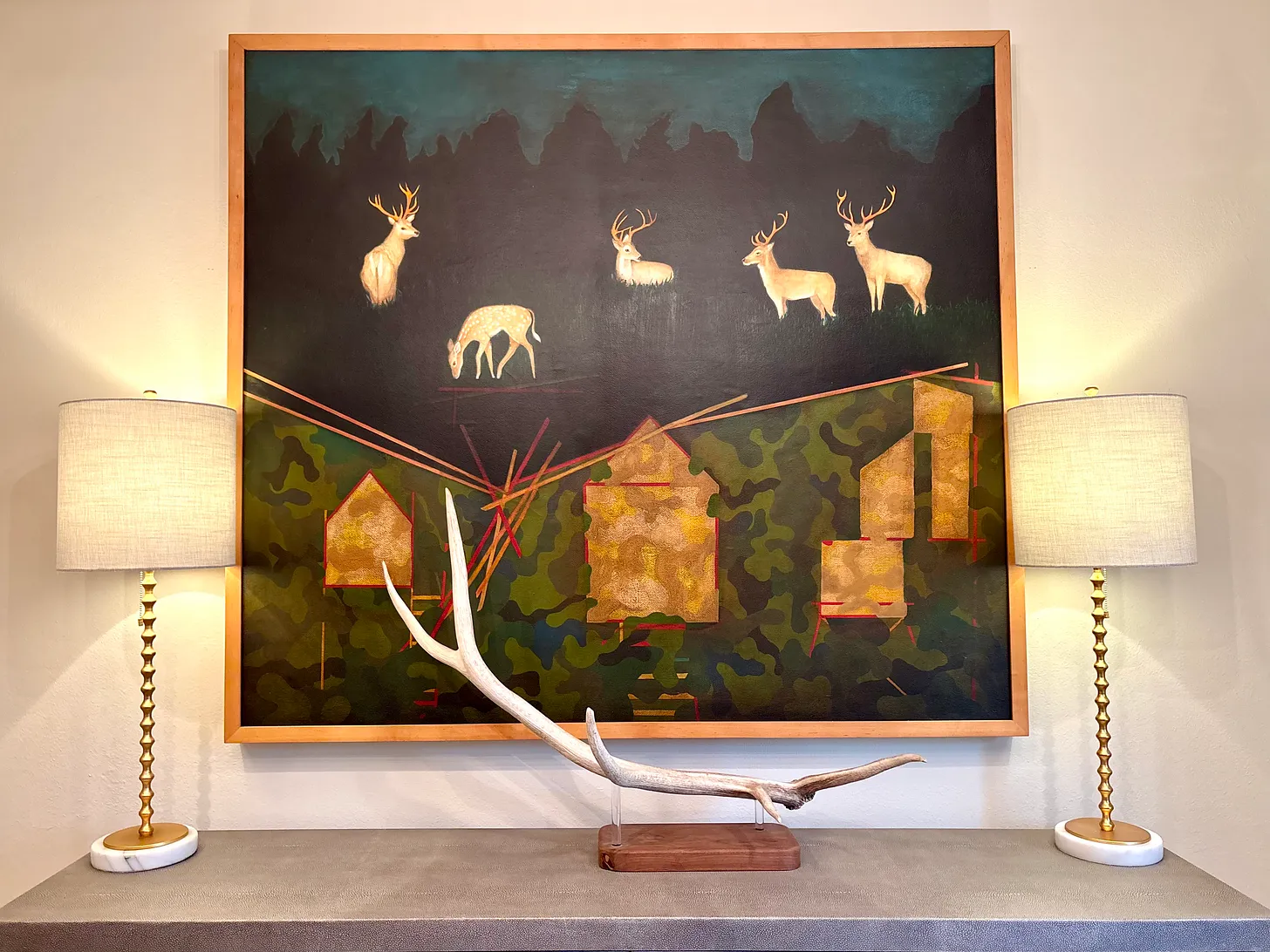
Should you hire THAT art advisor?
This post is not as self-serving as it sounds...
Good Friday morning, my friends! It’s my birthday (yes, for real) so I am writing a birthday present to myself. And by that, I mean I am going to discuss one of my favorite topics—art advisory. Now, you might be thinking, it is a sad state of affairs if one of your favorite topics is your work. And that would be fair. But to be honest, my work does not feel like work because I absolutely love what I do. Don’t tell anyone but I would probably work for free. (My husband and my dad will be calling in 3, 2, 1…)
As the laziest high school student on the planet, no one ever thought I’d be the one who would thrive on her job but I LOVE my work and I LOVE working. I think it is because I feel that my work is the honor of a lifetime. Art-buying puts people in a really vulnerable position; and, when people trust me enough to be in that exposed place with them, it really kind of takes my breath away.
But I digress. There are A LOT of art advisors out there. It is a growing field to say the least; and, lots of them, ahem, us are really good. Many of us have rigorous academic pedigrees, resumes full of prestigious jobs, and networks that give us an edge over your average collector. But we are not all created equal. So how do you differentiate?
Here are some factors that should influence your thinking if you have decided to hire some help to fulfill your art-acquiring aspirations.
- Hopefully this is an obvious one. Do your goals align with the advisor’s skills set? I think this idea can take on at least two different forms. In the first way, you want to ensure you are aligned in the same area of the market. If you want to build a collection of emerging Australian artists, you should not hire the world’s greatest advisor who specializes in blue-chip European Modernism. While this person is probably brilliant and obviously the best at what they do, they do not do what you need them to do. The best electrician on the planet could not fix your toilet (unless you have one of those automatic toilets with a heated seat), so you should not hire an advisor who specializes in a field that does not align with your interests just because they are globally-renowned. This seems obvious but I imagine there are folks out there that would hire someone who is “the best” by many measures but not in the way that is most important to achieve their goals. Don’t hire for the prestige but for the expertise.In a real life example, a client wanted to hire me to sell over $500,000 worth of contemporary art. He did not want to sell via galleries or auction. He wanted to privately place each piece. While I can do that, it would be an extremely inefficient use of time and might not yield the best result. The opportunity cost is bad for both of us. In this case, he needs a large global firm with a huge network of collectors to cast a wide net. The boutique experience that I offer does not align with his needs, so I directed him to a trusted colleague. Because I have earned his trust, I am actually still on retainer to continue to advise on ancillary matters. And this brings me to my next point.
- Hire someone you trust. First of all, make sure you understand how they are getting paid. Do they have their hands in multiple pots? As in, are you paying them and the gallery is offering a kickback? If you find out this is happening with your advisor, run in the opposite direction. In my opinion, the best way to keep interests aligned is for the client to pay the advisor, but to each his own. When you pay for a work of art, do you send money to the advisor who then pays the gallery or do you cut a check to the gallery directly? Your money should not pass through someone else’s hands and you should know the value of your investment in the art independent of the value your advisor brings to the transaction. How transparent and forthcoming with information is the advisor? You should have all the information and paperwork pertaining to your acquisition…and you shouldn’t have to ask for it. While the art world is a murky swamp a lot of the time, there are enough good advisors working above board so you should make sure you are working with one of those. Interests of all parties should always be 100% aligned. That is really non-negotiable. (Ask me how I maintain alignment with my clients’ interests, no matter what.)
- Going back to my first point, the second way the question of expertise and goals might manifest is how your taste and style align with those of your advisor. If you are collecting for investment purposes, this matters less. But if you are collecting to live with your art, then aesthetics matter and you want to make sure you are hiring someone with experience in aligning what you want your art to say with what you want it to look like. In some ways, this idea ties into the first, but I think it adds nuance to the question. First, you narrow by broad field, and second, you further differentiate by style. So if you are looking for emerging and mid-career artists, have a budget of, say, less than $10,000, and want a piece to hang over your mantle, then you are looking for a very different person from someone who is going to bid on your Magritte at the next Christie’s sale.
- And finally, you should listen to the way your advisor talks to galleries, artists, installers, framers, shippers, and other professionals. Just like they say you can judge someone’s character by how they talk to Alexa, so too can you understand the value of your advisor by listening to how they converse with other art world personnel. Are they interested in understanding the artist’s work and process? Do they ask questions and engage in the conversation or just wait to make the sale? Do they respect each person’s role in the transaction?
- Oh, and one more thing, how much do they get out in the world and see stuff?! A good advisor goes and sees lots and lots of art, but can also envision what something will look like IRL versus on a screen. The only way to develop that skill is by seeing a lot in person and understanding materiality.
I hope you feel armed to engage with an art world pro now, be it me or someone else. If you have a project and want to know if I’m right, I’m happy to have a conversation and point you in the right direction.
And since you made it this far, I will reward your devotion with some art. Here are some things I’ve seen and liked lately…
lobster club is not a new-to-me gallery but I spent a bit of time perusing their recent group exhibition this week and found a few new artists. Here are some standouts…
As always, I appreciate your eyeballs on my work so much. Thanks for being here and following along. It means more than you know.
Featured Art
Stephanie King and Pam McMillan, I Spy Something Brown, acrylic, gouache, oil on treated paper on panel, 57 x 64 in

MARCEL ROZEK, The Vapors, 2024, oil and latex on canvas, 72 x 96 in
Marcel is not new to me but this is a new direction and I am here for it. I imagine these layers of color look like the colored light of stained glass.

PHILIP WARNER PATTON, Untitled Still Life (Teapot), 2025, oil on canvas, 35 x 22 in
Philip is brand new to me but the caliber of painting here compared to the price is such good bang for your buck. I spent some time on his website and found that the movement and vitality of the flowers in this scene carries across his other still life scenes. Movement and vitality are not often words associated with STILL lives… There’s also the teeniest hint of the surreal, more in mood than in actual form, but I think that lends a certain tension that I enjoy.

JOHN VITALE, Ra, 2024, acrylic, pencils, enamel, latex, and china markers on raw canvas, 36.5 x 30.5 in
Another new-to-me artist, John Vitale caught my eye. I love the narrative he creates in his abstraction. In contrast to Rozek’s abstraction (above) where the hand of the artist is removed in favor of chance due to the nature of the poured paints, here Vitale invigorates the surface fully revealing the artist’s hand and his decision-making power in composing this image. Also I’ve got a thing for neon yellow…

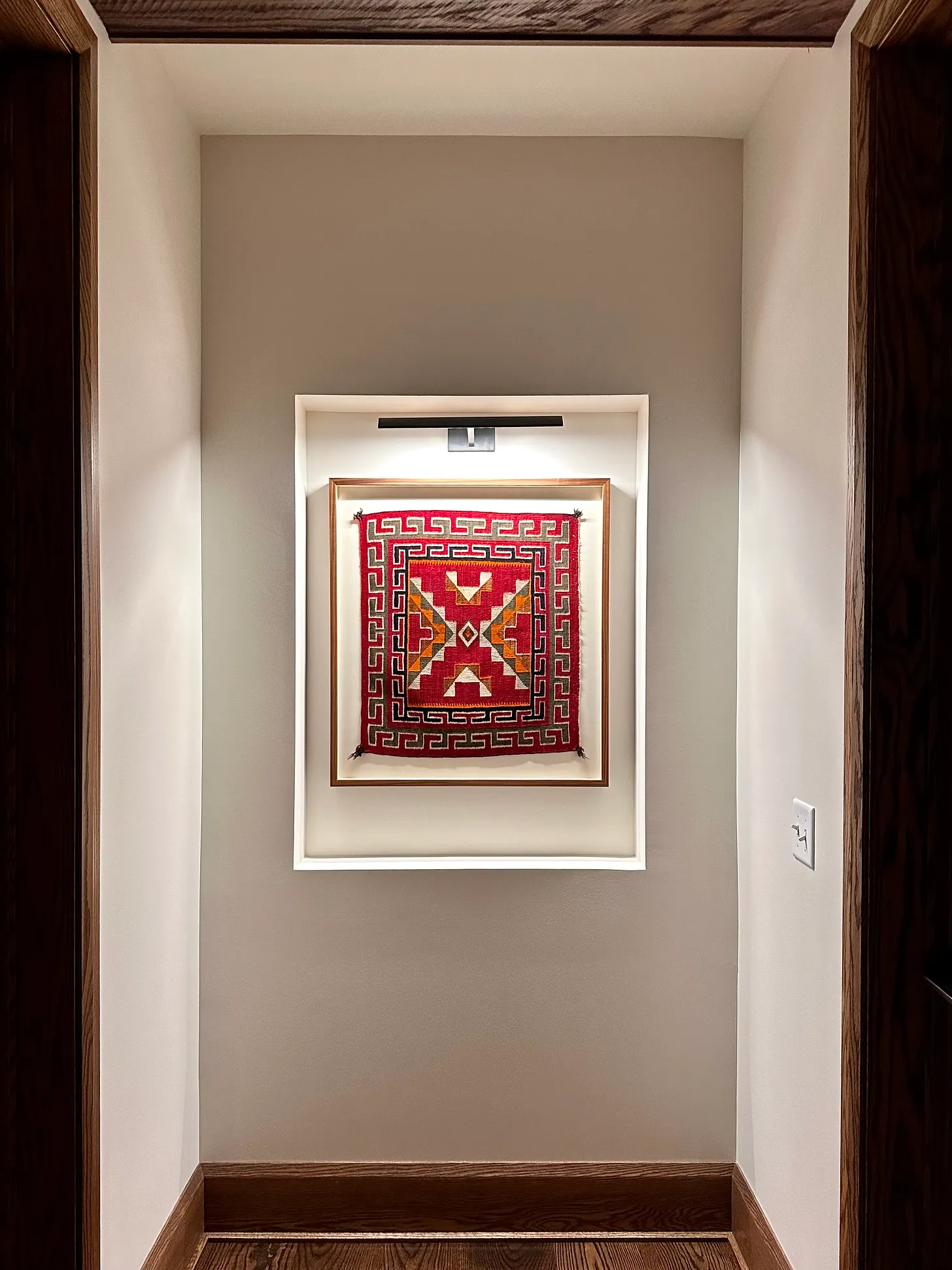
Purchasing Art: An Art or A Science?
All Access
Like the perfect chocolate chip cookie, it's a little bit of both.
How do I know I should buy?
This question has been on the brain a lot lately. I am working on a business pivot to focus on serving a very specific clientele—the novice buyer with a lower budget. I suppose it is less of a pivot and more of a bifurcation. What I have discovered in the four years since I started Casey Monda Art Advisory is that there are very few, if any, advisors who serve both clients looking to collect blue-chip work and those who are just starting their collections with emerging talent. There is a good reason for it—it’s a bad business model. It is really hard to sustain a business when it takes the exact same amount of work to make $1,000 as $10,000. But there are a ton of people who want art but don’t have massive budgets, people! And I desperately want to work with each and every one of them.

It has taken me about a year to come up with the business plan that will make this work. But yall!!! To say I am PUMPED is an understatement! I’m physically chomping at the bit to launch my new idea and working in overdrive to get it off the ground. I’m an entrepreneur at heart; so when I’ve got the idea, getting it done needs to happen, like, yesterday. At the center of the planning, scheming, and designing, though, have been the fundamental, foundational questions that all novice collectors ask and that are hard to answer without expert guidance. Chief among them is, “How do I know I am ready to buy?”
The honest answer to this question is simple. You know when you know. How many times do you think I’ve heard, “Oh, heck, let’s just do it!” or “I have to have it!” Clients really say these things to me routinely. Very rarely do I hear, “I’m not sure about it but okay…” or “It’s pretty but I’m only buying it because you say so.”
Don’t get me wrong, I love it when clients trust me and buy something on my recommendation and expertise. But to be frank, I do very little selling and very much leading to the proverbial water. Early in my career, a mentor told me that art sells itself; and in my experience, she could not have been more right. Thankfully, this works really well for me because I hate selling and am really bad at it. (Sidebar: I did inside sales for a hot minute at Groupon when I was like 25 and I was absolutely terrible at it. Like sooo bad…)

Aaaanyway, this simple answer does not a newsletter make so allow me to expound.
Getting over the hump of purchasing your first piece is honestly the highest hurdle you are going to face (other than snotty gallerinas, but we have already covered that). There is a level of trust and confidence you have to have in yourself (and in me if we are working together) and that can only really be gained by exercising the muscle.
Often times, the first purchase for my clients comes after one of two experiences:
- You encounter a work either in person or online and you so profoundly connect with it that there are no questions you need to ask to know that you must own it. You buy it. You live with it. Then you call me and tell me how eternally grateful you are for bringing it into your life. And a burgeoning collection is born.
OR
- You encounter a work either in person or online and you so profoundly connect with it that there are no questions you need to ask to know that you must own it. You don’t buy it. You either pass on it or it is already sold before you can get your hot little hands on it. You live with the regret. And then you call me and tell me how badly you must have something else by that artist but nothing will ever measure up to your first love and so the search continues…and then we find something else magical.
You will notice that in both scenarios, the need to own is instinctual. If you are not used to relying on your gut to make decisions, this is a foreign feeling. When you know you know. It may not be immediate but it is deep. (Sidebar: Even if you want it so badly you don’t need to ask questions, you still should. That is the science part and partially why you have me. I’ve already answered all the questions you should be asking so all you have to do is say, “Jump!”) As I always tell my clients, we never need to force it. If it does not feel like a fit, then we have our answer. There is too much great art out there to buy something that only feels half way.

Ok, cool, Case. Can I call you Case? But, how do I exercise the proverbial muscle? I don’t know where to even look.
The first step to knowing when to buy is knowing what to buy. And knowing what to buy comes from looking at a lot of art. Like a lot a lot. You have to see stuff you like and stuff you despise to know what “must own” feels like. This critical step can be physically prohibitive for many people. A lot of cities do not have thriving art communities or easy, logical places to go and see good art. Traveling to major art metropoli is time-consuming and just not what many want to do with their precious PTO. And once you’re there, you still don’t really know where to go. This, this, my friends, is the problem I am going to solve with my new business venture, er, bifurcation of services.
Meet the Art I Saw and Liked database (working title). It’s all the art I love and stand behind in one easy-to-access place so new collectors can look at a lot of art at their leisure with the confidence of an expert advisor behind them. And it’s coming soon!
We are still under construction but I’m looking for feedback on functionality. In exchange for pre-launch, free, lifetime access, I would love to take 15-20 minutes of your time to ask you a few questions. Email me or comment on this post and we’ll connect.
As always, thanks for reading this far. Not much art but hopefully I’ve offered some food for thought and a cure for all your art-buying woes!
"That does not excite my eyes."
All Access
A little story about child-like honesty...
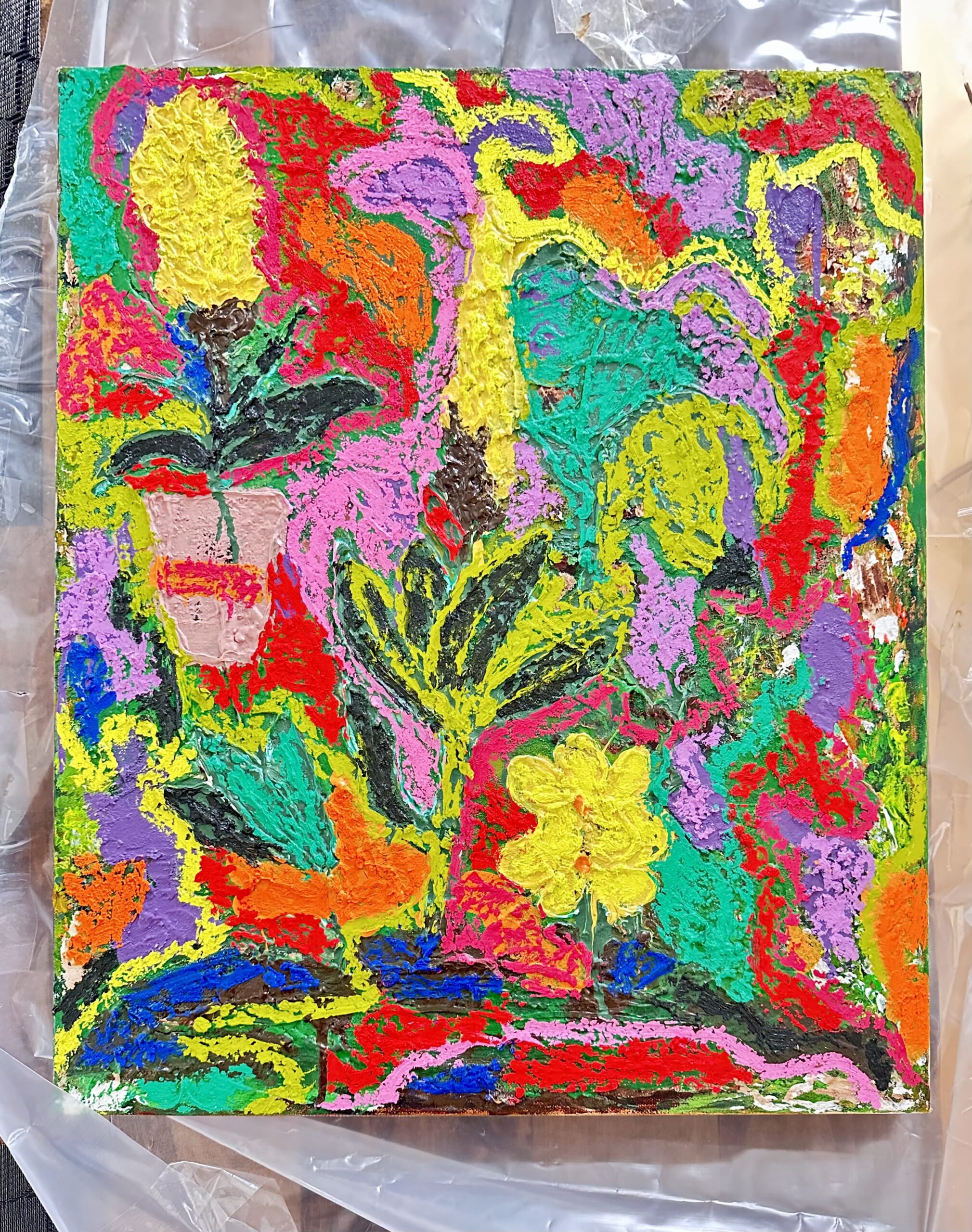
On Tuesday evening, I unwrapped a new painting that we recently purchased from Shaheen Gallery’s exhibition of new work by Antwoine Washington. Maybe they have been groomed or maybe their excitement is genuine, but my sons love it when new art arrives. They have opinions on where it should go and why; and, it is the most fun to hear all about what they are thinking. After we settled on the fact that the painting really aligns most closely with my younger son and that it should hang in his room, we took it in there to figure out which wall. There is a lot of bright art in his room and this particular painting is also bright. I held it up and my older son declared, “That does not excite my eyes.” He is 7 and he was exactly right. When I asked him why it does not excite his eyes, giddy with glee that he had articulated his opinion so clearly and concisely. He observed that the colors in the new painting are too similar to the other work on the wall and so it all just gets lost.
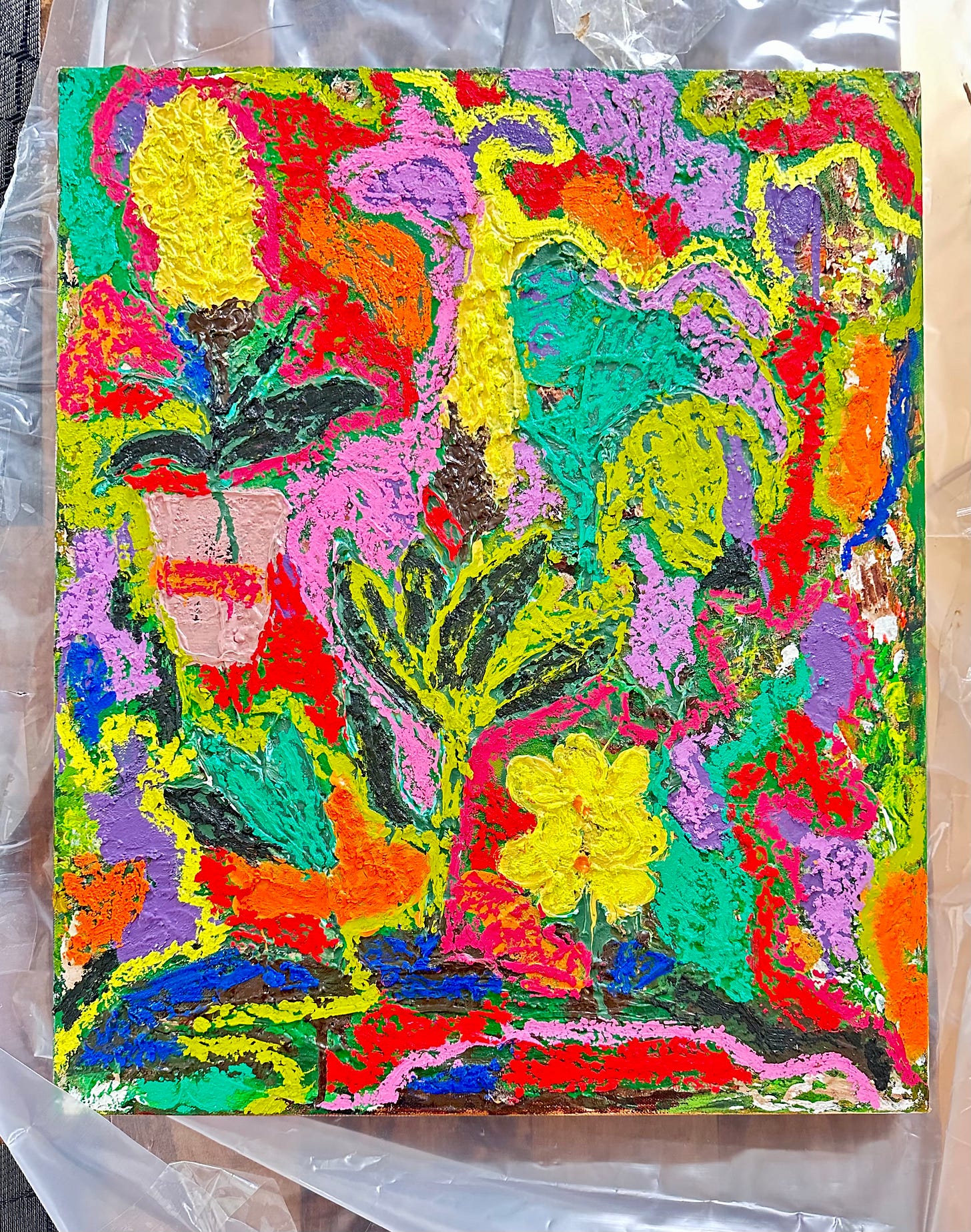
Whoa.
I was speechless.
How did my 7-year-old, sports-obsessed, can’t-put-an-outfit-together-to-save-his-life, doesn’t-know-where-his-brush-is son just say this? And clearly! And articulately!! And confidently!!!
Color me impressed!
After I got over my excitement at what a brilliant boy he is and that he is going to be the next world-changing curator….obviously….I asked him for further thoughts. We agreed that the painting should still hang in the room but not on the same wall because it needs some breathing room. So we are going to take one thing down, move it elsewhere, and replace it with the new kid on the block.
So then….yes, there’s more!!!! My son was on a roll. He was like, “Mom, now that we have that done, there are some paintings in this other room I want to look at.”
Hot dog, let’s go!!!
We proceeded into the next room where I have a gallery wall of small works. In the grouping, there are 3 Rituals drawings by Charlotte Keates along with a small painting by her that I purchased from Arusha Gallery. I adore Charlotte Keates but don’t have the wall space (or husband buy-in) for one of her larger works.*

My son wanted to discuss the painting and he promptly launched into his understanding of it and began making connections between it and the drawings, which he did not know were by the same artist. He lit up when I told him the same artist made the paintings and the drawings; and, that the drawings were the artist’s way of practicing and working out her ideas before she made a painting. We shared our mutual love of the style and different elements. I told him that I loved the painting because it looks like the treehouse I never had. He told me how much he wants a treehouse and was surprised when I admitted how much I’d love to have one as well!


Here we go again—art fostering connection and community. Art gave us the space to have a real, authentic bonding moment. He came into my world for a little bit and we spent time together in my space. Usually I’m trying to claw my way into his world but the art in our home opened the door for him to waltz right into mine. I became a little more human to him when he realized that I like to play and have fun and once dreamt (ahem, still dream) of a cool treehouse! In the parent-child relationship, that does not happen very often.
But I think the lesson here, as far as art collecting goes, is this. Like my son, don’t be afraid to not be an expert. Exercise your childlike curiosity. Be honest about what you don’t understand. Trust your instincts and be open to new ideas. One of the main reasons we collect art is because it expands our understanding of the world around us. If you feign expertise, you miss out on the possibility of that expanded understanding.
Let me give you another example along with some freaking cool art…
*I often go rogue and buy art upon which my husband and I have not agreed. But when it comes to significant wall real estate, I respect the fact that we both have to live with it. We both have to LOVE it when there are major walls involved.
A couple of weeks ago, I presented the work of Katie Paterson to a client. This client is very cool. I want to be them when I grow up. Even so, I knew that the work was going to stretch them and their collection. In many respects, Katie’s work is conceptual. While the physical objects she makes are gorgeous and executed with immense precision (unlike a lot of conceptual art), it is the ideas behind them that really knock your socks off. If you miss that piece of her practice and just look at the objects, you are definitely going to miss its importance.
I think a lot of people (hopefully none of my clients) would immediately dismiss an artist they don’t understand for fear of being thought dumb or uninformed, but not this client. After looking at the work, she totally admitted that she did not understand it but was open to learning more. (Yes! I’m in!) After we discussed the work in some depth, they were totally enamored and ended up buying a suite of works on paper.
So let’s talk about why I love the work SO MUCH! “Katie Paterson is renowned for her multi-disciplinary, conceptually-driven artwork that explores themes of nature, ecology, geology, and deep time. Through collaborations with scientists and researchers worldwide, her ambitious projects delve into humanity’s place on Earth within the vast framework of geological time and transformation. Employing advanced technologies and specialized knowledge, Paterson creates intimate, poetic, and thought-provoking works that challenge our perceptions of the world. Blending a Romantic sensibility with a rigorous, research-based approach and minimalist aesthetics, her art bridges the gap between the viewer and the farthest reaches of time.”

The series to which I am most drawn (and just happens to clock in around $10,000) is her Ideas. I’m going to use the gallery’s explanation here:
In this body of work, “Paterson [starts] with a single, seemingly impossible Idea—represented in this exhibition and throughout her body of work as short, haiku-like sentences crafted in sterling silver. These sentences pose questions about deep time and the boundaries between reality and imagination. The works, which may or may not materialize, take form in the minds of those who engage with them, becoming an expression of the idea itself. Often, these initial concepts expand into a range of interlinked inquiries, both material and philosophical.”


On a recent visit to New York with my family, I made a special trip down to Tribeca just to see this exhibition at James Cohan. It was so much fun to spend time with these Ideas with my kids. Their imaginations ran totally wild with what the works might look like if someone actually made them! Unlike many adults, they had no trouble with the fact that making them might be impossible or the very ideas represented are inherently paradoxical.
I can imagine one of these in a quiet corner where someone might stumble upon it. Or in a powder room where all we can do is sit and think… Or in an office where we might need to expand our thinking outside the box or take a brain break from the daily grind. Or in a bedroom where we can drift off into dreams of the cosmos.
What would you do with an Idea?
Trying not to be noise, an artist I am really into, and a moment of vulnerability
All Access
All in under 4 minutes!

Good morning all! Another week on the inexorable quest to be relevant, interesting, insightful, and novel. These are my North Star words when it comes to my online presence. There is so much GD noise out there and it is truly driving me berserk. I crave quiet. I crave stillness. I crave a moment off the hamster wheel to sit with my thoughts. So many evenings in these last few weeks, when my husband and I have finally made it to “the couch” for some wind-down time, I have lamented that my brain feels overwhelmed and my thoughts jumbled. It feels like nothing is straight and clear. That’s the god’s honest truth.
To be honest (it feels like I say that a lot), when I sat down to write today, I had no idea what to say. The ideas have not been flowing like usual; and, I think it is because there are too many boulders in the stream blocking the clear and continuous flow of deep and meaningful thought. My internal dialogue to get myself here went something like this: “Casey, just take the first step. The headlights are illuminating only what is in front of you so just do the next right thing…”
Step 1: Sit down at your desk.
Step 2: Open the Substack app on your desktop computer to minimize potential Instascroll distraction.
Step 3: Open a fresh draft.
Step 4: Tell the truth.
That last step is when my fingers started flying.
I’ve been self-helping the $h!t out of life lately. Since the start of the new year, I have devoured The Let Them Theory by Mel Robbins (transformational), Raising Boys by Stephen Biddulph (I understand my children so much better!), Directional Living by Megan Hellerer (some great nuggets), and currently I’m reading Know What Matters by Ron Shaich. Shaich was the force behind Panera and responsible for making it one of the most successful restaurant concepts of all time due to his keen insight into adaptability and transformation. The book is rather business-y but I picked it up because CMAA is undergoing a bit of a transformation and rebrand at the moment.
In the book, Shaich outlines his steps to transformation:
- Tell the truth.
- Know what matters.
- Get the job done.
First, you gotta tell the truth. You have to come to terms with reality and see things as they really are. And my reality is that I don’t have my content calendar planned months in advance and I have been dreading writing this post because I didn’t feel like I had anything to say. But when I started writing what I feel—jumbled, confused, and misaligned—I realized that many of you might feel that way too. I realized that the universe is probably telling me, “Hey, if you feel this way, think about everyone else. You live under the same sky as every other human.” And then, the lightbulb spluttered, blinked, sparked, and exploded…
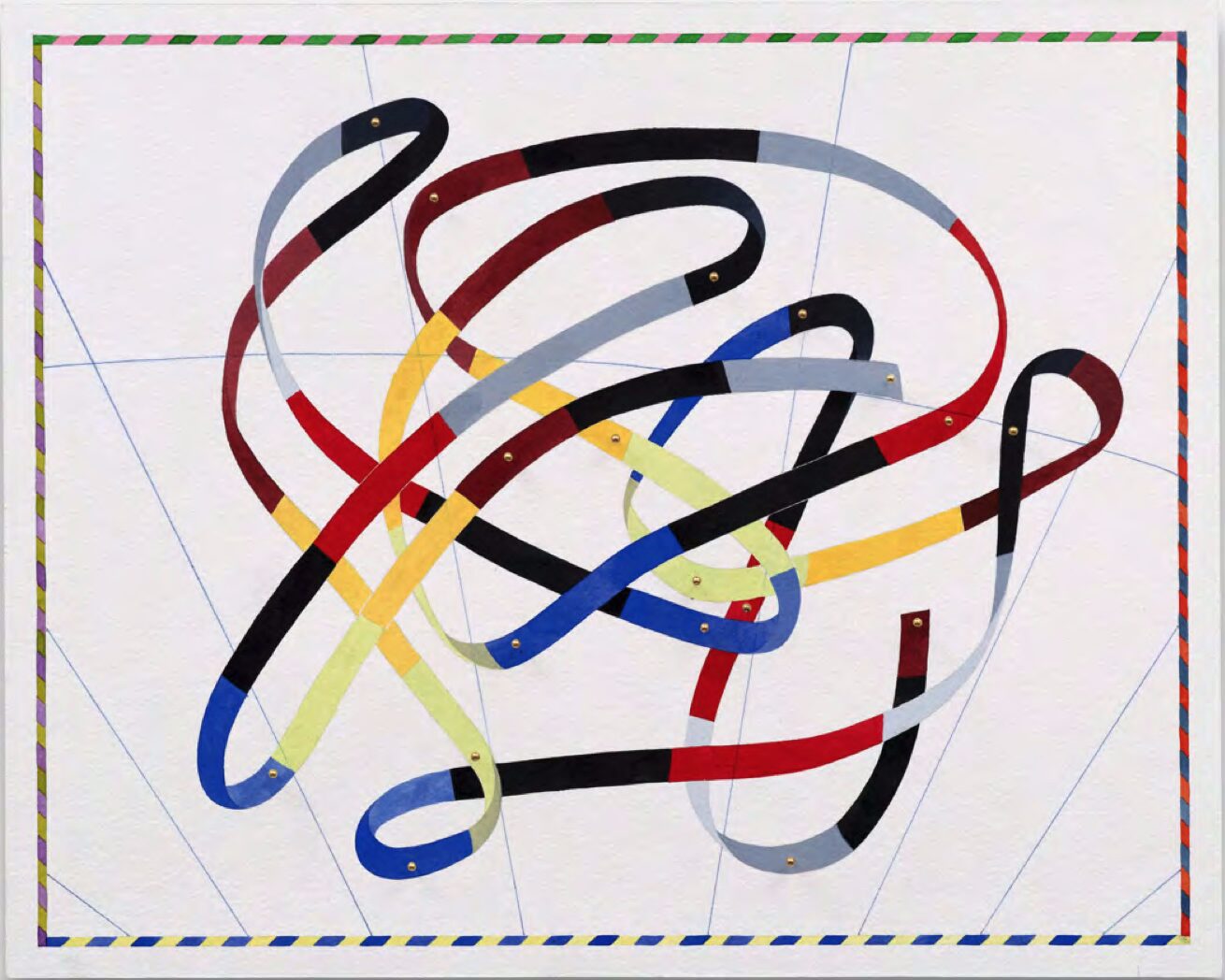
I spent the morning drooling over Bortolami’s upcoming Frieze presentation (thank you Evan for the preview!) and I am obsessed with Madeline Hollander’s project Day Flight. I’m just going to use Bortolami’s verbiage here because I can’t improve on it:
Each of Madeline Hollander’s watercolors correspond to a specific constellation of stars. Together, they map a full calendar of the night sky over the course of one year.
The colorful, curlicued patterns in each watercolor depict a three dimensional flight map, charting a path from the the stars closest to Earth to those furthest away.
Each star is demarcated with a map pin on the surface of the paper. Using her own color-coded language, Hollander has “spelled” the name of each constellation in the swirling forms which connect the stars. And the candy stripe patterns along the border of each page spell out the month in which each constellation is brightest and most clearly visible.
With Frieze and Art Production Fund, Hollander has choreographed flight routes corresponding to each watercolor. Visitors to Frieze can purchase a private flight in electric planes departing from Santa Monica Airport which will simulate the forms in her compositions.

In total, there are 88 works in the suite, which correspond to the International Astronomical Union (IAU)’s officially recognized constellations. 70 will be shown at Frieze.
At first, I thought I related to these works because I have a deep and unfulfilled fascination with space. I love thinking about the concept of the infinite and the vastness of the unknown. For whatever reason, it makes me feel better about life. Backwards, I know. But whenever I get wrapped up in whatever is wrapping me up—her accomplishments are better than mine, her hair is thicker than mine, her jewelry is prettier than mine, she has her life together more than me, yaddah yaddah yaddah…—and then I think about how “she” is a tiny speck in the infinite and ineffable universe, and so am I, I feel a lot better about just living my tiny little life and letting her live hers (whoever she is). Ok, bringing it back to the art, just give me a minute…


So, yes, I think these works are GENIUS because of how they marry my love of the cosmos with art historical principles of abstraction and invite me to think about the vastness of time and space (my toe is wildly tapping right now). And they are really just cool-lookin’ and would rock a moody office space in a kind of macho, yet sensitive way. And they are priced so well. Checking all the boxes.
But they also remind me that life ain’t a straight line. On of the critical aspects of this work is the fact that the ribbons map the path of the stars from furthest to closest to Earth and the pushpins demarcate the location of the stars in the constellation. As we can see, even though the shortest distance between two points is a straight line, life isn’t about taking the shortcuts. It’s about meandering this way and that on the journey toward ultimate fulfillment. It’s okay to explore over here and over there on your path from A to Z. At times, everyone living under the same sky feels confused, jumbled, and misaligned. All we have to do is find the next star and take the next step.


And that concludes this week’s edition of “Deep Thoughts by Casey.” Thank you all for listening to me meander. I feel a lot better now.
Air kisses (we need to practice since LA fairs are nigh),
Casey
(All photo credit: Bortolami’s preview)
Collecting With Purpose, Part III
All Access
A Case Study or Two
Since it is February, I missed the opportunity to make the requisite reference to the Roman mythological god Janus, the double-faced god of beginnings, endings, transitions, and doorways, and the namesake of our first month of the year. But I am going to seize the moment now because Collecting with Purpose requires us to evaluate where we have been and decide what our next right step will be. This does not mean we have to make a bulleted list of target artists we must collect in 2025 or top galleries with whom we must establish ourselves or even identify the next space in our home where we would like to hang a piece of art. What it means is to take stock of our collection and notice what interests you. Some questions you might ask:
- Which works do I most enjoy spending time with and why?
- Which works spark the most conversation or pique the interest of guests?
- Which artists are exploring new terrain and how does that compare to what I already have?
- Who has exhibitions coming up?
- Which works am I feeling less drawn to these days?
- Did I make any miscalculations last year?
This exercise puts you in tune with your relationship with the art you own and orients you in the right direction for what to collect next while leaving the possibilities wide open for discovery and exploration. I just finished reading Directional Living by Megan Hellerer and I think her methodology for finding your “bigger something” in life is aptly suited to art collecting. In a nutshell, we don’t need to know the destination. We just need to identify the next right step in the general direction we want to go. She makes extensive use of E.L. Doctorow’s metaphor for living life.
Life is like driving at night in the fog. You can only see as far as your headlights, but you can make the whole trip that way.
When we collect with purpose or collect directionally, we do not know our destination and we do not need to know it. All we need is a direction in which to travel so that we continue on the journey that will eventually deliver us where we need to be.
So, what does this look like in practice, you ask? Excellent question! That transitions me perfectly into our case study for Collecting With Purpose.
I have been working with Client R for several years. They first came to me because they wanted to purchase a piece of art for their home office. This was their first “serious art purchase” and they had almost zero idea what they wanted. I started spitballing some ideas based on what I know they love—rock climbing and travel. We looked at photographs of mountains, paintings of mountains, abstracted landscapes, drawings of rocks—you know, the obvious. And then I stumbled on Charles Arnoldi’s Machu Picchu series and it clicked so beautifully it was uncanny. The series is literally about the geometry of the rocks that the Incans cut to build their civilization. The colors were perfect and the size fit like the painting had been made for the space. Yall, I’m telling you when you know, you know. But at the same time, a work by Leonardo Drew also bubbled to the surface and it, too, profoundly resonated with them and their young sons. At first glance, these works have little to do with one another other than they both kind of incorporate rocks…? That’s fine. They both resonated, looked great in their home, and actually coordinated aesthetically with one another. Check. Check. Check.

Fast forward a few years and their collection now includes an abstracted landscape by Icelandic-Cleveland artist Hildur Jonsson, a commissioned abstract painting by Akron-native, LA-based painter Marcel Rozek, and a small cityscape work by Ohio-native, Berlin-based artist Dylon Krauss, and a pending acquisition of an extra special work by Manabu Ikeda. Now I have something to work with! Some really cool themes have emerged and as we embark on the next phase of acquisitions, we have a sort of Venn diagram of motifs and ideas that are guiding this next purchase. The possibilities of what could fit into this collection are still near limitless, but we now have a filter through which to sift things that come across our radar. Even if it filters out, we might still decide it should be in the collection for other reasons, but at least we are conscious of this. We are being mindful.

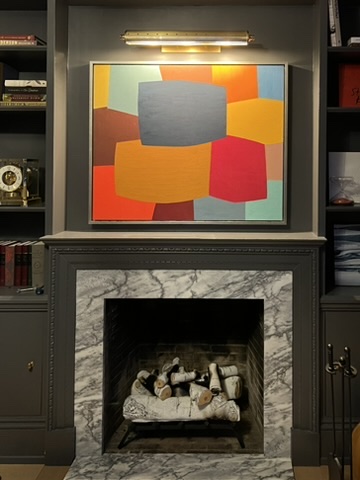
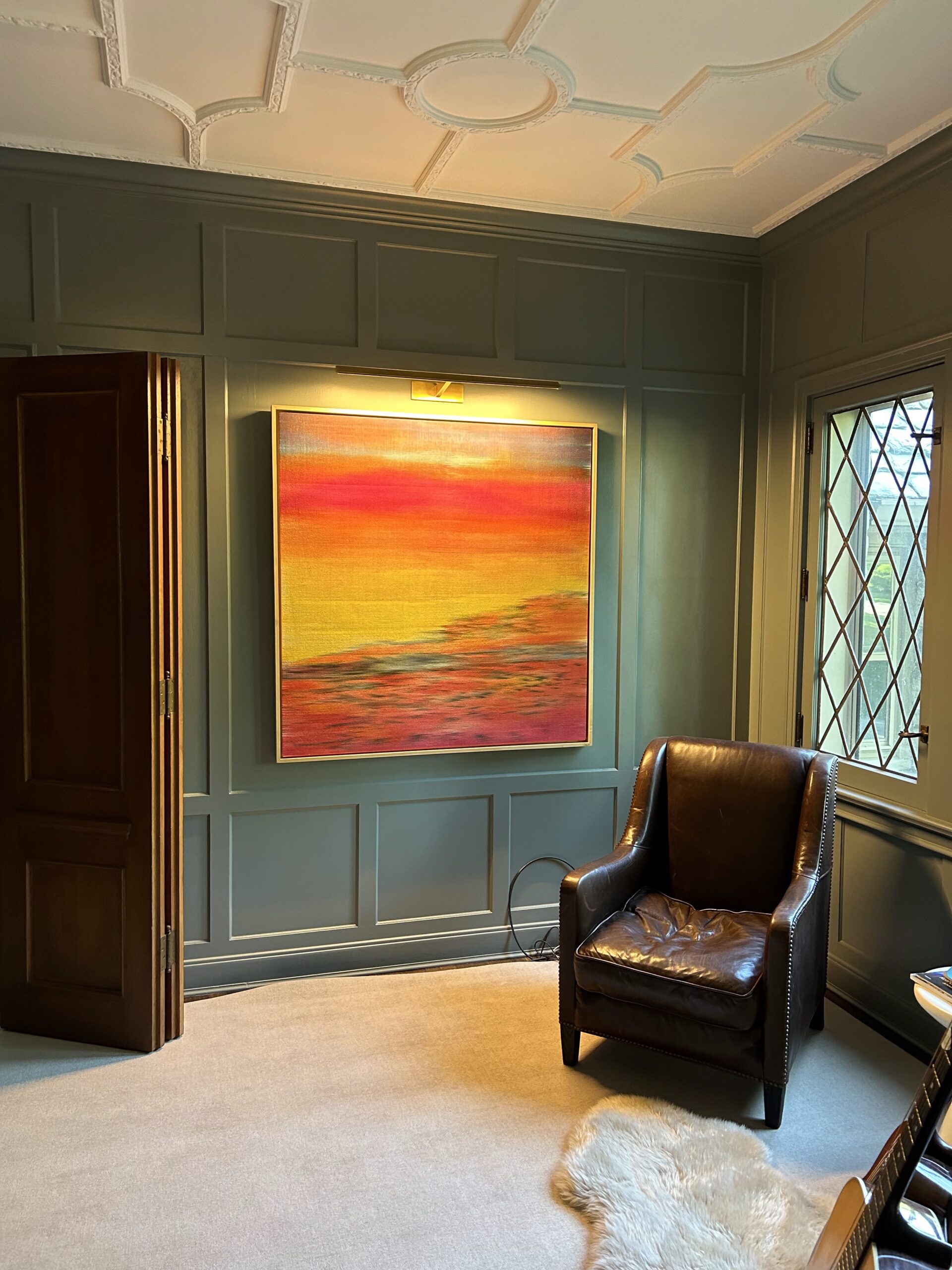
Since I promised you that we would return to pretty pictures of art this week, here are some non-professional-Casey’s-iPhone install shots at Client R’s!


Ahem, Casey…I have never purchased a piece of art before so how can I collect directionally or with purpose? Another excellent question!
When I begin working with a novice collector, we focus purely on what attracts you for any reason. Do you like the colors, the motif, the theme, the way something makes you feel or what it makes you think about? However, it is also important to consider what deterred you. Was something too dark, too political, too controversial? Conversely, are you wanting something really punchy to make a statement about who you are and what you believe? I won’t say it is the Wild West, but in many ways the first few acquisitions can feel a little helter skelter. Many collectors find that art attracts them for different reasons and they are often surprised at what compels them to swipe right on a work of art. You might buy an abstract painting of a flower, a tumultuous landscape, and a portrait of an old woman because you like them. And that is okay. It is after these first few acquisitions, that we start to see trends in your buying patterns and what attracts you.
Let’s take a look at Client B, with whom I have been working since this time last year. We found me via a Google search and we met at his home a few weeks later to get to know each other. In his words, their home is very nicely decorated but feels a little flat. He wants more sophisticated art to enliven their space. Yall, we have been working together for a full year and he finally bought a small (but mighty) painting of a flower by Antwoine Washington. I can pretty much guarantee you that he never would have thought this is where we would end up. During the same gallery visit, we also identified another couple of artists that we found attractive but they could not be more diametrically opposed visually. It remains to be seen what our next acquisition will be but every time we discuss art, we get a closer to finding the direction we want to be headed. We are really just turning on the car and firing up the headlights!
If you are brand new to buying art like Client B, I advise you to think back on artists you may have met this past year or exhibitions you have visited. Did you decide to buy or abstain? Why? Try to list out a couple of reasons for each, I bet you start to see a pattern.
Just begin with the next single right step in mind. This is not a means to an end goal but a passion project that will be the best, most sophisticated version of itself when you infuse your heart, mind, and soul into it.
And speaking of future planning, here are a few fairs I will be visiting this year. Are you ready to take the leap to joining me at an art fair in 2025? I’d love to have you! If you think you’re interested, fill out this form. Don’t think you can attend in person? Fill out the form to be contacted about remote attendance on FaceTime!
- EXPO Chicago April 24-27
- Frieze Week New York May 6-10
- Armory Week New York September 4-7
- Untitled Houston September 17-21
- Paris Art Week October 20-25
- Art Toronto October 23-26
- The Art Show New York TBD Dates
- Miami Art Week December 2-5
That’s all for this week!
Collecting with Purpose, Part II
All Access
The Art World AKA Dr. Jekyll And Mr. Hyde
<Mounts her soapbox and clears her throat…>
I have a bone to pick with the art world. Well I actually have many bones to pick but the one in question today is how ridiculously snobby it is. On the one hand our little community talks about how welcoming we are to all types of people, and how every person’s voice should be heard, and how we want to represent the complete spectrum of humanity. And at the very same time, galleries and dealers are some of the snobbiest, most exclusionary, isolating entities and people on the planet. So, who are you? If you are going to preach inclusion and justice for all, then you better practice it too.
Just this week, I read a Town & Country article asking the question how young is too young to start an art collection. Truth be told, the article did not really offer an answer to this question and in my opinion it is a silly question to ask anyway. (For the record, I collect art on behalf of and with my young sons, so maybe I’m biased. But I still think it’s a dumb question.) My problem is not with this question but what some of the cited sources say about art collecting. One advisor who wished to remain anonymous (cue eye roll) said:
As with many things, a proper education is key. “It’s important to understand the culture, the language, and the rules of the collecting world before you saunter into a Gagosian or Zwirner. The surest way to look like a rube is to go in and say, ‘I need something for over my couch,’ ” the anonymous art advisor says. “There is a gentility to it that is learned.”
Yes, this is true, in the current climate, one should never admit to buying art that is to be hung above a couch even if that is the goal, but OMG can we please change that??!!!! Can we please stop. Stop with the snobbery. Stop with the pretension. Stop with with serious collector BS. Climb down out of your ivoriest of towers and meet people where they are. So what if someone wants to buy a piece of art to hang over their couch! Let’s stop for a second, just a millisecond, and think about what that actually means—wanting a piece of art for over the couch. The wall over the couch is usually a big space so the work is going to be large and highly visible. In all likelihood, the buyer spends a lot of time in this room. Over the couch has pride of place. For a homeowner, deciding what you want to hang over your couch and look at day-in and day-out is a really big decision.
MOREOVER, this person who has sauntered into your gallery looking for “couch art” has come to YOUR GALLERY and not IKEA or HomeGoods. They are TRYING to buy something good. They recognize that good art can be transformative and want to do better than an industrially-produced giclée print of a blue blob. So meet them where they are and teach them about good art and what to look for and how to see and help them find something that will make them want to buy the next thing. Don’t all “serious collectors” have to start somewhere?
Have you ever met an artist who would prefer that their work be crated up, sent to a storage unit in the freeport never to see the light of day again until it goes under the hammer for a massive return? I mean, that’s what we are all talking about when we say “serious collector,” aren’t we? Serious collectors often have collections so large that they don’t actually live with the art. They are just buying and storing in a tax-free facility. And many are buying low and selling high for huge financial gains, you know, investment potential… I have never spoken with an artist who would not take profound joy in knowing that their art is hanging in someone’s living room, being seen and enjoyed, and sparking conversations.
Yes, it is a big deal when the work of a young artist enters a significant collection of established artists or a genuinely passionate collector or an institution. But given the option between an investor-collector who may hold hundreds or thousands of works that they never look at or a novice collector who is buying their very first piece, I think I know the placement most artists would prefer.
So what if they want the art that they LIVE WITH to go with their decor. So what if they want the red one instead of the blue one? You gotta make a decision somehow.
And that brings me back to how we are collecting with purpose in 2025. When we are collecting with purpose, we may be shopping for something to hang over our couch but we are also shopping for something that will reflect our goals, values, ambitions, and personalities. Our decor becomes just one guiding principle among many other criteria. So when we walk into a gallery we can say, “I’m shopping for a large painting to hang over my couch that is all about ______.” You fill in the blank with whatever resonates with you. Collecting with purpose helps you clear the highest hurdle in the art-buying game—the snobby gallery gatekeepers.
If you’re not sure how to fill in that blank, let’s chat!
And if you are being snobby to novice collectors, this is your sign to lighten up!
<Steps down from her soapbox.>
Collecting With Purpose
All Access
Better late than never...
I am a tad late back to the office this January. Some unexpected events last week caused a little upheaval to my schedule, and my MO to be honest.
On Monday, I had the distinct honor of eulogizing my grandfather at his memorial service. I spent many hours over the course of several days last week remembering his life and thinking about what made him who he was. He was a man of faith, joy, resiliency, and purpose. As I thought about my time with him and what made him a great man, and more specifically, the best grandfather was that the time I spent him with was always purpose-filled. It was never passive or happenstance, and that made him present in every moment. He had reasons for the activities he did with me and my sister. He was all-in every time. I did not realize it at the time but can say now, looking back, that this purposeful way of living is what made him so successful personally and professionally.
As I sit here today, I find myself looking to these lessons I learned from writing his eulogy and thinking about how I might apply them to my own life. Sure, I can be more present with my kids (Put the phone down!) and be more intentional about staying in touch with friends who live far away. But what I really wanted to get straight for myself was how I can make my professional work more meaningful.
To be honest, sometimes, I feel like my work is frivolous and self-serving. With everything happening in the world, it is hard to say that anyone NEEDS to buy more art. I imagine there are a few of you reading this who may want to debate that statement, but hear me out.
It is not that anyone NEEDS to buy more art to survive, physically speaking. BUT, I would argue that art IS critical to our survival as a society as we have known it. Art is a vehicle for community. It begets community. It brings people together to love, admire, feel, argue, debate, and understand. Art, well, good art, helps us both better understand ourselves and our own perspectives, but also our world in new and meaningful ways. It helps us come to grips with difficult truths or find our way through foreign situations or acknowledge and understand differing viewpoints. In a recent conversation with Leilani Lynch, she observed that art forges our path to progress and artists often have a head start on that journey, forging the way for the rest of us to come along behind. It helps us bridge the gap across what divides and illuminates possible ways to move forward together.
And isn’t community what is lacking most in our society today? In his Parting Prescription for America, former US Surgeon General Dr. Vivek Hallegere Murthy opined that:
In addition to more commonly discussed challenges such as economic hardship, mental health struggles, and uncertainty about the future, there is something else that has been missing for many people that is a critical driver of health and well-being: community. The three critical components of community are relationships, service, and purpose. They comprise the triad of fulfillment.
It seems to me that art is a place to form and strengthen relationships; it can be a vehicle to serve others; and, it can help all of us fulfill the human need for purpose in our lives. I would contend that collecting art with purpose will turn this little thing we do as a hobby or passion project into an act that will grow beyond ourselves.
What do I mean by collecting with purpose?
I think it can mean different things for different people but I’ll give you an example. For one client who is passionate about philanthropy in the areas of the arts, nature, and healthcare in Cleveland, collecting with purpose might mean building a collection of artists who are offering a variety of perspectives on those themes. It would mean supporting the artists who are forging that proverbial path toward agreement on issues of the environment, for example. Supporting the wayfinders, so to speak, is yet another avenue through which they can deepen their impact on the areas that are most important to them. Moreover, it allows them another opportunity to share their passions with those around them. It could go a little something like this:
Friend: Oh, I see you got a new piece of art. What is it?
Collector: You noticed! I LOVE this artist! They are a Cleveland-based artist that makes work all about the forces of time and nature on our culture.
Friend: Wow! What does that mean?
Collector: Well, it could mean that the artist invites the viewer to think about what the future looks like if we keep on our current trajectory. What do you think it means?
Boom! Community-building at its finest! Friends getting to know each other on a deeper level through mutual vulnerability. Passions shared through the softer vehicle of a pretty picture. Relationship-check. Service-check. Purpose-check. Community—check, check, check.
So maybe we don’t NEED art to physically survive, but we do need it to thrive as humans and to continue to build the society we hope to leave to our children.
If that is what my work does, then I feel good about my purpose. In honor of my grandfather, a man of admirable purpose, I am resolving in 2025 to help my clients collect art with purpose and strengthen their communities so that they can thrive!

Reflections on 2024
All Access
Reflections...ramblings...same thing
By now, I imagine you have read many, many reports on the state of the art market. We’re undergoing a correction…Stiff upper lip…Collectors are buying more cautiously…We’re fine…It’s fine. These are a thousand different ways of saying 2021 was bonkers, the ride on the Covid wave is over, we will not hit those levels again any time soon, and we are getting back to business as usual. But here at CMAA, we are singing a different song.
Business is GREAT! CMAA had its best year yet by multiple metrics. Revenue was up year over year. I attended more art fairs, established more relationships, and connected more clients with art they love than ever before. Collectors in Cleveland are enthusiastically expanding their treasure troves. Novices are jumping in with both feet and scooping up fantastic pieces from artists across the country and around the world. When the art world says the market is soft, that is precisely the time to zig against the market’s zag. It was easier to acquire work by hot artists, galleries were more willing to concede to client’s budgets, and people were generally more open to conversations with newer collectors who don’t yet have a pedigree or catalogue to demonstrate their value to an artist’s career. In other words, buying was easy.
Was this the year to sell? No. I deaccessioned a collection of over 200 objects with respectable but not spectacular results. And I advised another client to hold if they could, so they did; and, I think they are pleased to have heeded my advice.
But from where I sit, the art market is doing just fine and I believe I know why. At CMAA we buy with our hearts first. While investment potential can certainly be part of the calculus when we make purchasing decisions, it is not the leading factor. So when economic uncertainty rears its ugly head, we may scale back or budget down a tier, but we don’t stop purchasing altogether. We evaluate quality, art historical relevance in both the near and long term, and fit in a specific collection, among other factors. In fact, investment potential sometimes never even enters the conversation because my clients know that I am only going to show them things that I anticipate will stand the test of time.
Do I promise double-digit returns on every purchase? Heck no. Will every artist turn out to be the next Picasso? No. Will every artist’s prices triple in ten years? Of course not. Will my client’s derive lasting value from living with art they love? You bet. Will their homes be more interesting, inviting, warm, and lively because they show off their personality, beliefs, ambitions, and values through their art collections? A resounding HELL YES!
So, at CMAA, we can say that 2024 was a great year. We delivered on our promise to find great art and provide top-notch service to our clients. Here are three favorites from the last 12 months:


I already have a glimpse into 2025 and it is looking bright! I wish you all the merriest of holiday seasons filled with peace, joy warmth, and love. See you in the new year!
City Feature: OKLAHOMA CITY
All Access
It's more than just an oil town...

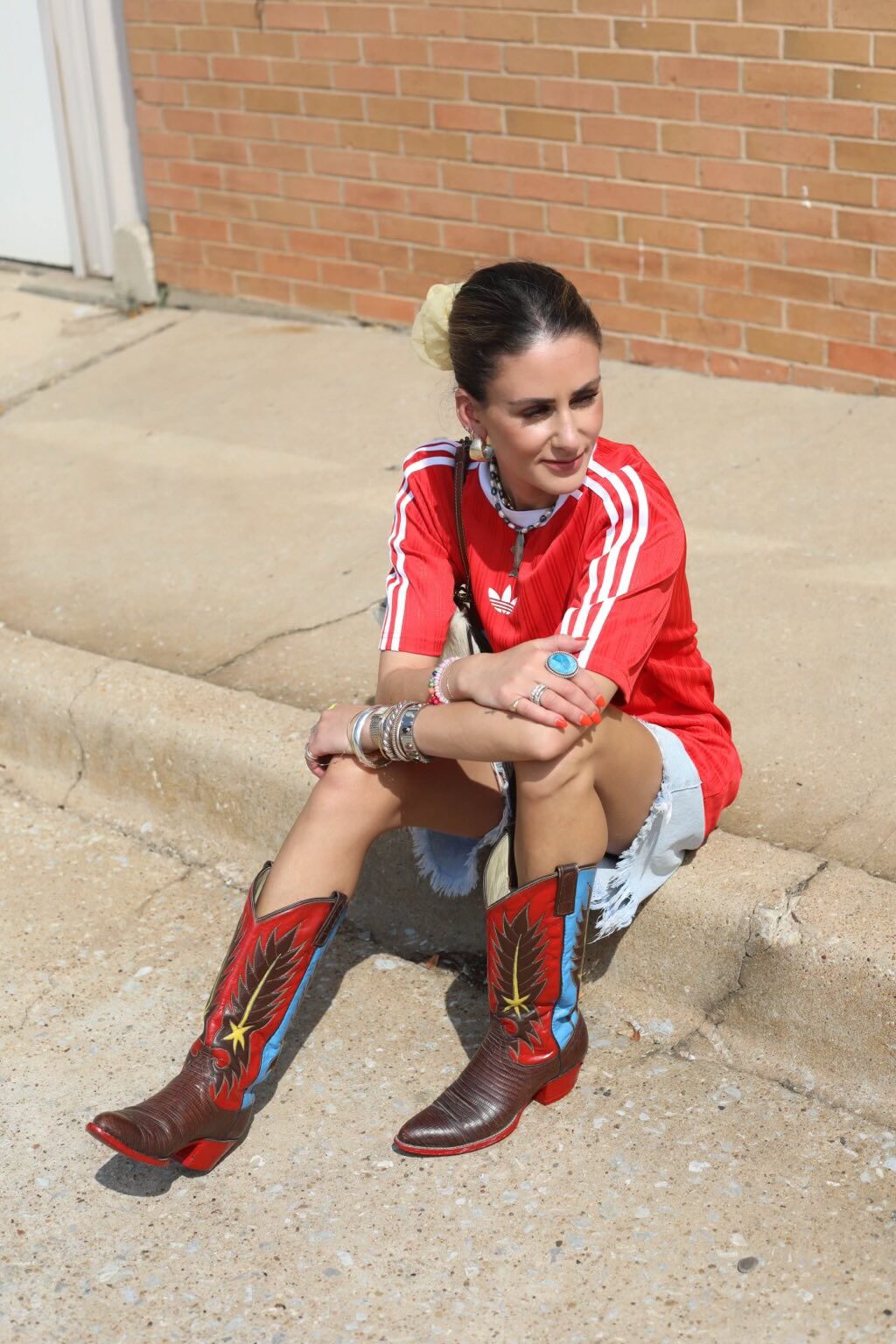
If I am endeavoring to spotlight great arts communities that you may have never considered, what better place to start than in the Heartland? Today I am bringing you Oklahoma City, or OKC for those who know. The Horse Show Capital of the World, the third largest city in the nation by land area, and home to the Cowboy and Western Museum, Oklahoma City offers its residents more than just working oil wells and lively livestock markets! I sat down with Aubrey Ballard, better known as The Dandy Liar, to chat all things arts and culture in her home city.

Aubrey and I have known each other since elementary school and have reconnected at various points in our adult lives. I have always admired her as an incredibly smart and kind person as well as a one-of-a-kind creative professional, so when I decided to do these city feature posts, she was the very first person that came to mind!
As a busy mom of two and crazy successful blogger, Instagram fashion influencer, interior designer, and vintage jewelry dealer, Aubrey has A LOT on her plate, but she was gracious enough to answer some of my burning questions about the arts and culture in her great city. So, without further ado, let’s get into it!
Q: Start with the obvious. Aubrey, where do you find the best art in Oklahoma City?
A: There are some great galleries in OKC, but one of my favorites has to be DNA Gallery in the plaza district. They have their finger on the pulse of the creative community here, and are so great at highlighting lesser known and established artists alike. I’ve attended several shows there, and I often turn to DNA Gallery to source pieces both for clients and for my own home.

Q: Which local artists do you love? Have you collected any art by local artists?
A: I have yet to snag one of his pieces, but I’ve been loving works by Matt Goad for some time now. Highly influenced by his background in graphic design, he works in all mediums and his talent takes many shapes- from woodblock prints, to public murals and acrylic paintings. I’m particularly drawn to his signature bold color palette and the line composition that exists throughout his work.

Q: What do you love about living in your city?
A: Hands down, I love the creative community here. It’s very collaborative, and us creatives are very generous with one another. I’ve lived in 7 other cities and have found the makers and artist community in OKC to be the most inclusive. I moved here 10 years ago without knowing a single person. I was very quickly embraced by my peers and found myself feeling at home in my new city.
Q: Who else in OKC and beyond inspires you?
A: I find myself constantly inspired by architecture and interiors, as I view them as their own art forms. Lately, I’ve been loving British interior designers like Beata Heuman and Sarah Vanrenen, who push the envelope through color, texture, print and pattern. And of course, as a student of fashion, I am inspired by different tastemakers around the globe. Leandra Cohen is one of my favorite stylists of late. She does for outfits what I seek to do with my interiors- reimagine everyday pieces in a fresh, new way.


Q: What is your favorite piece of art that you own?
A: My favorite piece is a large scale painting of two women, painted by an unknown artist circa 1973 titled Jealousy. It was my first “big” art purchase and is still my favorite to this day. The two women depicted have very expressive eyes, and yet there is still an air of mystery about them, which has always drawn me to the piece. The style is reminiscent of fashion illustrations from the 70s, which speaks to my love of and background in fashion design. The colors also scream 1970s, with touches of neons and soft primary colors.

Thanks very much to Aubrey for sharing her city with us! I love knowing about the gems hidden right here in our own backyard and OKC is certainly one to watch!
Happy holidays everyone!
Miami Art Week 2024 Recap
All Access
It's a marathon. No, it's a sprint! No, it's an ARTATHON!!!!
There is nothing quite like the furor of Miami Art Week. The opportunity to see this much contemporary art all at one time is rare and I seized it with abandon these past few days. I learned the hard way that one must go into the week with a plan, leave room for some flexibility, and be realistic about what is actually accomplish-able! With comfy shoes, my extra phone battery, and an open mind, I hit the ground running on Tuesday and have not stopped until right this second as I sit on the plane home to Cleveland.
I am sure that if you subscribe to this newsletter, you also read a myriad other publications that have given you the scoop on the general mood of the week. Mildly subdued, generally optimistic, a little bit slower paced, and perhaps a return to fundamentals. No gimmicks, no bombastic, splashy antics. Just strong presentations by some really great galleries from around the world. And I am happy to report that Cleveland put her best foot forward this week! We had a strong cohort of collectors and arts professionals on site and there will be some great work coming into Cleveland collections, both public and private, after this week.
Here are some of my top picks, and since this a publication dedicated to finding great art under $10,000, that criterion still applied, except for one category. Here we go:
Favorite New Artist Discovery (>$10k, <$20k)
Araminta Blue from Gallery Rosenfeld at Untitled takes this one! Her work stuck in my mind above the rest. What can I say? I am a sucker for anyone who has even a hint of Helen Frankenthaler going on! But beyond pushing the boundaries of abstraction and figurative painting, Araminta’s story resonated with me because she is a brand new mom and also a full time working artist. This body of work is about the balance she has struggled to find over the past couple of years since giving birth to her son. Many of the paintings were made with her baby strapped to her chest. Somehow the work feels both light and ethereal even though they are about both the joy and difficulty of new motherhood and being a working mom. She is daring in her mark-making and brushwork, takes risks in both the application of color, and demonstrates a great deal of restraint to leave so much canvas bare. Ultimately the balance she finds pays off big time. While her large scale works clock in over $10,000, she has some smaller work available that would be more budget friendly.

Favorite New Artist Discovery (under $10k)
Amanda Seibæk was a great find at NADA in Patricia Fleming Gallery’s presentation. Her work encourages the viewer to join her on a journey through whimsical and mythical landscapes that she has imagined as places in which one might contemplate how to foster a kinder, more empathetic society. Using the artistic trope of the wanderer and nature as metaphor for society, the paintings both resist clear definition and offer just enough detail for the viewer to find some footing. Painted on transparent voile, they also function as windows or scrims into another world.

Favorite New Gallery Connection
One of the great things about these fairs is the opportunity for relationships and connections to happen that would not otherwise. I always love visiting friends and colleagues from other cities whom I don’t see often (but email with frequently), but I also really cherish the new relationships formed at each fair. This year I was so pleased to meet and connect with Red Arrow Gallery in Nashville. While I already knew about their program thanks to Cleveland-based artist Dana Oldfather, I was excited to meet them in person and see Emily Weiner’s work IRL (which totally holds up as well in person as it does on the ‘gram BTW).

Honorable Mentions
Here are some presentations and singular works that caught my eye:
Jakub Tomas at Asya Geisburg Gallery gave us a glimpse into a world run by AI. He is Czech and apparently they are far beyond the US in terms of their use of robotics. But I also found another layer in looking at this particular painting. I see a commentary on beauty culture where conformity is rewarded and individuality is demonized. In other words, when we, particularly young girls, let TikTok and the ‘Gram dictate what is beautiful and don’t stay true to our individuality, we end up as Frakenstein’s monster—a mish mash of ill fitting parts that don’t allow what’s real to shine. His painting says it better than my words can.

Crystal Liu at Morgan Lehman Gallery’s booth at Untitled caught my eye at the very end of the day on Thursday, thus the subpar photos. Plus when work is glazed, getting pictures in awful fair lighting is virtually impossible to do on the fly. Anyway, I think the beauty and delicacy of these paintings comes through nevertheless. They are gouache, watercolors, ink and collage on paper, the collaged parts being the marbled paper she makes and then applies. She has some very large scale work that might be out of the budgetary boundaries but these smaller works are fantastic, quiet reflections on her experience in Japan. I find them to capture the allure and mystery of that country so well. For anyone who has travelled to Japan, I imagine you would love living with one of these.

And one more piece of eye candy for your viewing pleasure, Krista Louise Smith’s altarpiece to femininity is not only a stunning piece of craftsmanship, but also an exciting next steps in the artist’s practice. Her work historically has been of comprised both intimate and monumentally-scaled ethereal paintings in buttery pastel colors that she would describe as “internal skyscapes.” Her colors hold personal meanings of safety and comfort and she applies them to images of clouds, moons, and suns. Her paintings have taken on the look and shape of chapel niches and apses of late, so gallerist Jennifer Carvalho has been encouraging Smith to explore altarpieces as a next step in this evolution. (I can vouch on personal experience that when Jennifer says to do something you should do it because she is brilliant.) So, here the artist created a reliquary that celebrates feminine beauty through the ages. The handles are inspired by the Nike of Samothrace and the half-face is taken from a favorite Egyptian object in The Met, reconfigured as a self-portrait, and covered in 23k gold. As a reliquary, this object holds and protects that sacred power of the feminine but also reminds us to recognize and protect the self, whatever that may mean for the viewer. Perhaps that means staying true to one’s values when it is difficult. Perhaps that means letting go of toxic relationships. Perhaps that means pursuing a dream or saying no to someone when you are feeling overwhelmed.

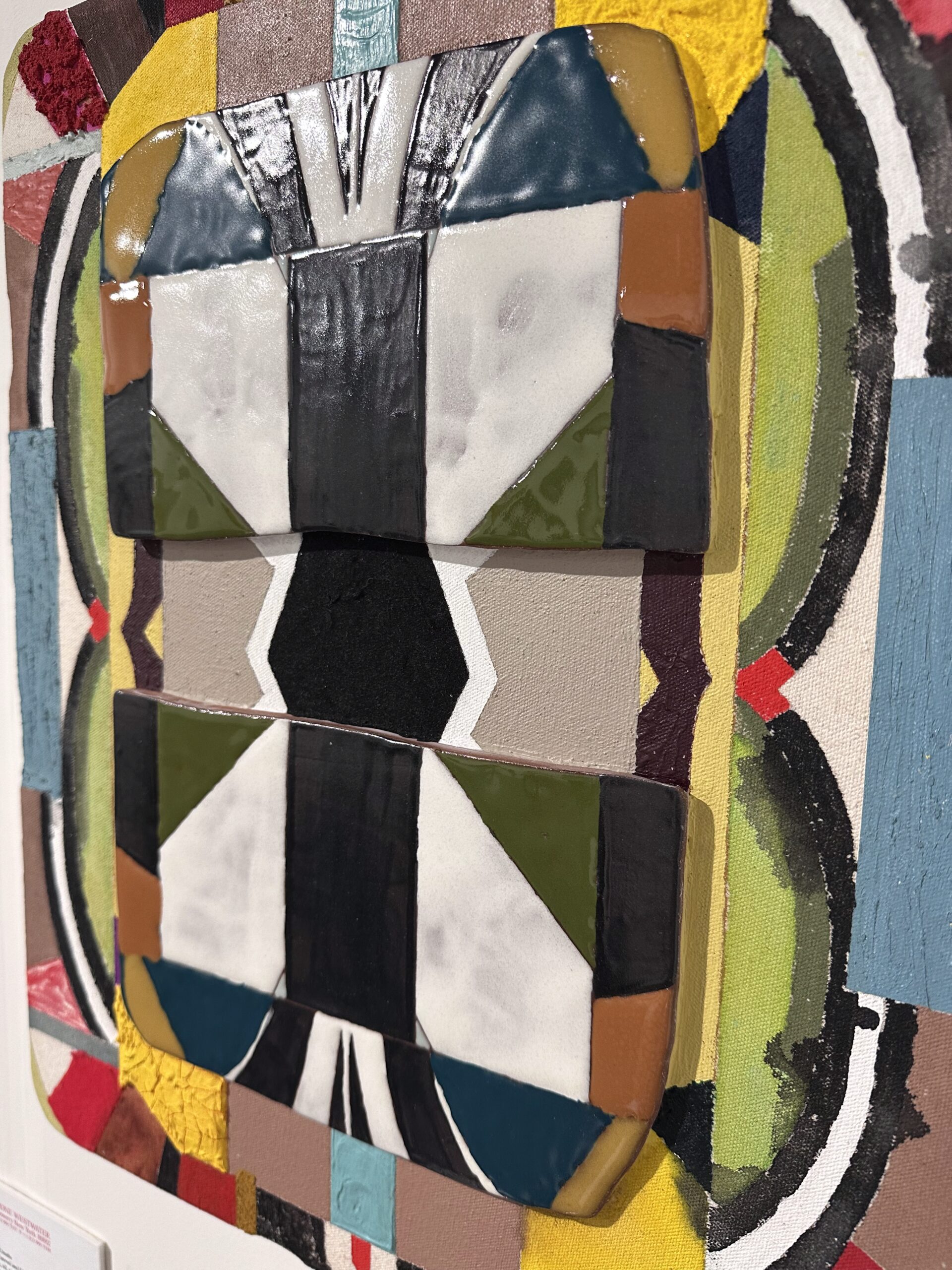
Okay, okay, now one more, Kevin Umaña at Sperone Westwater (but he also has a show at Romer Young right now) was a study in duality. The tablets, as he calls them, fuse materials, styles, and forms to create these wonderful pieces that show us that life can be more than either/or. We can exist in a state of both/and. How very Post-Modern of you, Mr. Umaña! Born in El Salvador, and recently delving into the traditions and legacy of the Pipil people, Umaña has discovered a visual language of contradiction that speaks to the spiritual connection his people have with the land and the lessons we can learn from Nature.

Thanks for reading my recap! For more art I saw and liked in Miami and beyond, make sure to visit the Chat. You’ll find lots of new suggestions posted each week with all the details you need to find out more and even make a purchase. Feel free to reach out with questions, and remember sharing is caring so forward this to a friend or family member who would enjoy seeing all the art I saw and liked!